That's not the sound of a bug zapper on your porch. It's the sound of electric fields scrambling cancer cells in someone's pancreas - and the FDA just gave it a thumbs up.
In February 2026, the FDA approved Optune Pax, a wearable, portable device that zaps pancreatic tumors with low-intensity alternating electric fields. It's the first new treatment approved for locally advanced pancreatic cancer in roughly 30 years. Three. Decades. Let that sink in while we talk about what this gizmo actually does.
Wait, You Can Electrocute a Tumor?
Not exactly electrocute - more like confuse it to death. The technology is called Tumor Treating Fields (TTFields), and here's the gist: cancer cells divide fast. That's kind of their whole brand. During division, cells rely on tiny protein structures called microtubules to pull everything apart neatly. Microtubules happen to have a strong electrical charge (a dipole moment, if you want to impress someone at brunch). TTFields deliver alternating electric fields at 150 kHz that mess with those charged proteins, scrambling the spindle assembly and turning orderly cell division into absolute chaos (Rominiyi et al., 2022).
The result? Cancer cells stall mid-division, produce mangled daughter cells, and eventually die. Meanwhile, your normal cells - which divide much more slowly - are mostly unbothered. It's like setting up a speed trap that only catches the cars going 200 mph.
The PANOVA-3 Trial: Numbers That Actually Matter
The approval came on the back of a phase 3 trial called PANOVA-3, which enrolled 571 patients with previously untreated, unresectable, locally advanced pancreatic adenocarcinoma (Picozzi et al., Journal of Clinical Oncology, 2025). Half got standard chemotherapy (gemcitabine plus nab-paclitaxel), and half got the same chemo plus TTFields delivered through adhesive patches stuck to their abdomen.
The headline: median overall survival jumped from 14.2 months to 16.2 months (HR 0.82, P = .039). Two extra months might not sound like a mic drop, but for pancreatic cancer - a disease with a 13% five-year survival rate and a reputation as the most ruthless solid tumor out there - any statistically significant survival gain is a genuine event (American Cancer Society, 2025).
Even better? Pain-free survival nearly doubled: 15.2 months versus 9.1 months. When you're talking about a cancer that's infamous for debilitating pain, that's not a footnote. That's the headline.
So You Just... Wear It?
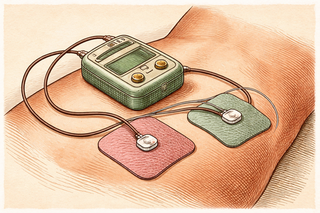
Pretty much. Optune Pax is a portable field generator connected to adhesive electrode arrays you stick on your skin over the abdomen. Patients are told to wear it at least 75% of the day. Yes, that's a lot. No, it's not comfortable for everyone - about 76% of patients in the trial reported skin reactions where the patches sat, though most were mild to moderate (Anderer, JAMA, 2026).
The trade-off calculation is real: wear a buzzy patch system most of the day and deal with some skin irritation, or skip it and lose a meaningful survival advantage. For a cancer with options this limited, most patients and oncologists are going to take that deal.
Why This Is a Bigger Deal Than It Looks
Pancreatic cancer has been the stubborn holdout of oncology. While survival rates for many cancers have climbed dramatically over the past two decades, pancreatic cancer's five-year survival has barely budged from single digits to 13%. The last major treatment advance for locally advanced disease happened in the 1990s. The FDA gave Optune Pax Breakthrough Device designation back in December 2024 for good reason - options here aren't just limited, they've been essentially frozen in time.
TTFields also represent something conceptually different. This isn't a drug. It's not radiation. It's not surgery. It's a physical modality - a fourth pillar of cancer treatment that's already approved for glioblastoma and mesothelioma (Mun et al., 2018). The pancreatic cancer approval expands the playbook, and trials are underway for lung, ovarian, and other solid tumors. The idea that you can disrupt cancer biology with precisely tuned electric fields still sounds like science fiction, but the survival curves say otherwise.
What Comes Next
Nobody's calling this a cure. Pancreatic cancer remains ferociously lethal, and two extra months of median survival, while statistically significant, still leaves enormous room for improvement. But PANOVA-3 proved that TTFields can meaningfully move the needle in one of oncology's toughest arenas - and that's a foundation to build on with combination strategies, biomarker selection, and next-generation devices.
For a disease where "nothing has changed in 30 years" was practically the motto, bzzzzzt sounds a whole lot like progress.
References:
-
Anderer S. FDA Approves New Device for Pancreatic Cancer Treatment. JAMA. 2026;335(13). doi:10.1001/jama.2026.1011
-
Picozzi VJ, et al. Tumor Treating Fields With Gemcitabine and Nab-Paclitaxel for Locally Advanced Pancreatic Adenocarcinoma: Randomized, Open-Label, Pivotal Phase III PANOVA-3 Study. Journal of Clinical Oncology. 2025. doi:10.1200/JCO-25-00746. PMID: 40448572
-
Rominiyi O, et al. The Mechanisms of Action of Tumor Treating Fields. Cancers. 2022;14(20):5371. doi:10.3390/cancers14205371. PMCID: PMC9574373
-
Mun EJ, et al. Tumor-Treating Fields: A Fourth Modality in Cancer Treatment. Clinical Cancer Research. 2018;10:6317-6322. doi:10.2147/CMAR.S166840. PMCID: PMC6207253
-
American Cancer Society. Survival Rates for Pancreatic Cancer. Updated 2025. Available at: cancer.org
Disclaimer: The image accompanying this article is for illustrative purposes only and does not depict actual experimental results, data, or biological mechanisms.