Dear ovarian cancer,
We need to have a chat. You've been flying under the radar for way too long, showing up late, disguising yourself as bloating, and generally being the worst kind of uninvited guest. Roughly 325,000 women worldwide got your unwelcome knock on the door in 2022 alone, and you took about 207,000 of them with you. So let's put everything on the table - who you are, what you're up to, and why science is finally catching up to your tricks.
Signed,
Everyone who's had enough.
The Basics (In Other Words, What's Actually Going On Down There)
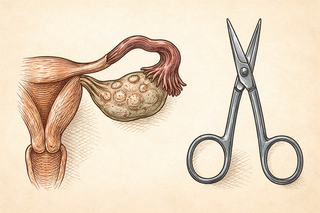
Ovarian cancer starts in the ovaries - the two small organs that produce eggs and hormones. Basically, think of ovaries as the body's reproductive command centers. When cells there start multiplying without following the rules, you've got a problem.
Here's the kicker: this cancer is the eighth most common malignancy among women globally, and yet most people couldn't name a single specific symptom. That's because the symptoms - abdominal pain, bloating, frequent urination, feeling full quickly - sound like a dozen other things. It's the con artist of cancers, impersonating a bad lunch or a stressful week until it's already set up shop in places it doesn't belong.
The median age at diagnosis is 63, but age isn't the only player here. Family history of breast or ovarian cancer cranks up the risk, as does endometriosis and never having given birth. And about 25% of ovarian cancers trace back to inherited genetic variants, primarily in the BRCA1 and BRCA2 genes - basically, your DNA's spell-check feature has a bug (Voelker, 2025).
Staging: How Far Has It Wandered?
Doctors use imaging like pelvic ultrasounds, CT scans, MRIs, and PET scans to figure out the damage. Stages I and II mean the cancer is still hanging around the pelvis - relatively contained. Stages III and IV mean it's packed its bags and traveled to the abdomen, lymph nodes, or distant organs like the liver and lungs.
The survival numbers tell the story bluntly: five-year survival for stages I-II sits at 70-95%. For stages III-IV, it drops to 10-40%. In other words, catching this thing early is the difference between a manageable problem and a devastating one.
The Arsenal: Surgery, Chemo, and Some Really Clever New Drugs
Treatment starts with surgery - typically removing both ovaries, fallopian tubes, uterus, and nearby lymph nodes. For younger patients who want to preserve fertility, surgeons can sometimes remove just the affected ovary. After surgery comes chemotherapy, because you want to chase down any cancer cells that tried to sneak away.
But here's where things get genuinely exciting. PARP inhibitors - drugs like olaparib and niraparib - have changed the game for patients with BRCA mutations. These drugs exploit a clever weakness: cancer cells with broken BRCA genes can't repair their DNA properly, and PARP inhibitors knock out their backup repair system. It's like cutting the power AND the generator. The result? Advanced-stage patients with BRCA variants treated with PARP inhibitors now achieve approximately 70% five-year survival - a dramatic leap from the historical 10-40% for late-stage disease (Wang et al., 2025).
Meanwhile, antibody-drug conjugates (ADCs) are the new kids on the block. Mirvetuximab soravtansine, approved for platinum-resistant ovarian cancer, works like a guided missile - it locks onto a protein on cancer cells and delivers chemo directly to the target (Wang et al., 2025). And in May 2025, the FDA approved avutometinib plus defactinib for KRAS-mutated low-grade serous ovarian cancer - the first-ever approved treatment for that specific subtype.
What Scientists Are Chasing Next
Immunotherapy, which has revolutionized treatment for cancers like melanoma and lung cancer, has been stubbornly difficult to crack in ovarian cancer. The tumor microenvironment - basically the neighborhood surrounding the tumor - acts like a bouncer that keeps immune cells from doing their job. Combination approaches pairing checkpoint inhibitors with other targeted drugs are showing early promise, with dual blockade regimens roughly tripling response rates compared to single-agent therapy (Wang et al., 2025).
Researchers are also exploring CAR-T cell therapy, cancer vaccines, and nanotechnology-based drug delivery. The goal? Transform ovarian cancer from a death sentence into a manageable chronic condition.
The Bottom Line
Ovarian cancer is sneaky, aggressive, and historically underfunded compared to other cancers. But the science is accelerating. Between PARP inhibitors rewriting survival statistics, targeted ADCs delivering precision strikes, and combination immunotherapies chipping away at the tumor's defenses, there's genuine reason for optimism. The biggest challenge remains early detection - we desperately need better screening tools so this disease stops getting caught in act four when we need to find it in act one.
If you have a family history of breast or ovarian cancer, talk to your doctor about genetic testing. It might just be the most important conversation you ever have.
References
-
Voelker R. What Is Ovarian Cancer? JAMA. 2025. doi: 10.1001/jama.2025.18446. PMID: 41343175.
-
Wang L, Zhang Q, Wang X, et al. Therapeutic landscape of ovarian cancer: recent advances and emerging therapies. Biomarker Research. 2025;13. doi: 10.1186/s40364-025-00818-7. PMCID: PMC12344919.
-
Wang G, Yang H, Wang Y, Qin J. Ovarian cancer targeted therapy: current landscape and future challenges. Frontiers in Oncology. 2025. doi: 10.3389/fonc.2025.1535235. PMID: 40395324.
Disclaimer: The image accompanying this article is for illustrative purposes only and does not depict actual experimental results, data, or biological mechanisms.