Here's a fun fact that absolutely no one asked for: your liver and your colon are in constant communication, and when that relationship goes south, things get weird. Really weird. Like, "your gut bacteria stop processing bile acids properly and suddenly cancer becomes more likely" weird.
A research team led by Muyiwa Awoniyi and colleagues just published work in Gut that finally connects some dots between a frustrating liver condition, inflammatory bowel disease, and why some patients develop colon cancer despite their colonoscopies looking relatively chill.
The Unhappy Marriage of PSC and UC
Primary sclerosing cholangitis (PSC) is a chronic liver disease where bile ducts get inflamed and scarred. Ulcerative colitis (UC) is chronic inflammation of the colon. When someone has both - PSC-UC - they face a significantly higher risk of colorectal cancer than people with UC alone. The kicker? Their colons often look deceptively calm during routine endoscopy.
So what gives?
The researchers compared surveillance colonoscopies from 251 PSC-UC patients against 8,839 UC-only patients over a decade. PSC-UC patients showed more inflammatory activity and - here's the concerning part - their precancerous changes (dysplasia) were shifted toward the right side of the colon. That's the harder-to-reach territory where problems can hide longer.
The Mice That Told the Story
To dig deeper, the team created a mouse model mimicking PSC-UC by knocking out two genes: MDR2 (which handles bile transport) and IL-10 (a major anti-inflammatory signal). These double-knockout mice developed early right-sided colitis that progressed to multiple spots of dysplasia as they aged.
But here's where it gets interesting.
When they raised these same genetically-modified mice in germ-free conditions - no gut bacteria at all - the mice were protected. No severe colitis. No dysplasia. The genes alone weren't enough to cause trouble.
Then came the fecal microbiota transplant experiments. Transferring live stool from the disease-prone mice to germ-free recipients brought back the severe colitis and precancerous changes. But when they filtered out all the bacteria and just transferred the liquid portion? Nothing happened. The sterile stool supernatant was completely inactive.
The bacteria themselves were essential. Not their metabolic byproducts floating around in solution - the actual living microbes.
The Bile Acid Connection
What made these disease-associated bacterial communities so problematic? They had lost the ability to perform a key chemical transformation called 7α-dehydroxylation. This process converts primary bile acids (made by your liver) into secondary bile acids like deoxycholic acid and lithocholic acid.
In the disease model, these secondary bile acids were nearly absent. And importantly, the researchers didn't find enrichment of the usual bacterial suspects - the known genotoxins that directly damage DNA. This wasn't about bad bacteria producing cancer-causing toxins. It was about the community losing a protective function.
Secondary bile acids aren't just digestive helpers. They appear to play roles in regulating inflammation and possibly keeping the colonic lining healthy. When the microbial machinery that produces them breaks down, you're left with a gut environment that favors chronic inflammation - and chronic inflammation is fertile ground for cancer.
Why This Actually Matters
The finding that this cancer-promoting state is transmissible through microbiota transplant is both alarming and oddly hopeful. Alarming because it confirms that dysbiotic (imbalanced) gut communities can actively drive disease progression. Hopeful because it suggests a therapeutic angle.
The researchers specifically note that "controlled restoration of BA-transforming microbial functions" - rather than just dumping secondary bile acids into the system - could be a rational treatment approach. In other words, fixing the bacteria that make these compounds might work better than replacing the compounds directly.
This aligns with emerging understanding that the gut microbiome isn't just a passive collection of hitchhikers. It's an active metabolic organ, and when specific functions go offline, the consequences can be serious.
The Bottom Line
For the roughly 70% of PSC patients who also have inflammatory bowel disease, this research offers both an explanation and a direction. The excess cancer risk they face appears linked to transferable changes in their gut bacteria - specifically, communities that have lost the ability to produce protective secondary bile acids.
The right side of the colon, where bile acid concentrations are highest, seems particularly vulnerable. And standard colonoscopy might underestimate the microscopic inflammation driving the process.
Restoring the missing microbial functions - perhaps through targeted probiotics or carefully designed bacterial consortia - represents a logical next step. The gut-liver axis, it turns out, depends heavily on microbial middlemen. When they stop showing up to work, problems follow.
References
-
Awoniyi M, El Hag M, Hernandez J, et al. Dysbiotic microbiota trigger colitis-associated colorectal cancer and imprint a distinctive bile acid profile in a PSC-IBD model. Gut. 2025. DOI: 10.1136/gutjnl-2025-336675
-
Vaughn BP, Rank KM, Khoruts A. Fecal Microbiota Transplantation: Current Status in Treatment of GI and Liver Disease. Clin Gastroenterol Hepatol. 2019;17(2):353-361. DOI: 10.1016/j.cgh.2018.07.026 PMCID: PMC6309513
-
Ridlon JM, Kang DJ, Hylemon PB, Bajaj JS. Bile acids and the gut microbiome. Curr Opin Gastroenterol. 2014;30(3):332-338. DOI: 10.1097/MOG.0000000000000057 PMCID: PMC4215539
-
Franzosa EA, Sirota-Madi A, Avila-Pacheco J, et al. Gut microbiome structure and metabolic activity in inflammatory bowel disease. Nat Microbiol. 2019;4(2):293-305. DOI: 10.1038/s41564-018-0306-4 PMCID: PMC6342642
-
Jia W, Xie G, Jia W. Bile acid-microbiota crosstalk in gastrointestinal inflammation and carcinogenesis. Nat Rev Gastroenterol Hepatol. 2018;15(2):111-128. DOI: 10.1038/nrgastro.2017.119 PMCID: PMC5765103
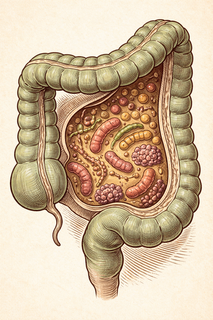
Disclaimer: The image accompanying this article is for illustrative purposes only and does not depict actual experimental results, data, or biological mechanisms.