In Ant-Man and the Wasp, the heroes discover that the key to saving the day isn't some galaxy-sized weapon - it's mastering the quantum realm, a world so tiny it makes atoms look like beach balls. Turns out, cancer researchers have been on a remarkably similar quest. Deep inside your cells, organelles smaller than a speck of dust are splitting and merging in a nonstop microscopic dance - and learning to control that dance might be one of the wildest new strategies for beating cancer.
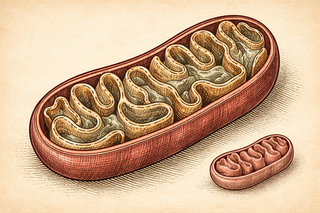
Your Mitochondria Are Doing Parkour Right Now
You probably remember mitochondria as "the powerhouse of the cell" from biology class. What your textbook left out is that these little energy factories are extremely dramatic. They don't just sit there generating ATP like boring batteries. They're constantly fusing together into long spaghetti-like networks and then snapping apart into tiny individual beans. This process - mitochondrial dynamics - isn't random fidgeting. It's how cells control their metabolism, decide whether to live or die, and even communicate with their neighbors [1].
And cancer cells? They've hacked the system.
Cancer Cells Are Playing Both Sides
A new review in Trends in Cell Biology by Cao, Yang, Shen, Hu, and Gao lays out just how sneaky tumors get with mitochondrial dynamics [1]. Cancer cells crank up mitochondrial fission (the splitting part) to turbocharge their growth and survival. When mitochondria fragment, it rewires the cell's entire metabolic playbook - shifting energy production, dodging programmed cell death, and even helping cancer cells pack up and metastasize to new organs like the worst houseguests imaginable.
But here's where it gets truly devious. Ramping up fission doesn't just help tumor cells thrive - it actively sabotages your immune system. A landmark Nature Communications study showed that excessive mitochondrial fission triggers a stress response that strips MHC-I molecules off cancer cell surfaces [2]. MHC-I is basically your cell's ID badge that tells T cells, "Hey, I'm normal, don't eat me" - or, crucially, "Something's wrong, come deal with this." Without that badge, cancer cells become invisible to the immune system's hit squad.
And it gets worse. A jaw-dropping 2025 Nature paper revealed that cancer cells literally donate their broken mitochondria to nearby T cells [3]. These transferred mitochondria carry mutant DNA and come packaged with molecules that prevent the T cell from trashing them. The result? Your best immune soldiers end up metabolically crippled, aging prematurely, unable to do their jobs. It's like a spy dropping a virus into the enemy's computer network from the inside.
The Two-For-One Therapeutic Deal
This is where the review gets genuinely exciting. Targeting mitochondrial dynamics isn't just about attacking the tumor - it's a two-front war. Block excessive fission in cancer cells (using compounds like Mdivi-1, which inhibits the fission protein DRP1), and you simultaneously restore MHC-I expression on tumor surfaces AND prevent the metabolic sabotage of immune cells [2]. One drug target, two massive therapeutic effects. That's the kind of efficiency that would make any pharmacologist weep with joy.
Meanwhile, boosting mitochondrial fusion in T cells could supercharge their cancer-killing abilities by improving their energy production and longevity inside the hostile tumor microenvironment [4]. Think of it as giving your immune cells a bigger gas tank for a longer fight.
So Where Are We Actually?
Before you start chugging mitochondrial supplements (please don't), some reality: we're still mostly in preclinical territory. DRP1 inhibitors have shown impressive results in mouse models, but no registered clinical trials exist yet as of 2026 [5]. The main hurdles are specificity - making sure you're disrupting mitochondrial dynamics in cancer cells without wrecking the process in healthy ones - and the sheer diversity of how different cancers exploit these pathways.
Still, the momentum is real. Researchers recently demonstrated that transplanting healthy mitochondria into lung tumors shrank them dramatically in mice while boosting immune cell infiltration [6]. And computational tools for mapping mitochondrial networks at single-cell resolution are advancing fast, which could help identify which patients would benefit most from these approaches.
The Bottom Line
Mitochondrial dynamics is shaping up to be one of those rare therapeutic angles that hits cancer from multiple directions at once: disrupting the tumor's own survival machinery while simultaneously unleashing the immune system that the tumor worked so hard to suppress. It's elegant, it's promising, and it proves once again that the tiniest things in biology often hold the biggest surprises.
Your mitochondria have been doing parkour this whole time. Maybe it's time we started coaching them.
References
-
Cao YL, Yang CP, Shen B, Hu J, Gao S. Targeting mitochondrial dynamics against cancer. Trends in Cell Biology. 2026. DOI: 10.1016/j.tcb.2026.03.006. PMID: 41935920.
-
Mitochondrial fission induces immunoescape in solid tumors through decreasing MHC-I surface expression. Nature Communications. 2022;13:3882. DOI: 10.1038/s41467-022-31417-x. PMCID: PMC9259736.
-
Ikeda H, Kawase K, Nishi T, et al. Immune evasion through mitochondrial transfer in the tumour microenvironment. Nature. 2025;638:225-236. DOI: 10.1038/s41586-024-08439-0. PMID: 39843734.
-
Mitochondrial regulation in the tumor microenvironment: targeting mitochondria for immunotherapy. Frontiers in Immunology. 2024;15:1453886. DOI: 10.3389/fimmu.2024.1453886. PMCID: PMC11562472.
-
Iwata W, Haggerty N, Sesaki H, Iijima M. Targeting mitochondrial structure and dynamics for therapeutic intervention in cancer. PLOS Biology. 2025;23(10):e3003453. DOI: 10.1371/journal.pbio.3003453. PMCID: PMC12543139.
-
Du H, Xu T, Yu S, et al. Mitochondrial metabolism and cancer therapeutic innovation. Signal Transduction and Targeted Therapy. 2025;10:245. DOI: 10.1038/s41392-025-02311-x. PMCID: PMC12319113.
Disclaimer: The image accompanying this article is for illustrative purposes only and does not depict actual experimental results, data, or biological mechanisms.