A fly on the wall in the offices of JAMA this spring would have witnessed something remarkable: a polite but pointed academic cage match over one of the biggest questions in cancer medicine. On one side, three epidemiologists - Frerik Smit, Jay Kaufman, and Arnaud Chiolero - raising an eyebrow at the WISDOM trial's promise of smarter, risk-based breast cancer screening. On the other side, the WISDOM investigators firing back. The stakes? How we screen roughly half the planet for one of the most common cancers on Earth.
Think of it like the Avengers: Civil War of oncology. Everybody wants the same thing - fewer women dying of breast cancer - but they fundamentally disagree on how to get there.
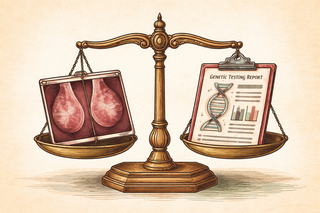
The Screening Saga So Far
Here's the quick-and-dirty recap. For decades, the strategy was simple: mammograms for everyone, start around 40 or 50, repeat every year or two. The USPSTF updated its guidelines in 2024, now recommending biennial mammography starting at age 40 for all women through age 74 (Siu et al., 2024; DOI: 10.1001/jama.2024.5534). Straightforward, right? Like Netflix's "Are you still watching?" prompt, except the answer should always be yes.
But this one-size-fits-all approach has a villain lurking in the background, and its name is overdiagnosis - finding cancers that would never have caused trouble if left alone. A meta-analysis of 30 studies pegged the overdiagnosis rate at about 12.6%, though estimates swing wildly from under 1% to over 50% depending on who's counting and how (Defined et al., 2023; PMCID: PMC10051653). That means for roughly 1 in 8 screen-detected cancers, the tumor was basically the biological equivalent of a Game of Thrones character who gets introduced but never actually does anything.
Enter the WISDOM Trial
The WISDOM trial showed up like a Marvel post-credits scene, teasing a whole new approach. This massive randomized trial - 28,372 women across all 50 US states - tested whether tailoring screening intensity to individual risk (using genetic testing, polygenic risk scores, and clinical models) could work as well as annual mammography (Esserman et al., 2025; DOI: 10.1001/jama.2025.0290).
The results, published in JAMA in December 2025, were genuinely intriguing. Risk-based screening was noninferior - meaning it worked just as well at catching the dangerous cancers. Better yet, women in the highest-risk group who got screened every six months with alternating mammography and MRI had zero stage IIB or higher cancers detected. Zero. That's a plot twist even M. Night Shyamalan would respect.
The Plot Thickens: Smit, Kaufman & Chiolero Weigh In
Here's where our JAMA paper enters the chat. Smit, Kaufman, and Chiolero acknowledged the WISDOM trial's ambition but essentially asked: does risk-based screening actually solve the overdiagnosis problem, or just rearrange the deck chairs on the Titanic? (Smit et al., 2026; DOI: 10.1001/jama.2026.1266).
Their concern is sharp and worth sitting with. Individualized screening sounds great - like getting a custom Spotify playlist instead of the same Top 40 station. But if the underlying issue is that mammograms catch slow-growing tumors that would never kill you, then screening smarter doesn't necessarily mean screening less harmfully. You're still finding things that didn't need finding. The algorithm got better at sorting the mail, but nobody asked whether some of those letters should have been sent at all.
Why This Actually Matters to You
If you've ever gotten a callback after a mammogram, you know the specific flavor of dread that follows. About 50% more false positives come with annual versus biennial screening, and each one carries real psychological weight - not to mention biopsies, follow-up imaging, and sometimes treatment for cancers that were never going to be a problem.
This debate isn't just ivory-tower bickering. It's about whether the next generation of screening can thread a genuinely difficult needle: catching the aggressive cancers that kill while leaving the indolent ones alone. It's the difference between a security system that catches burglars and one that also calls the SWAT team every time a squirrel crosses the lawn.
The Road Ahead
The WISDOM investigators responded that a one-size-fits-all approach is "increasingly anachronistic" and that risk stratification can simultaneously improve detection and reduce harm (Esserman et al., 2026; DOI: 10.1001/jama.2026.1269). Meanwhile, AI is entering the scene - the 2026 NCCN guidelines now include the first FDA-authorized AI tool for predicting individual 5-year breast cancer risk from routine mammograms.
The honest answer is that nobody has fully cracked this yet. But the fact that some of the sharpest minds in epidemiology and oncology are publicly hashing it out in JAMA? That's exactly how science is supposed to work. Less like a courtroom, more like a writer's room - everyone pitching ideas, poking holes, and trying to make the final product better.
Your takeaway: screening saves lives, but the how, when, and how often are still being fine-tuned. Talk to your doctor, know your risk factors, and don't skip your mammograms. The debate is about making screening better, not about whether you should do it.
References
-
Smit F, Kaufman JS, Chiolero A. Screening for Breast Cancer. JAMA. Published April 6, 2026. DOI: 10.1001/jama.2026.1266
-
Esserman LJ, Eklund M, Olopade OI, et al. Risk-Based vs Annual Breast Cancer Screening: The WISDOM Randomized Clinical Trial. JAMA. 2025;335(2):123-133. DOI: 10.1001/jama.2025.0290. PMID: 41385349
-
Esserman LJ, Olopade OI, Eklund M. Screening for Breast Cancer - Reply. JAMA. Published April 6, 2026. DOI: 10.1001/jama.2026.1269
-
US Preventive Services Task Force. Screening for Breast Cancer: US Preventive Services Task Force Recommendation Statement. JAMA. 2024;331(22):1918-1930. DOI: 10.1001/jama.2024.5534
-
Defined M, et al. Overdiagnosis Due to Screening Mammography for Breast Cancer among Women Aged 40 Years and Over: A Systematic Review and Meta-Analysis. Cancers. 2023;15(6):1691. PMCID: PMC10051653
Disclaimer: The image accompanying this article is for illustrative purposes only and does not depict actual experimental results, data, or biological mechanisms.