Estrogen Patches for Prostate Cancer? Yep, You Read That Right.
Somewhere in a parallel timeline, a scientist is pitching this idea at a conference: "So, we're going to treat prostate cancer - the most male of male cancers - with estrogen patches. The ones you stick on your skin." The room goes quiet. Someone nervously adjusts their tie.
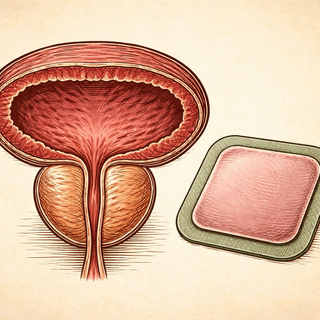
But here we are, in the real timeline, and it works. A massive trial just proved it. Welcome to the beautiful, weird world of hormone-based cancer therapy.
The Backstory No One Tells You
Doctors have actually known that estrogen suppresses testosterone since the 1940s. Back then, a synthetic estrogen called diethylstilbestrol (DES) was the go-to treatment for prostate cancer. One problem: swallowing estrogen pills dramatically increased the risk of fatal blood clots and heart attacks. Oral estrogen gets metabolized through the liver on its "first pass," and that process cranks up clotting factors like someone turned the dial to eleven. So DES fell out of favor, and LHRH agonists (drugs like goserelin and leuprolide) took over as the standard testosterone-suppression therapy.
But LHRH agonists come with their own baggage. By shutting down testosterone, they also wipe out estradiol - the form of estrogen that men's bodies naturally produce in small amounts. Turns out, men actually need some estrogen. Without it, bones start thinning at an alarming rate (up to 17% bone mineral density loss within two years), hot flashes become a near-constant companion, and metabolic syndrome creeps in like an uninvited houseguest who eats everything in your fridge (Nguyen et al., 2015).
So the question became: what if we could deliver estrogen through the skin, bypass the liver entirely, suppress testosterone just as well, and keep estrogen levels healthy?
The PATCH Trial: 15 Years in the Making
The trial published this week in the New England Journal of Medicine answers that question definitively. Between 2007 and 2022, researchers across 75 U.K. centers enrolled 1,360 men with locally advanced prostate cancer and randomized them to either transdermal estradiol patches (four small patches delivering 100 micrograms of estradiol daily) or standard LHRH agonists (Langley et al., 2026).
The headline result: transdermal estradiol was noninferior to LHRH agonists for 3-year metastasis-free survival - 87.1% versus 85.9%. Statistically indistinguishable. The patches did the job.
Even more intriguing, 5-year overall survival trended in favor of the patches: 81.1% versus 79.2%, though the difference wasn't statistically significant. The hazard ratio for death was 0.90, which means - while we can't call it definitive - there's a hint that patches might actually be better at keeping people alive.
The Side Effect Swap
Here's where it gets interesting, and where patients actually get a choice.
Hot flashes - the bane of nearly every man on LHRH agonists - hit 89% of the standard therapy group. With patches? Just 44%. Grade 2 or worse hot flashes (the kind that soak your sheets and ruin your sleep) dropped from 37% to 8%. That's not a small improvement. That's a different life.
On the flip side, gynecomastia - breast tissue enlargement - showed up in 85% of men on patches compared to 42% on LHRH agonists. Significant grade 2 events (meaning noticeable, bothering you) were 37% versus 9%.
So the trade is real: fewer hot flashes, more breast tenderness. Both affect quality of life. But critically, patients now have a choice they didn't have before - and that choice should be informed by what matters most to each individual.
The Hidden Bonus: Bones and Hearts
Two things that don't make the headline but absolutely should: the patches appear to protect bones and hearts.
Standard LHRH agonists drain estrogen from the male body, triggering rapid bone density loss and increasing fracture risk up to sixfold (Lassemillante et al., 2015). Transdermal estradiol, by maintaining circulating estrogen levels, promotes bone preservation from day one - DEXA scans in the PATCH trial confirmed this, potentially eliminating the need for bone-protective drugs like bisphosphonates.
And the blood clot concern from old oral estrogen days? Long-term cardiovascular data from the PATCH program showed no excess cardiovascular mortality or morbidity with transdermal delivery (Langley et al., 2021). The skin route bypasses liver metabolism, keeping clotting factors in check. Problem solved.
Why This Matters Beyond the Numbers
Prostate cancer is the second most common cancer in men worldwide. Millions of men are on androgen-deprivation therapy right now, many dealing with hot flashes, bone loss, fatigue, and metabolic changes that erode quality of life year after year.
This trial - 15 years of data, 1,360 patients, published in the most prestigious medical journal on Earth - just validated a cheap, generic, off-patent alternative that works just as well, protects bones, spares patients from debilitating hot flashes, and doesn't increase heart risk. The patches cost a fraction of monthly LHRH agonist injections.
It's not a cure. It's not a breakthrough therapy that attacks cancer in some novel way. It's something arguably more important: a better option for living with treatment. And sometimes, that's exactly what matters most.
References:
-
Langley RE, Gilbert DC, Mangar S, et al. Transdermal Estradiol Patches in Locally Advanced Prostate Cancer. N Engl J Med. 2026. DOI: 10.1056/NEJMoa2511781. PMID: 41880608
-
Langley RE, Gilbert DC, Duong T, et al. Transdermal oestradiol for androgen suppression in prostate cancer: long-term cardiovascular outcomes from the randomised Prostate Adenocarcinoma Transcutaneous Hormone (PATCH) trial programme. Lancet. 2021;397(10274):581-591. DOI: 10.1016/S0140-6736(21)00100-8. PMID: 33581820. PMCID: PMC7614681
-
Langley RE, Gilbert DC, Nankivell M, et al. A Repurposing Programme Evaluating Transdermal Oestradiol Patches for the Treatment of Prostate Cancer Within the PATCH and STAMPEDE Trials. Clin Oncol (R Coll Radiol). 2024;36(2):100-108. DOI: 10.1016/j.clon.2023.11.005. PMID: 37973477
-
Nguyen PL, Alibhai SMH, Basaria S, et al. Adverse effects of androgen deprivation therapy and strategies to mitigate them. Eur Urol. 2015;67(5):825-836. DOI: 10.1016/j.eururo.2014.07.010. PMID: 25097095
-
Lassemillante ACM, Doi SAR, Hooper JD, et al. Androgen-deprivation therapy and bone loss in prostate cancer patients: a clinical review. Bonekey Rep. 2015;4:716. PMCID: PMC4478875
Disclaimer: The image accompanying this article is for illustrative purposes only and does not depict actual experimental results, data, or biological mechanisms.
Get cancer research delivered to your inbox
The best new studies, explained without the jargon. One email per week.