A tumor is not just a ball of bad cells. It is a construction project. From the moment a cancer establishes itself, it starts remodeling the surrounding tissue into a custom-built ecosystem designed for one purpose: keeping the tumor alive and the immune system out. Oncologists call this the tumor microenvironment (TME), and understanding it has become one of the most important problems in cancer biology.
The Neighborhood Nobody Asked For
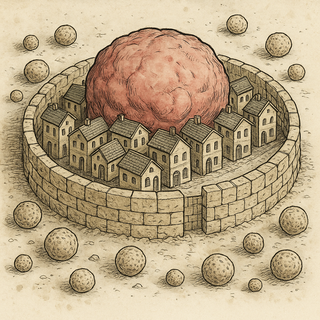
Think of a healthy tissue as a well-run neighborhood. Cells communicate, follow rules, and the immune system patrols like a competent police force. Now imagine one household goes rogue, starts bribing the cops, building walls, rerouting the plumbing, and paying the neighbors to look the other way. That is roughly what a tumor does.
The TME includes cancer cells, immune cells (both helpful and corrupted), fibroblasts, blood vessels, signaling molecules, and a physical scaffold called the extracellular matrix. Every component gets co-opted or remodeled to serve the tumor.
Immune Cells That Switched Sides
The most infuriating thing about the TME is that it is full of immune cells. They are right there. But instead of killing the cancer, many of them have been reprogrammed to protect it.
Regulatory T cells (Tregs) accumulate in the TME and actively suppress anti-tumor immune responses. Myeloid-derived suppressor cells (MDSCs) show up in large numbers and shut down the T cells that could actually do damage. Tumor-associated macrophages (TAMs) - which should be eating cancer cells - get flipped to an M2 phenotype that promotes tumor growth, builds blood vessels, and suppresses inflammation.
The tumor orchestrates this by flooding the area with immunosuppressive cytokines like TGF-beta, IL-10, and VEGF. It is essentially running a propaganda campaign at the molecular level, convincing immune cells that everything is fine and there is nothing to see here.
The Blood Supply Problem
Tumors need oxygen and nutrients, so they stimulate new blood vessel formation through angiogenesis. But tumor-driven angiogenesis is sloppy. The resulting vessels are leaky, disorganized, and structurally abnormal, creating areas of low oxygen (hypoxia) that - in a particularly cruel twist - make the cancer more aggressive and more resistant to treatment.
Hypoxia activates HIF-1 alpha, upregulating genes involved in survival and immune evasion. The low-oxygen zones become dead zones for immune cells, which need oxygen to function. So the tumor's own incompetent plumbing creates immune-privileged sanctuaries. Anti-angiogenic drugs like bevacizumab were designed to cut off the blood supply, but in practice they often "normalize" the vasculature - paradoxically improving immune cell infiltration. Some oncologists now use anti-angiogenics specifically to make immunotherapy work better.
The Physical Barriers
Cancer-associated fibroblasts (CAFs) are another piece of the puzzle. These cells produce dense extracellular matrix, essentially building a physical wall around the tumor. This desmoplastic reaction is especially prominent in pancreatic cancer, where the stroma can make up the majority of the tumor mass. Drugs literally cannot get through.
CAFs also secrete growth factors and chemokines that promote cancer survival and immune exclusion. They are not innocent bystanders; they are active collaborators.
Why This Matters for Treatment
The TME is the reason immunotherapy does not work for everyone. Checkpoint inhibitors like anti-PD-1 and anti-CTLA-4 remove molecular brakes on T cells, but if T cells cannot physically reach the tumor, or if the local environment exhausts them on arrival, removing the brakes does nothing. Oncologists categorize tumors as "hot" (immune-infiltrated, likely to respond to immunotherapy) or "cold" (immune-excluded or immune-desert, unlikely to respond).
The entire next generation of cancer therapy is arguably about converting cold tumors to hot ones. Strategies include oncolytic viruses that trigger local inflammation, bispecific antibodies that drag T cells into tumors, STING agonists that activate innate immunity at the tumor site, and radiation therapy used as an immune adjuvant rather than just a direct cell killer.
The Mapping Problem
The TME is not one thing. It varies between cancer types, between patients, within a single tumor, and over time during treatment. Single-cell sequencing and spatial transcriptomics are revealing the TME at extraordinary resolution - mapping which cell types sit where and how they interact.
The data is staggering, and making sense of it requires serious tools. If you need to organize the conceptual relationships between TME components, cell types, and therapeutic targets, a visual thinking tool like mapb2.io can turn the complexity into something a human brain can actually parse.
The TME is not a bystander in cancer. It is an active participant, and treating the neighborhood - not just the tumor cells - is where oncology is headed.
References
- Binnewies M, Roberts EW, Kersten K, et al. Understanding the tumor immune microenvironment (TIME) for effective therapy. Nat Med. 2018;24(5):541-550. DOI: 10.1038/s41591-018-0014-x | PMID: 29686425
- de Visser KE, Joyce JA. The evolving tumor microenvironment: From cancer initiation to metastatic outgrowth. Cancer Cell. 2023;41(3):374-403. DOI: 10.1016/j.ccell.2023.02.016 | PMID: 36917948
Disclaimer: This blog post is for informational and educational purposes only. It is not medical advice. Always consult a qualified healthcare professional for clinical decisions.
Get cancer research delivered to your inbox
The best new studies, explained without the jargon. One email per week.