A tumor walks into a pathology lab. The pathologist says, "I know exactly what grade you are." The tumor replies, "Are you sure about that?" Turns out, the tumor might have a point.
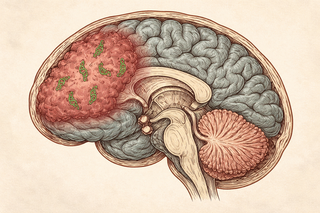
For years, doctors have been grading IDH-mutant astrocytomas - a type of brain tumor that tends to show up in younger adults - using a fairly straightforward playbook. Look at the cells under a microscope. Check for a specific genetic deletion called CDKN2A/B. Slap on a grade 2, 3, or 4. Done.
But here's the thing: nearly 18% of tumors that looked like they should be lower-grade were actually hiding genetic troublemakers that nobody was routinely checking for. A massive new study published in Neuro-Oncology just exposed these molecular wolves in sheep's clothing.
The Genetic Lineup You've Never Heard Of
Researchers from Mount Sinai, UT Southwestern, and a dozen other institutions analyzed over 1,200 astrocytoma cases across two independent groups. Their mission: figure out which genetic alterations actually predict how long patients survive, beyond the usual suspects.
The winners (or losers, depending on your perspective) of this molecular lottery include:
- CDK4 amplification - basically the tumor hitting the gas pedal on cell division
- CCND2 amplification - another accelerator, because one apparently wasn't enough
- PDGFRA alterations - growth factor signaling gone haywire
- PIK3R1 mutations - messing with a key cellular pathway
- MYCN amplification - a gene so notorious it's named after a cancer
- EGFR alterations - the same troublemaker that shows up in lung cancer
In other words, these tumors had assembled an all-star team of bad molecular actors, and nobody was checking their credentials at the door.
The Middle Children of Brain Tumors
Here's where it gets clinically important. Patients whose tumors carried one or more of these alterations - but didn't qualify for grade 4 by traditional criteria - landed in a strange middle ground. Their median survival was 67 to 82 months, compared to 135-141 months for "clean" grade 2/3 tumors and just 35-45 months for grade 4.
Basically, these patients were being told their tumors were relatively chill when, molecularly speaking, their tumors were anything but.
"We've been missing a significant chunk of high-risk patients," the findings suggest. When nearly one in five lower-grade tumors secretly carries aggressive molecular features, that's not a rounding error - that's a systematic blind spot.
Why Grading Systems Need a Software Update
The World Health Organization's current brain tumor classification - the 5th edition, released in 2021 - was a massive step forward. It finally incorporated molecular markers like IDH mutations and CDKN2A/B deletions into the grading criteria, moving beyond just squinting at cells through a microscope.
But molecular biology moves fast. The genetic alterations identified in this study weren't random picks from a hat. Previous research had already flagged CDK4 and PDGFRA alterations as concerning in other glioma subtypes. This study just proved they matter for IDH-mutant astrocytomas specifically - and provided the survival data to back it up.
The authors are essentially making a case for Grading System 2.0: add these six molecular markers to the diagnostic checklist, and you'll catch the patients who are currently slipping through the cracks.
What This Means for Actual Humans
If you or someone you know has been diagnosed with an IDH-mutant astrocytoma, this research has practical implications. Asking whether comprehensive molecular profiling was performed - including these newly identified markers - could provide more accurate prognostic information.
For clinicians, the message is clear: a grade 2 or 3 label doesn't always tell the whole story. Patients with these molecular red flags might benefit from more aggressive monitoring or treatment approaches typically reserved for higher-grade tumors.
The gap between "your tumor looks calm" and "your tumor is plotting something" can apparently be hidden in genes we weren't routinely testing.
The Bigger Picture
This study exemplifies how cancer classification is becoming increasingly molecular rather than purely morphological. Looking at a tumor under a microscope tells you what it looks like today. Reading its genetic code tells you what it's capable of becoming.
The researchers validated their findings across two completely independent patient cohorts - the gold standard for showing that results aren't just statistical flukes. When 840 patients in one group and 367 in another show the same patterns, the biology is trying to tell us something.
Future WHO classification updates will likely need to incorporate these findings. Until then, the data is there for pathologists and oncologists willing to dig deeper into the molecular weeds.
References:
-
Virata MC, Samanamud J, Slocum CC, et al. Expanding the molecular grading criteria in IDH-mutant astrocytoma. Neuro-Oncology. 2025. DOI: 10.1093/neuonc/noag069 PMID: 41903203
-
Louis DN, Perry A, Wesseling P, et al. The 2021 WHO Classification of Tumors of the Central Nervous System: a summary. Neuro-Oncology. 2021;23(8):1231-1251. DOI: 10.1093/neuonc/noab106 PMCID: PMC8328013
-
Shirahata M, Ono T, Stichel D, et al. Novel, improved grading system(s) for IDH-mutant astrocytic gliomas. Acta Neuropathologica. 2018;136(2):153-166. DOI: 10.1007/s00401-018-1849-4 PMCID: PMC6061172
-
Brat DJ, Aldape K, Colman H, et al. cIMPACT-NOW update 5: recommended grading criteria and terminologies for IDH-mutant astrocytomas. Acta Neuropathologica. 2020;139(3):603-608. DOI: 10.1007/s00401-020-02127-9 PMCID: PMC7046585
Disclaimer: The image accompanying this article is for illustrative purposes only and does not depict actual experimental results, data, or biological mechanisms.
Get cancer research delivered to your inbox
The best new studies, explained without the jargon. One email per week.