In Memoriam: Traditional Protein Inhibition (1970s - 2026)
Beloved by pharmaceutical companies, tolerated by patients, and increasingly irrelevant in oncology circles, the venerable approach of "just slapping a small molecule onto a protein and hoping it stops doing bad things" has finally been laid to rest. Survived by its more sophisticated descendants - PROTACs, LYTACs, and now an upstart newcomer called Group-Transfer Chimeras - traditional inhibition is remembered for its decades of service, even when that service was... mediocre at best.
Meet the GRCs: The Decorator You Never Knew Proteins Needed
Here's the situation: your cells are covered in proteins, and some of those proteins are basically wearing "CANCER WELCOME" signs. Traditional immunotherapy says, "Let's train T cells to recognize these bad actors." But what if the cancer cells aren't expressing the right targets? What if they've gotten sneaky?
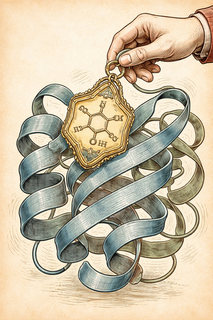
Researchers from Amit Choudhary's lab at Harvard have introduced something rather clever - Group-Transfer Chimeras, or GRCs. These molecular matchmakers don't just block proteins or destroy them. Instead, they hang decorations on them. Specifically, they attach new chemical groups to lysine residues - those conveniently located amino acids that apparently sit near every protein's binding pocket like overeager greeters at a department store.
The decorations aren't tinsel. They're molecular tags - things like HaloTag or FKBP binders - that essentially turn cancer cells into walking targets for T cell engagers. It's like putting a flashing neon sign on cancer cells that says "HEY T CELLS, OVER HERE."
The Technical Bit (Stay With Me)
Nature has been doing post-translational modifications for approximately forever. Cells routinely slap chemical groups onto proteins to change how they interact with their neighbors. The Choudhary team thought: what if we could hijack this process with small molecules?
The catch was that existing lysine-targeting chemistry was, to put it charitably, a mess. Too unstable in water. Too bulky. Too reactive at the wrong times. So they developed something called SuFA - an N-(sulfonyl)-N-(trifluoroethyl)-ethanamide handle. It's small, stable, plays nicely with different protein-targeting ligands, and most importantly, it actually works.
GRCs use a protein's own ligand as an address label, then employ the SuFA handle to permanently attach a tag to a nearby lysine. The result: cancer cells now display foreign tags on their surface, visible to the immune system.
The Universal T Cell Engager Play
Here's where it gets genuinely interesting. The team paired their GRCs with a "Universal T cell Engager" (UniTE) - a bispecific molecule that grabs both the displayed tag and CD3 on T cells. Bispecific T cell engagers have been making waves in hematological cancers, with drugs like blinatumomab already approved for acute lymphocytic leukemia. But they require cancer cells to naturally express specific antigens.
The GRC-UniTE combination sidesteps this limitation. First, GRCs paint cancer cells with tags they wouldn't normally display. Then UniTE recognizes those tags and drags cytotoxic T cells into the fray. The T cells activate, release their cellular destruction toolkit (perforins, granzymes, the whole murderous ensemble), and the cancer cells meet their end.
It's a two-step dance: decorate, then destroy.
Why This Matters Beyond the Cleverness
The PROTAC revolution showed us that targeted protein degradation could work clinically. But degradation isn't always the answer - sometimes you want to add function, not subtract it. Post-translational modifications like phosphorylation, acetylation, and ubiquitination regulate nearly every cellular process. The ability to pharmacologically write new PTMs onto specific proteins opens therapeutic avenues that pure inhibition or degradation can't reach.
GRCs represent a philosophical shift: from blocking and destroying to editing and decorating. The cancer cell's identity doesn't change, but its surface presentation does - just enough to become visible to a properly armed immune system.
The Fine Print
This is early-stage work. The chemistry needs optimization for clinical translation. The SuFA handles need to prove themselves in more complex biological environments. And we've all watched promising platforms stumble between proof-of-concept and phase III trials often enough to maintain appropriate skepticism.
But the underlying logic is sound, the chemistry is elegant, and the therapeutic concept addresses a genuine limitation of current immunotherapy approaches. Sometimes the best way forward isn't to destroy your enemies - it's to make sure everyone can see them.
References
-
Singh S, et al. (2026). Lysine Targeting Group-Transfer Chimeras for Proximity Induction. Angewandte Chemie International Edition. DOI: 10.1002/anie.202512131
-
Targeted protein degradation for cancer therapy. Nature Reviews Cancer (2025). https://www.nature.com/articles/s41568-025-00817-8
-
Post-translational modifications and their implications in cancer. Frontiers in Oncology (2023). PMCID: PMC10546021
-
Bispecific T cell engagers for cancer immunotherapy. Immunology and Cell Biology (2015). PMCID: PMC4445461
-
Immune Cell Engagers: Advancing Precision Immunotherapy for Cancer Treatment. International Journal of Molecular Sciences (2025). PMCID: PMC11843982
Disclaimer: The image accompanying this article is for illustrative purposes only and does not depict actual experimental results, data, or biological mechanisms.