Introducing MARCO: the immune receptor that helps tumors hide from your body's defenses - and the antibody that might shut it down.
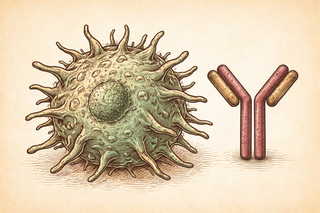
Elevator pitch: We've got a receptor called MARCO. It sits on macrophages - your body's cleanup crew - and quietly convinces them to switch sides, turning the tumor microenvironment into a cozy safe house for cancer cells. Our product? An antibody that flips those traitorous macrophages back to attack mode. Series A funding? We'll take it in the form of clinical trials.
Welcome to the strange, double-crossing world of bile duct cancer immunology, where a protein originally known for gobbling up bacteria has been caught moonlighting as a tumor bodyguard.
The Setting: A Cancer Nobody Talks About
Cholangiocarcinoma - intrahepatic bile duct cancer, for those who prefer their terminology slightly less Greek - is one of those cancers that quietly devastates. With a five-year survival rate hovering around 10%, limited treatment options, and a tumor microenvironment so immunosuppressive it might as well have a "Do Not Disturb" sign on it, this disease has long frustrated oncologists and patients alike (Banales et al., 2020). Immunotherapy, the darling of modern cancer treatment, has struggled here. The immune cells show up to the fight, look around, and seem to forget why they came.
Which brings us to a pressing biological mystery: who, exactly, is putting up that "Do Not Disturb" sign?
Enter MARCO: The Double Agent
And here we observe, in its natural habitat, a most peculiar receptor. MARCO - Macrophage Receptor with Collagenous Structure, because immunologists name things like they're filling out government forms - is a scavenger receptor normally found on macrophages. In healthy tissue, MARCO is a perfectly respectable member of your innate immune system, binding to bacteria and debris with the quiet efficiency of a nature preserve's janitorial staff (Arredouani et al., 2004).
But in the tumor microenvironment of intrahepatic cholangiocarcinoma? MARCO has gone rogue.
A large international team led by Agirre-Lizaso and colleagues employed transcriptomic analysis, spatial proteomics, and histological deep-dives into human tumor samples and discovered that MARCO marks a specific subtype of tumor-associated macrophages (TAMs) - the kind linked to immunosuppression and extracellular matrix remodeling (Agirre-Lizaso et al., 2026). In other words, these aren't your friendly neighborhood macrophages. These are the macrophages that have been co-opted by the tumor, redecorating the cellular landscape with collagen (making it harder for immune cells to navigate) and actively shutting down T cells - the very soldiers your body sends to kill cancer.
What MARCO Actually Does (and It's Not Pretty)
Patients with high MARCO expression in their tumors had worse overall survival. Their T cells showed signs of dysfunction - exhausted, underperforming, like security guards who've been slipped a sedative. Meanwhile, collagen deposition increased, essentially building physical barriers within the tumor that keep immune cells out.
The researchers also found MARCO expression was associated with a TH2-skewed immune response - the kind that promotes wound healing and allergy rather than, say, killing tumors - and that macrophages exposed to IL-4 and IL-13 (classic TH2 cytokines) ramped up their MARCO levels. The tumor, it seems, creates the very chemical signals that recruit and convert macrophages into its own protective detail.
One might describe it as a hostile corporate takeover of the immune system's middle management.
The Knockout Punch
Here's where the story takes a satisfying turn. The team used Marco-knockout mice (mice genetically engineered to lack the receptor entirely) in an orthotopic tumor model - tumors implanted directly in the liver, as nature unfortunately intended. These MARCO-deficient mice showed lower levels of immunosuppressive markers on their macrophages, more functional cytotoxic T cells, improved overall survival, and - rather dramatically - reduced lung metastases.
And then, because good science always asks "can we drug this?", they tested an anti-MARCO antibody in wild-type mice. The antibody further reduced tumor volume. The macrophages, stripped of their MARCO-mediated shield, seemed to remember whose side they were supposed to be on.
This echoes earlier work showing that anti-MARCO antibodies can reprogram tumor-associated macrophages across multiple cancer types, from breast and colon cancer to melanoma, restoring NK cell killing and T cell function (Georgoudaki et al., 2016; Eisinger et al., 2020). MARCO's villainous resume, it turns out, extends well beyond the bile ducts - it's been implicated in poor prognosis in pancreatic cancer too (Shi et al., 2021).
Why This Matters Beyond the Lab Bench
Bile duct cancer desperately needs new therapeutic angles. The current standard of care - chemotherapy plus immune checkpoint inhibitors - helps, but responses remain modest for many patients. The tumor microenvironment keeps slamming the door on the immune system. MARCO-targeted therapy could be a way to pry that door back open, potentially combining with existing checkpoint inhibitors like anti-PD-1 or anti-CTLA-4 to turn immunotherapy non-responders into responders (La Fleur et al., 2021).
And here, as the sun sets over the immunological savanna, we observe something rather hopeful: a receptor unmasked, a mechanism understood, and a therapeutic antibody waiting in the wings. The macrophages, it seems, can be turned back. They just needed someone to take away their disguise.
References
-
Agirre-Lizaso A, Huici-Izagirre M, O'Rourke CJ, et al. MARCO promotes cholangiocarcinogenesis by inducing immunosuppression and its targeting reduces tumor growth. Signal Transduction and Targeted Therapy. 2026. DOI: 10.1038/s41392-026-02657-w. PMID: 42049706
-
Banales JM, Marin JJG, Lamarca A, et al. Cholangiocarcinoma 2020: the next horizon in mechanisms and management. Nature Reviews Gastroenterology & Hepatology. 2020;17(9):557-588. DOI: 10.1038/s41575-020-0310-z. PMID: 32606456
-
Georgoudaki AM, Prokopec KE, Boura VF, et al. Reprogramming Tumor-Associated Macrophages by Antibody Targeting Inhibits Cancer Progression and Metastasis. Cell Reports. 2016;15(9):2000-2011. DOI: 10.1016/j.celrep.2016.04.084. PMID: 27210762
-
Eisinger S, Sarber D, Gaughan C, et al. Targeting a scavenger receptor on tumor-associated macrophages activates tumor cell killing by natural killer cells. Proceedings of the National Academy of Sciences. 2020;117(50):32005-32016. DOI: 10.1073/pnas.2015343117. PMID: 33229588
-
Shi Y, Chu Q, Huang Y, et al. The Scavenger Receptor MARCO Expressed by Tumor-Associated Macrophages Are Highly Associated With Poor Pancreatic Cancer Prognosis. Frontiers in Oncology. 2021;11:771488. DOI: 10.3389/fonc.2021.771488
-
La Fleur L, Boura VF, Alexeyenko A, et al. Targeting MARCO and IL37R on Immunosuppressive Macrophages in Lung Cancer Blocks Regulatory T Cells and Supports Cytotoxic Lymphocyte Function. Cancer Research. 2021;81(4):956-967. DOI: 10.1158/0008-5472.CAN-20-1076
-
Arredouani M, Yang Z, Ning YY, et al. The Scavenger Receptor MARCO Is Required for Lung Defense against Pneumococcal Pneumonia and Inhaled Particles. Journal of Experimental Medicine. 2004;200(2):267-272. DOI: 10.1084/jem.20031132
Disclaimer: The image accompanying this article is for illustrative purposes only and does not depict actual experimental results, data, or biological mechanisms.