Let me tell you about a molecular con artist that's been flying under the radar for years.
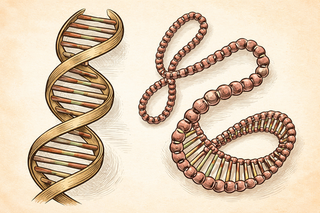
Glioblastoma, the most aggressive brain cancer, has a well-known villain: a mutated protein called EGFR. It's overproduced in about half of all glioblastoma cases, often riding around on weird little circular DNA fragments called extrachromosomal DNAs (ecDNAs) that tumors use to crank out extra copies of their favorite cancer-promoting genes. Pharmaceutical companies have thrown everything they've got at EGFR. The result? A whole lot of expensive clinical trials and not much to show for them.
Researchers have been scratching their heads over this for years. EGFR inhibitors work beautifully in lung cancer. Why does glioblastoma keep shrugging them off?
A team led by scientists at Northwestern University just caught the accomplice red-handed.
Meet HELDR, the Sneaky Passenger
When cells copy extra chunks of DNA containing EGFR, they're not just grabbing the famous oncogene - they're also scooping up some genetic material next door. Tucked in that neighborhood is a long non-coding RNA (lncRNA) the researchers have dubbed HELDR, short for "hidden EGFR long non-coding downstream RNA."
LncRNAs are the mysterious middle children of genetics. They don't code for proteins like regular genes, but they're not just genetic junk either. HELDR, it turns out, has been quietly running its own tumor-promoting operation completely independent of EGFR.
Here's the kicker: you could shut down EGFR entirely, and HELDR would still be in the background, cheerfully helping the tumor grow. It's like arresting the getaway driver while the actual bank robber walks out the front door.
How HELDR Pulls the Strings
The Northwestern team found that HELDR doesn't just float around doing nothing. It parks itself on chromatin - the densely packed DNA-protein complex inside cell nuclei - and recruits a protein called p300 to the promoter of another gene called KAT7.
If that sounds like a lot of abbreviations, here's the simple version: HELDR acts like a crooked recruiter, bringing in p300 to flip on the KAT7 gene. KAT7 then goes to work adding chemical tags to histones (the protein spools that DNA wraps around), which opens up the chromatin and activates a whole cascade of genes that help the tumor survive and spread.
It's a molecular Rube Goldberg machine, but the end result is straightforward: more aggressive cancer.
The Combination Punch
The really exciting part of this study isn't just the discovery of HELDR - it's what happens when you target it alongside EGFR.
When the researchers blocked either KAT7 or HELDR in tumor models, then added EGFR-targeting drugs, the treatment effects were dramatically enhanced. The tumors that had been shrugging off EGFR inhibitors suddenly became vulnerable.
This makes a frustrating amount of sense in hindsight. We've been trying to take down glioblastoma by targeting its most obvious vulnerability while ignoring the backup system running in parallel. It's like trying to stop a flood by plugging one hole in the dam while water pours through another.
Why This Matters Beyond Glioblastoma
EGFR isn't the only oncogene that gets amplified on ecDNAs. The same phenomenon happens with MYC, CDK4, and other cancer-driving genes across multiple tumor types. If HELDR is any indication, there could be dozens of co-amplified lncRNAs quietly contributing to drug resistance in cancers we thought we understood.
The study raises an uncomfortable question for the field: how many other "hidden" passengers have we been ignoring while laser-focused on the famous oncogenes?
The Road Ahead
Before anyone gets too excited, this is still early-stage research. Moving from mouse models to human patients involves navigating a minefield of safety testing, dosing challenges, and the eternal problem of getting drugs across the blood-brain barrier. Glioblastoma has humbled plenty of promising therapies before.
But the core insight here is valuable regardless of whether HELDR itself becomes a drug target. The study suggests that when we see amplified oncogenes, we should be asking what else got copied along for the ride. Cancer genomes are messy, and the mess might matter more than we thought.
For now, HELDR joins a growing list of lncRNAs caught misbehaving in cancer - and serves as a reminder that sometimes the real troublemaker isn't the one making all the noise.
References
-
Yu X, Song X, Schäfer RA, et al. An EGFR co-amplified lncRNA HELDR promotes glioblastoma malignancy through KAT7-driven gene programs. Nature Cell Biology. 2026. DOI: 10.1038/s41556-026-01924-w. PMID: 41896311
-
Nathanson DA, Gini B, Mottahedeh J, et al. Targeted therapy resistance mediated by dynamic regulation of extrachromosomal mutant EGFR DNA. Science. 2014;343(6166):72-76. DOI: 10.1126/science.1241328. PMID: 24310612
-
Schmitt AM, Chang HY. Long Noncoding RNAs in Cancer Pathways. Cancer Cell. 2016;29(4):452-463. DOI: 10.1016/j.ccell.2016.03.010. PMID: 27070700
-
Turner KM, Deshpande V, Beber D, et al. Extrachromosomal oncogene amplification drives tumour evolution and genetic heterogeneity. Nature. 2017;543(7643):122-125. DOI: 10.1038/nature21356. PMID: 28178237
Disclaimer: The image accompanying this article is for illustrative purposes only and does not depict actual experimental results, data, or biological mechanisms.