Picture a team of scientists sitting around a lab bench, staring at cancer's playbook, and thinking: "What if we built something that attacks from three directions at once?"
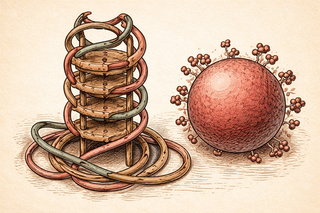
That's exactly what happened. And the result is a nanoplatform with so many moving parts it sounds like the plot of an elaborate heist film. There's a disguise (iron oxide nanoparticles), a mastermind coordinator (something called a G-quadruplex), and three separate crews running simultaneous jobs. The target? Your tumor's immune-evading defenses.
The Problem: Cancer Has Been Running the Table
Here's what we're up against. Your immune system should be able to spot and destroy cancer cells. It has the tools. It has the personnel. But tumors are crafty little ecosystems that have figured out how to suppress the immune response right in their neighborhood. They create what researchers call an "immunosuppressive tumor microenvironment" - basically a no-go zone where your immune cells show up, look around, and then mysteriously decide to take a nap instead of fighting.
On top of that, one of our best immune-boosting weapons - CpG adjuvants that wake up the immune system through something called the TLR9 pathway - gets chewed up by enzymes almost as fast as we can deliver it. It's like trying to send a telegram that dissolves in the rain.
Previous approaches have tried to solve one problem at a time. This new research, published in Advanced Materials, decided to go full Ocean's Eleven and tackle all of them simultaneously [1].
Enter the G-Quadruplex: The Unlikely Hero
The star of this show is a DNA structure called a G-quadruplex, or G4 if you're on a first-name basis. Unlike the classic double helix you remember from biology class, G4s are these unusual four-stranded structures that form when you have a lot of guanine bases hanging around. They look like tiny molecular towers.
What makes them useful here is that they're incredibly versatile. The research team at Yantai University figured out they could use G4 as a central hub to accomplish three things at once:
Job One: Protect the CpG sequences from getting degraded. By building the G4 structure around the CpG, they essentially gave it armor. The immune-activating signal stays intact long enough to actually do its job.
Job Two: Load up doxorubicin (DOX), a chemotherapy drug. G4 structures have this neat ability to grab onto certain drugs and hold them. When DOX gets released at the tumor site, it doesn't just kill cancer cells - it triggers something called immunogenic cell death, which is like the dying cells sending up a flare that says "Hey immune system, come check this out."
Job Three: Anchor a molecule called IMT that activates the cGAS-STING pathway. This is a completely separate alarm system in your cells that screams "danger" when it detects things that shouldn't be there. Two alarm systems ringing at once gets a much bigger response.
The Abscopal Effect: When Tumors Rat Each Other Out
Here's where things get genuinely wild. The researchers didn't just see the treated tumors shrink - they observed what's called the abscopal effect. Tumors that were never directly treated also started getting attacked by the newly energized immune system.
Think of it this way: you train the immune system on one tumor, and it graduates knowing how to recognize the whole criminal enterprise. It starts hunting down satellite operations it never even knew existed.
This happened because the platform drove robust dendritic cell maturation and boosted CD4 and CD8 T cells - the actual soldiers of your immune army [2]. The dendritic cells are like intelligence officers who collect information about what the enemy looks like and then brief the T cells, who go out and do the actual fighting.
Why Iron Oxide Nanoparticles?
The whole package gets anchored to iron oxide nanoparticles, which aren't just there for structural support. These little metal cores are biocompatible, meaning your body doesn't freak out about them, and they provide stability for the entire assembly. They're the getaway car that's also legitimately registered and street-legal.
What This Means Going Forward
We're still in the research phase here - this isn't something you can ask your oncologist about tomorrow. But the approach represents a genuine shift in thinking. Instead of playing whack-a-mole with cancer's various defense mechanisms, this platform coordinates a multi-front assault.
The tumor microenvironment reprogramming aspect is particularly intriguing. Rather than just sneaking past the tumor's defenses, this approach actively converts the hostile neighborhood into friendly territory where immune cells can actually function [3, 4].
If the results hold up in further studies, we might be looking at a template for how to design combination therapies that work together structurally rather than just being thrown at the problem separately and hoping for the best.
Cancer's been playing defense for a while now. It's about time someone brought a coordinated offense.
References
-
Sun M, Feng H, Sun X, Bai R, Feng F, Li Q, Sun H, Yao L. G-Quadruplex-Modular CpG Nanoplatform Drives Multi-Pathway Immunity for Abscopal Chemoimmunotherapy. Adv Mater. 2025. DOI: 10.1002/adma.72908. PMID: 41879352
-
Chen DS, Mellman I. Oncology meets immunology: the cancer-immunity cycle. Immunity. 2013;39(1):1-10. DOI: 10.1016/j.immuni.2013.07.012. PMID: 23890059
-
Ngwa W, Irabor OC, Schoenfeld JD, Hesser J, Demaria S, Formenti SC. Using immunotherapy to boost the abscopal effect. Nat Rev Cancer. 2018;18(5):313-322. DOI: 10.1038/nrc.2018.6. PMID: 29449659
-
Corrales L, Matson V, Flood B, Spranger S, Gajewski TF. Innate immune signaling and regulation in cancer immunotherapy. Cell Res. 2017;27(1):96-108. DOI: 10.1038/cr.2016.149. PMID: 27981969
Disclaimer: The image accompanying this article is for illustrative purposes only and does not depict actual experimental results, data, or biological mechanisms.