Somewhere in a lab, researchers decided the best way to fight one of humanity's deadliest cancers might involve shrimp shells. Not the actual shells, mind you - we're not suggesting you start a crustacean supplement regimen - but a remarkable substance hiding inside them called chitosan. And when you pair this ocean-derived biopolymer with one of oncology's most notorious chemotherapy drugs, something genuinely clever happens.
The Doxorubicin Dilemma
Doxorubicin has been a cancer-killing workhorse since the 1970s. It intercalates into DNA, jams up topoisomerase II, and generally makes tumor cells regret their life choices. The problem? It's about as discriminating as a wrecking ball at a construction site - healthy cells get demolished alongside malignant ones.
The heart takes this particularly badly. Studies show that up to 9% of patients treated with doxorubicin develop heart failure later on. At cumulative doses above 400 mg/m², the risk of cardiomyopathy climbs steeply - 26% at 550 mg/m², nearly half at 700 mg/m². Cancer survivors shouldn't have to trade one life-threatening condition for another.
So the plot thickens: How do you keep the tumor-killing benefits while protecting the organs that never signed up for chemical warfare?
Enter the Underdog: Chitosan
Chitosan is what you get when you strip the acetyl groups off chitin, the structural scaffolding of crustacean exoskeletons. The result is a biodegradable, biocompatible polymer covered in positively charged amine groups that love clinging to cell membranes.
A new review in Molecular Cancer by Mishra and colleagues examines how researchers have been engineering chitosan nanoparticles to ferry doxorubicin directly into breast tumors while sparing innocent bystander tissues. The concept sounds simple. The execution is anything but.
Smart Delivery: Reading the Room
Cancer cells create their own microenvironment - an acidic, enzyme-rich neighborhood where normal rules don't apply. The Warburg effect leaves tumors swimming in lactic acid, dropping local pH to 6.5-7 (compared to blood's cozy 7.4). Even more acidic are the lysosomes and endosomes inside cells, with pH values as low as 4.5.
Chitosan nanocarriers exploit this acidity beautifully. Engineers attach doxorubicin using pH-sensitive bonds - hydrazones, amides, orthoesters - that remain stable in circulation but snap apart once they hit the tumor's acid bath. The drug stays locked in its delivery vehicle until it reaches exactly where it needs to go.
Recent iterations have gotten even cleverer. PEGylated chitosan nanoparticles released 75% of their doxorubicin payload over 72 hours and achieved 2.6-fold better tumor reduction in animal studies. Magnetic nanocarriers using chitosan shells around iron cores reached 90% drug loading efficiency and outperformed free doxorubicin against breast cancer cells.
The Antibody Alliance
For tumors overexpressing HER2 - a subset of breast cancers with particularly aggressive tendencies - researchers have conjugated chitosan nanocarriers with trastuzumab, the same antibody in Herceptin. The nanoparticles essentially carry two business cards: one that says "I'm biodegradable and harmless" to healthy cells, and another that announces "I know your secret receptor" to HER2-positive tumors.
Multi-drug cocktails are also on the menu. Three-layered nanoparticles loaded with doxorubicin, silybin, and paclitaxel target CD44 receptors and release their payload at precise locations, overwhelming cancer's drug resistance mechanisms through sheer combinatorial force.
What's at Stake
Breast cancer remains among the most common cancers worldwide. Conventional chemotherapy works, but the collateral damage - cardiac toxicity, immunosuppression, hair loss, nausea - limits what doses patients can tolerate. If nanocarrier systems can deliver equivalent or better tumor control at lower systemic exposures, the quality-of-life implications are enormous.
FDA-approved nanomedicines like Doxil already demonstrate this principle using liposomal encapsulation. Chitosan offers additional advantages: its positive charge enhances cellular uptake, its natural antimicrobial properties may reduce infection risk, and its mucoadhesive qualities open doors to alternative administration routes.
The Road Ahead
None of this means chitosan-doxorubicin nanocarriers will arrive in your oncologist's office tomorrow. Regulatory hurdles remain significant - the FDA hasn't approved chitosan for drug delivery despite decades of research. Scaling production while maintaining consistency is notoriously difficult. And every promising mouse study demands the humbling reminder that humans are not large rodents.
Still, the trajectory is encouraging. Each iteration brings more sophisticated targeting, better drug release profiles, and accumulating evidence that these systems can thread the needle between efficacy and safety. The villains of this story - chemo resistance, cardiotoxicity, off-target effects - are formidable. But the heroes keep getting smarter.
Shrimp shells fighting cancer. Stranger things have worked.
References:
-
Mishra G, et al. Multifunctional chitosan-doxorubicin nanocarriers: advancing targeted breast cancer chemotherapy. Molecular Cancer. 2026. DOI: 10.1186/s12943-026-02639-0
-
Ashrafizadeh M, et al. Chitosan-based nanoscale systems for doxorubicin delivery: Exploring biomedical application in cancer therapy. Bioeng Transl Med. 2023. PMCID: PMC9842052
-
pH-Responsive Polymer Nanomaterials for Tumor Therapy. Front Oncol. 2022. PMCID: PMC8980858
-
Doxorubicin-induced cardiotoxicity and risk factors. Heart Fail Rev. 2024. PMCID: PMC10784684
-
Chitosan Nanoparticle-Based Drug Delivery Systems: Advances, Challenges, and Future Perspectives. PMCID: PMC12157975
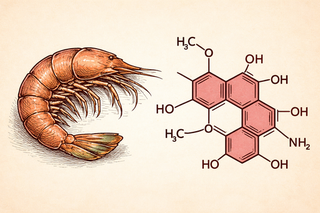
Disclaimer: The image accompanying this article is for illustrative purposes only and does not depict actual experimental results, data, or biological mechanisms.