If cancer treatment were a final exam, you'd think passing it - surviving five or more years - would earn you straight A's and permanent summer vacation. But for people who beat diffuse large B-cell lymphoma (DLBCL), it turns out the body keeps handing out surprise quizzes. And the subject? Cardiovascular health.
A massive new study just landed in the Journal of the National Cancer Institute, and it followed over 2,300 DLBCL survivors in the Netherlands for a median of 14 years. The findings are the kind of thing that makes oncologists and cardiologists schedule a very long lunch together.
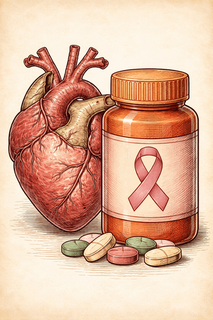
The Heart of the Matter
Here's the headline number that stopped researchers in their tracks: DLBCL survivors have a 3.9 times higher risk of developing heart failure compared to the general population. That's not a typo. Nearly four times the risk.
But wait - it gets weirder. While heart failure and stroke risks went up, coronary artery disease risk actually went down. The researchers observed 30% fewer heart attacks than expected. Cancer survivors: defying expectations since forever.
The culprit behind the elevated heart failure risk? A one-two punch of anthracycline chemotherapy (specifically doxorubicin, the workhorse drug of lymphoma treatment) and radiation therapy aimed anywhere near the chest.
Doxorubicin: The Frenemy Your Heart Didn't Ask For
Doxorubicin is incredible at killing cancer cells. Unfortunately, heart cells apparently look just attractive enough to get caught in the crossfire. The drug generates reactive oxygen species - basically tiny molecular wrecking balls - that accumulate in heart muscle cells and damage mitochondria, the cellular power plants that keep your heart pumping.
The study found that survivors who received more than 300 mg/m² of doxorubicin had a 2.8-fold increased risk of developing cardiomyopathy or heart failure. Radiation involving the heart? That added a 1.9-fold increased risk of valvular heart disease.
Young Women: The Unexpected High-Risk Group
Perhaps the most surprising finding is who's getting hit hardest. Women showed a standardized incidence ratio of 5.3 for heart failure, compared to 3.2 for men. And survivors who were 40 or younger when treated? Their heart failure risk was a staggering 10.5 times higher than expected.
This flips the usual cardiovascular script. We're used to thinking of heart disease as an older man's problem. But for lymphoma survivors, the young and female are actually the most vulnerable to late cardiac effects.
So What Now?
The good news is that awareness is step one, and this study delivers that in spades. The European Society of Cardiology's 2022 cardio-oncology guidelines already recommend that lymphoma survivors who received anthracyclines or chest radiation get regular cardiac monitoring - echocardiograms, ECGs, the works.
The researchers recommend individualized cardiac screening for DLBCL survivors. That means regular check-ups with someone who understands both your cancer history and your cardiovascular system. The growing field of cardio-oncology exists precisely for this reason - to bridge the gap between beating cancer and living long afterward.
The Bottom Line
DLBCL is increasingly survivable - about 60-70% of patients achieve long-term remission with current treatments. That's genuinely wonderful news. But survival comes with homework assignments: stay on top of blood pressure, cholesterol, and weight; don't smoke; exercise regularly; and keep your doctors informed about your treatment history.
Your heart worked hard to get you through treatment. The least we can do is return the favor by keeping an eye on it.
References:
-
Geurts YM, et al. (2025). Cardiovascular disease risk after radiotherapy and anthracycline-based chemotherapy for diffuse large B-cell lymphoma. Journal of the National Cancer Institute. DOI: 10.1093/jnci/djag085
-
Lyon AR, et al. (2022). 2022 ESC Guidelines on cardio-oncology. European Heart Journal, 43(41), 4229-4361. DOI: 10.1093/eurheartj/ehac244
-
Bansal N, et al. (2024). Cardiovascular Considerations After Cancer Therapy: Gaps in Evidence and Expert Panel Recommendations. JACC: CardioOncology. DOI: 10.1016/j.jaccao.2024.06.006
-
Su Y, et al. (2023). Anthracycline-induced cardiotoxicity: mechanisms, monitoring, and prevention. Frontiers in Cardiovascular Medicine. DOI: 10.3389/fcvm.2023.1242596
-
Khan AN, et al. (2025). Doxorubicin-Induced Cardiotoxicity: A Comprehensive Update. PMC. PMCID: PMC12193598
Disclaimer: The image accompanying this article is for illustrative purposes only and does not depict actual experimental results, data, or biological mechanisms.