Things follicular lymphoma cells are good at: dodging the immune system, staging comebacks after treatment, and - apparently - ignoring the genetic instruction manual that's supposed to keep them from going rogue. A new drug called abexinostat is here to fix that last one, and the results are turning heads.
The "Unwinding" Problem, Basically
Your DNA doesn't just float around loose in your cells. It's wound up tight around proteins called histones, like thread around tiny spools. When DNA is wound up tight, your cells can't read the genes written on it. When it loosens up, those genes become active.
Now, your body has two sets of molecular hands controlling this process. One set (histone acetyltransferases, or HATs) loosens the thread so genes can be read. The other set (histone deacetylases, or HDACs) winds it back up, silencing genes. In healthy cells, this push-and-pull keeps everything humming along nicely - tumor suppressor genes stay active, and cells know when to stop multiplying.
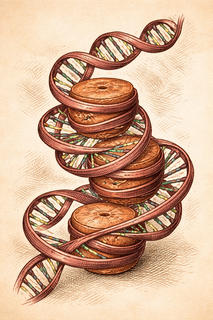
In cancer cells? The HDACs go full control freak. They wind things up way too tight, silencing the very genes that would normally slam the brakes on unchecked growth. In other words, cancer cells have basically duct-taped the instruction manual shut and started freelancing.
HDAC inhibitors like abexinostat rip that duct tape off. They block the enzymes that keep tumor suppressor genes silenced, letting the cell read its own stop-growing instructions again (Parveen et al., 2023).
Follicular Lymphoma: The Villain That Keeps Coming Back
Follicular lymphoma (FL) is the second most common form of non-Hodgkin lymphoma, accounting for about 20% of all NHL cases in the U.S. (SEER Cancer Stat Facts). Here's the frustrating part: FL is slow-growing, and most patients respond well to initial treatment. The five-year survival rate is around 87%.
But - and this is a big but - FL loves a sequel. It keeps relapsing, and each time it comes back, it's harder to beat. Response rates drop with each line of therapy, and treatment options thin out like your playlist at 3 a.m. For patients who've already been through two or more rounds of treatment, the options start looking pretty sparse (Zinzani et al., 2024).
Enter Abexinostat, Stage Left
This is where the new phase 2 study comes in. Researchers across multiple centers in China enrolled 90 patients with relapsed or refractory follicular lymphoma - basically, people whose cancer came back or refused to leave in the first place, despite at least two prior treatment regimens. Patients took abexinostat as a pill, 80 mg twice daily, on a week-on, week-off schedule.
The headline number: a 69.5% overall response rate. In other words, roughly seven out of ten patients saw their tumors shrink meaningfully. The disease control rate hit 91.5%, meaning the overwhelming majority of patients saw their cancer at least stabilize. And 89% of evaluable patients experienced some degree of tumor shrinkage.
The median progression-free survival landed at 13.8 months, with overall survival reaching a striking 47.18 months. For a population that's already been through the treatment wringer twice over, those numbers are genuinely noteworthy (Gui et al., 2026).
Not a Free Lunch, But a Manageable Tab
The side effects tell a familiar HDAC-inhibitor story. Thrombocytopenia (low platelets) showed up in 85.6% of patients, neutropenia (low white blood cells) in 58.9%, and leukopenia in 52.2%. Basically, the drug takes a temporary toll on blood cell production. These are known, manageable effects - and the week-on, week-off dosing schedule was specifically designed to give patients' bone marrow a breather.
Earlier studies of abexinostat in lymphoma had shown a similar pattern: a phase I/II trial reported a 64.3% response rate and 20.5-month PFS in follicular lymphoma patients, with manageable toxicity (Evens et al., 2016). The new study's results are consistent and, if anything, a step forward.
Why This Matters Right Now
The treatment landscape for relapsed FL is evolving fast. Bispecific antibodies, CAR-T cell therapy, and EZH2 inhibitors are all entering the conversation. But many of these are complex, expensive, or require specialized medical centers. Abexinostat is a pill. You take it at home. That's not a small thing for patients who've already spent considerable time in infusion chairs and hospital corridors.
The FDA previously granted abexinostat fast track designation for fourth-line follicular lymphoma, signaling that regulators see unmet need here. With 17.8% of patients in the current study still on treatment at the data cutoff - some well past the two-year mark - abexinostat may offer a durable, accessible option for patients running low on alternatives.
In other words, sometimes the best move isn't building a fancier weapon. Sometimes it's handing the cell back its own rulebook and letting nature do the rest.
References
-
Gui L, Liu H, Wang H, et al. Abexinostat, a histone deacetylases inhibitor, for patients with relapsed or refractory follicular lymphoma: a multi-center, single-arm phase 2 study. Signal Transduct Target Ther. 2026. DOI: 10.1038/s41392-026-02646-z. PMID: 42036411
-
Evens AM, Balasubramanian S, Vose JM, et al. A phase I/II multicenter, open-label study of the oral histone deacetylase inhibitor abexinostat in relapsed/refractory lymphoma. Clin Cancer Res. 2016;22(5):1059-1066. DOI: 10.1158/1078-0432.CCR-15-0624. PMID: 26482040
-
Zinzani PL, Muñoz J, Trotman J. Current and future therapies for follicular lymphoma. Exp Hematol Oncol. 2024;13:82. DOI: 10.1186/s40164-024-00551-1. PMCID: PMC11340193
-
Parveen R, Haris M, Tauseef A, et al. Recent histone deacetylase inhibitors in cancer therapy. Cancer. 2023;129(21):3372-3380. DOI: 10.1002/cncr.34974
Disclaimer: The image accompanying this article is for illustrative purposes only and does not depict actual experimental results, data, or biological mechanisms.