The moment the first scan showed that a heavily pretreated ROS1-positive lung cancer had actually shrunk - and not just in the chest, but in the place doctors dread most, the brain - the researchers likely did what scientists do when they're internally screaming: they opened a spreadsheet and tried to act normal.
That reaction makes sense. ROS1-positive non-small cell lung cancer is rare, showing up in about 1% to 2% of cases, but it has a talent for becoming expensive, complicated, and deeply annoying in a hurry. The basic problem is simple enough: a ROS1 gene fusion acts like a gas pedal jammed to the floor, telling cancer cells to keep growing. Drugs called tyrosine kinase inhibitors, or TKIs, can slam on the brakes. Then cancer does its usual villain move and changes the lock.
One of the most notorious lock changes is a resistance mutation called G2032R. If you want the bar-stool version, the drug key no longer fits the door. Add brain metastases to the mix, and now the drug also has to cross the blood-brain barrier, which is less a barrier and more a nightclub bouncer that rejects almost everything with suspicious enthusiasm.
The Part Where the Tumor Stops Following the Old Script
That is why JYP0322 is interesting. This new ROS1 inhibitor was designed to do three things at once: stay highly selective for ROS1, reach the brain, and keep working even when the G2032R resistance mutation shows up. In the phase 1 trial reported in Cancer Cell, 89 patients with ROS1-fusion NSCLC were treated, and 36% had brain metastases. Among 80 patients evaluable for efficacy, the objective response rate was 95.7% in TKI-naive patients, 57.1% in patients who had already been through at least two prior ROS1 TKIs, and 77.8% in patients with ROS1 G2032R-mutant disease (Ma et al., 2026).
Those are eyebrow-raising numbers, especially in the pretreated and G2032R groups. This is where the economics brain kicks in. In cancer drug development, companies often behave like venture capitalists chasing the same obvious winners. A drug that works after other targeted therapies fail is different. That is not just scientific upside. That is system-level value. Every time a patient avoids a quick crash into the next line of therapy, you potentially save more than money. You save time, brain function, hospital visits, steroid side effects, and a whole lot of miserable logistics.
Brain Metastases: The Market Failure of Human Anatomy
Brain metastases are one of the biggest headaches in ROS1-positive lung cancer, both literally and professionally. Older drugs can work well outside the brain and then get caught at the border. Some ROS1 inhibitors also hit TRK proteins strongly enough to cause neurologic side effects like dizziness, weird sensations, or the general feeling that your medication has decided to freelance in the central nervous system.
JYP0322 seems built to avoid some of that baggage. The phase 1 paper reports low TRK-related neurologic events, with dizziness in 6.7% and headache in 3.4% of patients. That matters because targeted therapy is supposed to feel targeted. If your precision drug behaves like a leaf blower in a library, people notice.
This new agent is entering a field that is no longer empty. Repotrectinib, approved by the US FDA on November 15, 2023, already showed that a next-generation ROS1 inhibitor can work in resistant disease and in the brain, including patients with G2032R mutations (Drilon et al., 2024). Taletrectinib, approved by the FDA on June 11, 2025, added more momentum, with pooled TRUST data showing strong systemic and intracranial activity and a 61.5% response rate in G2032R-mutant disease (Pérol et al., 2025; Li et al., 2024).
So JYP0322 is not arriving to an empty shelf. It is walking into a competitive aisle with several fancy cereal boxes already yelling about brain penetration. That is good for patients. Competition is one of the few forces in oncology more powerful than a press release.
Why This Still Feels Like a Big Deal
Even with those caveats, JYP0322 has a real shot at mattering. The combination of selectivity, brain penetration, and activity after prior ROS1 therapy is exactly what this field has been chasing. If these results hold up in larger studies, this drug could become a valuable option for people whose cancer has evolved past first-generation therapy or taken up residence in the brain like a tenant who never plans to leave.
The catch, because oncology never misses a chance to invoice optimism, is that phase 1 success is not the same thing as long-term clinical victory. We still need more data, longer follow-up, and ideally head-to-head evidence that helps doctors choose among repotrectinib, taletrectinib, and newer agents. We also need the boring but real-world stuff: access, pricing, reimbursement, and whether patients outside major cancer centers can actually get the drug before their tumor writes the next plot twist.
Still, the core signal here is hard to ignore. JYP0322 looks like another serious attempt to turn ROS1-positive lung cancer from a cycle of clever escape acts into something more manageable. In oncology, that is not just a scientific win. It is a better deal for everyone forced to live inside the balance sheet.
References
-
Ma Y, Xue J, Gao F, et al. JYP0322, a highly selective and brain-penetrant ROS1 inhibitor, overcomes ROS1 G2032R resistance mutation in NSCLC: The first-in-human phase 1 trial. Cancer Cell. 2026. DOI: 10.1016/j.ccell.2026.03.018
-
Drilon A, Camidge DR, Lin JJ, et al. Repotrectinib in ROS1 fusion-positive non-small-cell lung cancer. N Engl J Med. 2024;390(2):118-131. DOI: 10.1056/NEJMoa2302299
-
Li W, Xiong A, Yang N, et al. Efficacy and safety of taletrectinib in Chinese patients with ROS1+ non-small cell lung cancer: The phase II TRUST-I study. J Clin Oncol. 2024;42(22):2660-2670. DOI: 10.1200/JCO.24.00731. PMCID: PMC11272140
-
Pérol M, Yang N, Choi CM, et al. Taletrectinib in ROS1+ non-small cell lung cancer: TRUST. J Clin Oncol Precis Oncol. 2025. DOI: 10.1200/JCO-25-00275. PMCID: PMC12118623
-
Drilon A, Davare MA, Wade JL 3rd, et al. ROS1-dependent cancers - biology, diagnostics and therapeutics. Nat Rev Clin Oncol. 2021;18(1):35-55. DOI: 10.1038/s41571-020-0408-9. PMCID: PMC8830365
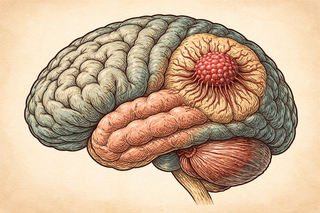
Disclaimer: The image accompanying this article is for illustrative purposes only and does not depict actual experimental results, data, or biological mechanisms.