The prosecution rested years ago. The androgen receptor (AR) was found guilty of driving prostate cancer - case closed, gavel down, everybody go home. Doctors threw the book at it with drugs like enzalutamide that clamp down on AR's ligand-binding domain like handcuffs on a suspect. But here's where the courtroom drama gets spicy: the defendant filed an appeal. AR started showing up to work without the very domain those handcuffs were designed for, essentially ditching the sleeves of its molecular jacket and walking right past security. Now a team from BC Cancer has done something nobody thought was possible - they've found a way to grab the slippery, shapeshifting part of the protein that was supposed to be untouchable.
The Typo That Won't Stop Copying Itself
To understand why this matters, you need to appreciate a fundamental problem in prostate cancer's genome-level playbook. The AR gene sits on the X chromosome, and it encodes a transcription factor that tells prostate cells to grow. Standard-issue cancer therapy - androgen deprivation and drugs like enzalutamide - targets AR's ligand-binding domain (LBD), the structured, well-behaved region that grabs testosterone like a catcher's mitt. It works beautifully. For a while.
Then the genome does what genomes do when you back them into a corner: it improvises. Splice variants start popping up, most notoriously AR-V7, a truncated version that's basically the AR gene with the last chapter ripped out. No LBD means no drug target. AR-V7 is constitutively active - it doesn't even need hormones anymore. It just shows up to the promoter regions of growth genes and starts transcribing like a rogue copy machine that someone unplugged the off switch from. Detection of AR-V7 jumps from less than 1% in primary tumors to roughly 75% after hormone therapy. That's not a mutation. That's an evolutionary middle finger.
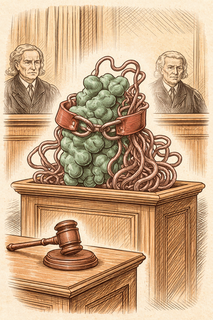
Grabbing Spaghetti: The "Undruggable" Problem
Here's where the science gets truly weird. The N-terminal transactivation domain (TAD) of AR - the region responsible for actually turning on gene expression - is what biologists call "intrinsically disordered." It doesn't fold into a neat 3D shape. There's no pocket, no groove, no keyhole for a drug to fit into. As lead researcher Marianne Sadar put it, disordered proteins "don't behave like locks at all, they're more like moving strands of spaghetti."
Roughly 30-40% of the human proteome contains disordered regions like this, and the pharmaceutical industry has historically labeled them "undruggable" with an air of finality usually reserved for declaring someone dead. But the AR-TAD is where all the transcriptional action happens for both full-length AR and the splice variants. If you could drug it, you'd bypass every resistance mechanism that current therapies stumble over.
Picomolar Precision on a Moving Target
That's exactly what Obst, Sadar, and colleagues pulled off. Their AR-TAD inhibitors (ARTADIs) - small molecules designed to bind the disordered N-terminal domain - showed binding affinities in the picomolar to low-nanomolar range, matching or exceeding enzalutamide's grip on the LBD. Surface plasmon resonance and microscale thermophoresis confirmed it. Mass spectrometry pinpointed the binding site: cysteine 129, a covalent attachment point that gives these compounds a molecular anchor in an otherwise chaotic landscape.
But the real plot twist came from the biology. Small tweaks to the chemical scaffold didn't just change potency - they reshaped which genes got turned on or off across the entire AR transcriptome. Different ARTADIs disrupted different interactions between AR (or AR-V7) and its co-regulators, meaning these aren't blunt instruments. They're tunable. In xenograft models, ARTADIs outperformed enzalutamide in the presence of androgens - the exact scenario where conventional drugs lose the fight.
Why Your Genome Should Care
This is bigger than prostate cancer, though prostate cancer alone affects roughly one in eight men. The conceptual barrier these findings crack open is the idea that disordered protein regions are off-limits to drug developers. If you can design small molecules with picomolar affinity for a protein that literally refuses to hold still, the roughly 40% of the proteome written off as undruggable suddenly looks a lot more like unexplored territory.
The complexity is real - the authors are refreshingly honest that multivalent binding interactions in disordered domains don't follow the tidy, stepwise rules of classical pharmacology. But the proof of concept is now sitting in peer-reviewed data: you can drug a strand of spaghetti, and it can work better than drugging the meatball.
References:
-
Obst JK, Banuelos CA, Jian K, et al. Drugging the intrinsically disordered transactivation domain of androgen receptor. Signal Transduction and Targeted Therapy. 2026. DOI: 10.1038/s41392-026-02642-3
-
Obst JK, Tien AH, Setiawan JC, et al. Inhibitors of the transactivation domain of androgen receptor as a therapy for prostate cancer. Steroids. 2024;210:109497. PMCID: PMC11364166
-
Antonarakis ES, Lu C, Wang H, et al. AR-V7 and resistance to enzalutamide and abiraterone in prostate cancer. New England Journal of Medicine. 2014;371(11):1028-1038. DOI: 10.1056/NEJMoa1315815
-
Myung JK, Banuelos CA, Fernandez JG, et al. An androgen receptor N-terminal domain antagonist for treating prostate cancer. Journal of Clinical Investigation. 2013;123(7):2948-2960. PMCID: PMC3696543
-
Sołtys K, Ożga K, Taube M, Kozak M. Current perspectives in drug targeting intrinsically disordered proteins and biomolecular condensates. BMC Biology. 2025. DOI: 10.1186/s12915-025-02214-x
Disclaimer: The image accompanying this article is for illustrative purposes only and does not depict actual experimental results, data, or biological mechanisms.