For years, stomach bacteria were the backup dancers of cancer biology. Colon microbes got the spotlight, gut health got the merch, and the stomach mostly got typecast as "that place with acid." Now this new Gut review argues that the gastric microbiota may be doing a lot more than loitering near the buffet table - it may be helping remodel the immune neighborhood around gastric tumors, for better or, more often, for worse (Gao et al., 2026).
That matters because your immune system is supposed to be the bouncer here. In gastric cancer, though, the bouncer keeps getting distracted, undertrained, or quietly bribed by the local crowd. The paper pulls together evidence that microbes in the stomach can shape which immune cells show up, how fired up they are, and whether they actually recognize cancer cells as the problem.
Not Just H. pylori Anymore
The old celebrity of stomach cancer is Helicobacter pylori, and yes, it still deserves top billing. It can drive chronic inflammation, damage tissue over time, and help create conditions that make cancer more likely. But the interesting shift in this review is that H. pylori is no longer the whole cast.
Other microbes, including Streptococcus, Lactobacillus, and Bacteroides, keep showing up in gastric cancer studies (Liu et al., 2024). Some seem tied to immune suppression, some to inflammation, some maybe even to better responses to immunotherapy in certain settings. Which is classic microbiome science: the same bacterial name can sound either like a hero or a tax accountant depending on context.
That confusion is real, by the way. Lactobacillus has the wholesome reputation of a probiotic yogurt mascot, yet in gastric cancer it may be elevated in tumors and could reflect a stomach environment that has already gone sideways. Biology loves making things weird just when you thought you had a clean good-guy/bad-guy chart.
The Tumor’s Sketchy Neighborhood
A tumor microenvironment is basically the block around the tumor - immune cells, fibroblasts, blood vessels, signaling molecules, all the local drama. If that neighborhood turns hostile to T cells, cancer gets room to operate.
The review highlights several ways microbes may help with that remodeling. Some bacterial signals and metabolites seem to encourage macrophages and regulatory T cells that calm immune attacks down. Others are linked to fewer or more exhausted CD8 T cells, which is bad news because those are among the immune system’s better hitmen. There is also evidence that H. pylori can push up PD-L1-related immune checkpoint signaling, which is a neat trick if you are a tumor and an extremely annoying one if you are everyone else (Liu et al., 2024).
And this is not just theoretical. A 2024 Gut Microbes study found that gastric tumors could be grouped into microbial subtypes with different immune features and different outlooks. One subtype looked more immune-active and potentially more favorable for immunotherapy, while another tracked with poorer prognosis and therapy resistance (Wang et al., 2024). In other words, the microbes are not just hanging around the crime scene - they may be messing with the witness list.
Why Anyone Outside a Lab Should Care
Because gastric cancer still has a nasty talent for being detected late and resisting treatment. Immunotherapy helps some patients, but not nearly enough. If microbes are part of the reason the immune response fizzles, then they might also become part of the fix.
That could mean better biomarkers to predict who responds to checkpoint inhibitors. It could mean combinations that include microbiota-directed strategies, from carefully chosen probiotics to microbial metabolites to more serious interventions down the line. Other cancer fields are already circling this idea, and broader immunotherapy reviews keep making the same point: the microbiome can influence treatment response, but turning that into reliable medicine is harder than sprinkling "good bacteria" on the problem like parmesan (Kim et al., 2024), (Kwon et al., 2024).
There is also a fun comparative-biology twist here. Tumors in the colon, pancreas, breast, and stomach all seem capable of recruiting microbial accomplices, but each organ writes its own script. The stomach is especially tricky because it is a low-biomass environment. There are fewer microbes there than in the colon, which makes contamination a serious headache and causation hard to prove (Liu et al., 2024). So yes, scientists are trying to solve cancer while also arguing about whether a bacterium is truly in the sample or just hitchhiked in on the lab workflow. Glamorous stuff.
The Real Takeaway
This paper does not claim stomach microbes are secretly running gastric cancer like tiny mob bosses with flagella. It makes a narrower, smarter point: microbes may help tune the immune environment that decides whether a tumor gets challenged or tolerated.
That is a big deal. If the stomach microbiota helps lock the immune system out of the building, then changing that microbial ecosystem might someday help open the door. Not tomorrow. Not with one magic probiotic capsule and a wellness influencer. But maybe with better profiling, better mechanism studies, and treatments that respect the fact that cancer is not just a pile of mutant cells - it is an ecosystem, and ecosystems are messy.
References
-
Gao J, Lau HCH, Fuhler GM, Yu J. Gastric microbiota-mediated immune remodelling in gastric cancer. Gut. 2026. DOI: https://doi.org/10.1136/gutjnl-2026-338505
-
Liu Z, Zhang D, Chen S. Unveiling the gastric microbiota: implications for gastric carcinogenesis, immune responses, and clinical prospects. J Exp Clin Cancer Res. 2024;43:118. DOI: https://doi.org/10.1186/s13046-024-03034-7
-
Wang G, Wang H, Ji X, et al. Intratumoral microbiome is associated with gastric cancer prognosis and therapy efficacy. Gut Microbes. 2024;16(1):2369336. DOI: https://doi.org/10.1080/19490976.2024.2369336 PMCID: https://pmc.ncbi.nlm.nih.gov/articles/PMC11216101/
-
Yasuda T, Wang YA. Gastric cancer immunosuppressive microenvironment heterogeneity: implications for therapy development. Trends Cancer. 2024;10(7):627-642. DOI: https://doi.org/10.1016/j.trecan.2024.03.008 PMCID: https://pmc.ncbi.nlm.nih.gov/articles/PMC11292672/
-
Kim CW, Kim HJ, Lee HK. Microbiome dynamics in immune checkpoint blockade. Trends Endocrinol Metab. 2024;35(11):996-1005. DOI: https://doi.org/10.1016/j.tem.2024.04.013
-
Kwon SY, Ngo HTT, Son J, Hong Y, Min JJ. Exploiting bacteria for cancer immunotherapy. Nat Rev Clin Oncol. 2024;21:569-589. DOI: https://doi.org/10.1038/s41571-024-00908-9
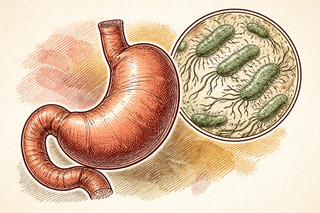
Disclaimer: The image accompanying this article is for illustrative purposes only and does not depict actual experimental results, data, or biological mechanisms.