Ryan Wexler’s The Liver We Share is not a splashy trial with Kaplan-Meier curves doing gymnastics. It is something rarer in medicine - a story about what happens when the clean lines between student, doctor, caregiver, and spouse get absolutely wrecked by real life. In this case, the wrecking ball is metastatic pancreatic cancer, with the author eventually becoming a living liver donor for his wife [1].
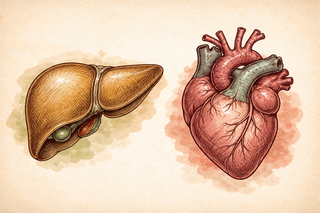
That lands because the liver is not some side character in pancreatic cancer. It is often the organ where this disease spreads, sets up shop, and starts acting like it owns the place. Pancreatic cancer already has a reputation for being a brutally efficient operator, and liver metastases are a big part of why [2,3]. If tumors were startups, pancreatic cancer would be the one that launched with no beta testing, burned through the firewall, and somehow still got Series A.
What Wexler’s essay captures is the part science papers often cannot: when cancer moves into a family, everyone’s job title changes.
Your liver is weirdly generous
A quick bar-stool science intermission. The liver is one of the few organs that can regenerate substantial volume after part of it is removed. That biological flex is what makes living-donor liver transplantation possible in the first place [4]. Surgeons can remove part of a healthy person’s liver, transplant it into someone else, and both liver remnants can regrow. It is amazing, slightly unsettling, and exactly the kind of fact that makes you think the human body was designed by a committee that occasionally got bold.
But let’s not turn this into biotech fan fiction. Living donation is not casual. Donors go through extensive medical and psychological evaluation, and the surgery carries real risk. A recent meta-analysis covering more than 60,000 living liver donors found that adverse outcomes do happen, which is why transplant teams treat donor safety like the whole product, not a side quest [5].
That matters here. Wexler’s story is moving not because donation is symbolic, but because it is concrete. It involves operating rooms, recovery time, fear, consent, uncertainty, and the kind of love that signs actual surgical paperwork.
Pancreatic cancer does not read inspirational quotes
Metastatic pancreatic cancer remains one of oncology’s toughest customers. Once the disease has spread to the liver or elsewhere, standard treatment usually centers on systemic therapy, not surgery with curative intent [3]. That is the grim baseline.
Still, researchers are trying to pry open a few windows. In carefully selected patients with limited liver spread, sometimes called oligometastatic disease, studies are exploring whether local treatments like liver resection or ablation might help on top of chemotherapy. A 2024 systematic review and meta-analysis suggests there may be benefit in selected cases, but the evidence is still far from practice-changing consensus [6]. Translation: the field is testing features, not shipping a universal update.
There is also growing interest in the liver itself as part of the metastatic setup, not just the unfortunate destination. Recent work argues that changes in the liver microenvironment may help forecast or enable pancreatic cancer spread [7]. In other words, the neighborhood may be getting renovated for the villain before the villain even arrives. Cancer biology loves a sinister pre-launch campaign.
The part medicine can’t outsource
What makes The Liver We Share hit so hard is that it exposes a truth medicine sometimes hides behind jargon: disease is experienced by people who still have to be spouses, make dinner, answer texts, and pretend they understand insurance forms written by goblins.
The essay takes the liver from object to relationship. First it is anatomy on a screen, then a surgical specimen, then a shared stake in survival. That shift matters. Modern oncology is full of remarkable tools, but patients do not live inside treatment algorithms. They live inside marriages, families, and timelines that suddenly split into before and after.
That is also why this piece feels bigger than one case. Research can tell us how pancreatic cancer behaves, where it spreads, and which interventions might improve outcomes. It is essential. But stories like Wexler’s remind us what all that work is for. Not just longer survival curves. More life inside the survival.
And yes, that sounds sentimental. Fine. Cancer occasionally forces even the most clinically minded among us to admit that bodies are not machines with service contracts. They are shared economies. Shared risks. Shared futures. Sometimes, astonishingly, shared organs.
References
- Wexler RP. The Liver We Share. J Clin Oncol. 2026 Apr 28. doi:10.1200/JCO-25-03106
- Tsilimigras DI, Brodt P, Clavien PA, et al. Liver metastases. Nat Rev Dis Primers. 2021;7(1):27. doi:10.1038/s41572-021-00261-6
- Chakraborty S, Singh P. Advances in the management of pancreatic cancer. BMJ. 2023;383:e073995. doi:10.1136/bmj-2022-073995
- Mayo Clinic Staff. Living-donor liver transplant. Updated January 23, 2026. Available at: https://www.mayoclinic.org/tests-procedures/living-donor-liver-transplant/pyc-20384846
- Xiao J, Zeng RW, Lim WH, et al. The incidence of adverse outcome in donors after living donor liver transplantation: A meta-analysis of 60,829 donors. Liver Transpl. 2024;30(5):493-504. doi:10.1097/LVT.0000000000000303
- Yun WG, Han Y, Jung HS, et al. Emerging role of local treatment in the era of advanced systemic treatment in pancreatic cancer with liver metastasis: A systematic review and meta-analysis. J Hepatobiliary Pancreat Sci. 2024;31(9):601-610. doi:10.1002/jhbp.12051
- Roth S, Michalski C, Hoheisel JD. A systemic look at pancreatic cancer patients: Predicting metastasis by studying the liver. Signal Transduct Target Ther. 2024;9:246. doi:10.1038/s41392-024-01964-4
Disclaimer: The image accompanying this article is for illustrative purposes only and does not depict actual experimental results, data, or biological mechanisms.