TFH cells are the diplomatic corps of the immune system. They are a specialized group of CD4+ T cells that hang around lymph nodes and help B cells make better antibodies.[3] Under normal circumstances, that is useful and even charming. You want these cells giving pep talks, handing out molecular advice, and helping the whole antibody operation run like a competent small business.
But TFH biology has a downside. If the developmental program gets distorted, the very features that make TFH cells helpful can also make them dangerous. That has been a growing theme in nodal TFH lymphomas, including angioimmunoblastic T-cell lymphoma, where mutations in TET2, RHOA, and related pathways show up again and again.[1,4] Old-timers in hematology have seen this movie before: a normal differentiation program gets nudged, then shoved, then politely escorted off a cliff.
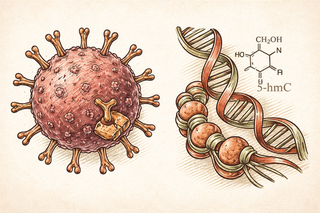
TET2 normally helps process DNA methylation marks, including the formation of 5-hydroxymethylcytosine, which is one of the ways cells keep their transcriptional house from becoming a student apartment after finals week.[1,5] Lose TET2, and gene control becomes less disciplined.
What This Paper Found Before the Tumor Even Arrived
That "before" matters. The clever part of this study is that the authors did not just inspect full-blown lymphoma and declare, rather late in the day, that something had gone wrong. They looked earlier, in Tet2-deficient CD4+ T cells before lymphoma developed.[2]
Those cells already showed trouble brewing. Their T-cell receptor and PI3K signaling were revved up, and their helper T-cell differentiation program was skewed toward TFH behavior. In plain English: the cells seemed primed to become the wrong kind of enthusiastic. The researchers also found reduced 5-hmC at regulatory DNA elements and transcriptional rewiring of TFH-associated genes, with ICOS-ICOSL-mediated PI3K signaling looking especially implicated.[2]
That is a useful mechanistic bridge. It suggests TET2 loss is not just a random badge found at the crime scene. It may be helping write the script.
The authors then pushed the work into human cells by knocking out TET2 in human CD4+ T cells. The same broad themes reappeared: more proliferation, less exhaustion, more memory-like features, restricted T-cell receptor diversity, and a persistent proliferative cluster with stem-like traits on single-cell RNA sequencing.[2] Cells that refuse to tire and keep a youthful sense of self-renewal are delightful in novels and somewhat less delightful in lymphoma biology.
Why This Matters Outside the Mouse Room
The real attraction here is therapeutic. When the team transplanted the mouse lymphomas into recipient mice, the tumors responded to 5-azacytidine and the PI3K inhibitor duvelisib, both alone and in combination.[2] That fits the broader clinical mood in TFH lymphomas, where epigenetic therapy and PI3K-directed strategies have been gathering attention for several years.[4,6] Recent clinical work has kept that hope alive, even if not every trial has landed with fireworks. The phase 3 ORACLE study of oral azacitidine in relapsed or refractory TFH lymphoma missed its prespecified primary endpoint, but reported a favorable safety profile, which is not nothing in a disease where treatment options are often less "precision masterpiece" and more "determined rummage through the toolbox."[7]
So this paper does not hand us a cure. It does something more durable. It clarifies how a common mutation in TFH lymphomas may reshape T-cell identity early, before overt cancer, and it points toward druggable pathways that already have clinical traction. If those findings hold up across more patient samples and models, they could help identify which tumors are especially dependent on the epigenetic plus PI3K combination.
That is the sort of progress one learns to respect after enough decades in oncology. Not magic. Not a miracle headline. Just a better map of how a normal helper T cell becomes the colleague who starts one committee, joins four others, ignores all restraint, and eventually burns down the building.
References
-
De Leval L, Gaulard P. Advances in understanding of angioimmunoblastic T-cell lymphoma. Leukemia. 2021;35:2591-2606. DOI
-
Heavican-Foral TB, Li Y, Lone W, et al. Tet2 deficiency alters CD4+ T cell function and promotes T cell lymphoma with a TFH cell immunophenotype. J Exp Med. 2026;223(6):e20250194. DOI
-
Uwadiae FI. T follicular helper cells. British Society for Immunology. Link
-
Carty SA. Biological insights into the role of TET2 in T cell lymphomas. Front Oncol. 2023;13:1199108. DOI PMCID
-
Kunimoto H, Nakajima H. TET2: A cornerstone in normal and malignant hematopoiesis. Cancer Sci. 2021;112(1):31-40. DOI PMCID
-
Ma H, O'Connor OA, Marchi E. Management of angioimmunoblastic T-cell lymphoma and other T follicular helper cell lymphomas. Semin Hematol. 2021;58(2):95-104. DOI
-
Dupuis J, et al. Oral azacitidine compared with standard therapy in patients with relapsed or refractory follicular helper T-cell lymphoma (ORACLE): an open-label randomised, phase 3 study. Lancet Haematol. 2024. PubMed
Disclaimer: The image accompanying this article is for illustrative purposes only and does not depict actual experimental results, data, or biological mechanisms.