A CD30-targeted immune therapy can make the whole trip to a Hodgkin lymphoma cell, swipe its ticket at the membrane, and still get stuck in a sugar traffic jam right outside the front door. That, in gloriously weird cancer-biology fashion, is the setup for this new study on classical Hodgkin lymphoma, where researchers found that the problem is not just whether the target exists, but whether it is buried under a bulky molecular scarf made of sugars.[1]
Classical Hodgkin lymphoma has a famous bullseye called CD30. That is why drugs like brentuximab vedotin, and newer ideas like CD30 CAR-T cells, go after it. In theory, this is elegant. In practice, cancer has the manners of a raccoon in a locked pantry. It keeps finding ways to make targeted therapy harder than it should be.[2][3]
The tumor put furniture in front of the exit
The core idea of the paper is delightfully sneaky. CD30 carries N-glycans, which are sugar decorations attached at specific spots on the protein. The team found two especially important sites, Asn101 and Asn276. These sugar attachments help keep CD30 stable on the cell, but they also create steric hindrance, which is a polite scientific way of saying the target becomes physically harder to reach.[1]
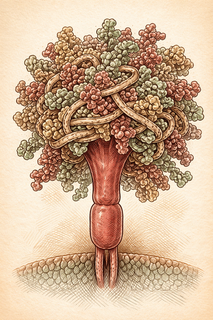
That matters because immune therapies are basically trying to dock with CD30. If the docking station is surrounded by molecular shrubbery, the approach gets messy. The researchers showed that removing those glycans genetically, or stripping them enzymatically, made CD30 easier for CAR-T cells to access. The T cells then activated better and killed tumor cells more effectively.[1]
This is the part where cancer biology once again reveals itself to be a field where tiny details behave like cartoon villains. The enemy was not just the target. It was the target's aggressively overdecorated front porch.
Enter eliglustat, stage left
The most clinically interesting move in the study involved eliglustat, a drug already approved for Gaucher disease. Eliglustat blocks glycosphingolipid synthesis, and here it acted like a very selective housekeeper. It did not rip CD30 apart. Instead, it trimmed terminal sialic acids from CD30-associated glycans while leaving the core structure intact.[1]
Why is that exciting? Because after eliglustat pretreatment, CD30 CAR-T cells worked better against wild-type CD30-positive tumors. So did brentuximab vedotin. In mouse xenograft models, the combinations controlled tumors better without obvious added toxicity.[1]
That gives this paper real traction beyond a neat mechanistic story. It suggests you might not need a brand-new cell therapy or a whole reinvented antibody-drug conjugate. You may be able to improve existing CD30-directed therapies by changing the sugary landscape around the target. Same destination, better road conditions.
Why this is bigger than one lymphoma paper
This study plugs into a much broader shift in cancer research: glycans are not decorative fluff. They help tumors dodge immune attack, reshape signaling, and change how therapies interact with the cell surface.[4][5] A 2024 Nature paper, for example, showed that glycosphingolipid synthesis can drive immune evasion in KRAS-driven cancers, which makes this whole lipid-and-sugar axis look a lot less niche and a lot more like a recurring scam run by tumors.[5]
That matters in Hodgkin lymphoma because CD30 therapies are already clinically relevant, especially for patients whose disease comes back after standard treatment. Brentuximab vedotin is established, and CD30 CAR-T therapy has shown encouraging activity with manageable safety in early studies and remains an active area of development.[2][3] The headache has been durability and resistance. This paper basically asks: what if the target is there, but the therapy is bumping into molecular elbow room problems?
That is a much more interesting question than "should we redesign the CAR again?" Sometimes the issue is not the weapon. Sometimes the tumor wrapped bubble wrap around the bullseye.
The catch, because there is always a catch
Before anyone starts acting like glycans are officially canceled, this is still preclinical work. The strongest results come from cell systems and xenograft models, not from patients in a trial.[1] We also do not yet know which CD30-positive lymphomas would benefit most, how durable the effect would be in real tumors, or whether glycan remodeling could have unexpected consequences in more complex clinical settings.
Still, the logic is sharp. If a tumor uses sugar structures to make a target harder to hit, then trimming those structures could make immunotherapy land cleaner punches. And because eliglustat already exists in the clinic, this idea has a more realistic runway than many cool oncology concepts that currently live in the witness-protection program known as "future translational research."[6]
For patients with CD30-positive lymphomas, that is the real hook. Not miracle-cure hype. Not sci-fi handwaving. Just a smart, testable way to make known therapies less likely to get stalled at the cellular border crossing.
References
- Pan Y, Chang Y, Zhang W, Qin X, Wang C, Lu N, Nie J, Han W. Inhibition of glycosphingolipid synthesis overcomes the steric hindrance of CD30 N-glycans to augment CD30-targeted immunotherapeutic efficacy. Cell Mol Immunol. 2026. doi: https://doi.org/10.1038/s41423-026-01421-y
- Veyri M, Drenou B, Eveillard M. CD30 as a therapeutic target in adult haematological malignancies: where are we now? Br J Haematol. 2023;203(1):43-56. doi: https://doi.org/10.1111/bjh.18958
- Ma Z, Lin C, Wang M, et al. Development of CD30 CAR-T cells in refractory or relapsed Hodgkin's lymphoma. Expert Rev Hematol. 2024;17(1):29-40. doi: https://doi.org/10.1080/17474086.2023.2278397
- Sun H, Cheng Y, Wang J, et al. Glycosylation targeting: a paradigm shift in cancer immunotherapy. Int J Biol Sci. 2024;20(8):2917-2938. doi: https://doi.org/10.7150/ijbs.93806
- Soula M, Julien S, Serre CM, et al. Glycosphingolipid synthesis mediates immune evasion in KRAS-driven cancer. Nature. 2024;633(8030):169-176. doi: https://doi.org/10.1038/s41586-024-07787-1
- Dong Y, Tomsig JL, Adjei AA, et al. Inhibition of glycosphingolipid synthesis with eliglustat in combination with immune checkpoint inhibitors in advanced cancers: a phase I study. Nat Commun. 2024;15:7474. doi: https://doi.org/10.1038/s41467-024-51495-3
Disclaimer: The image accompanying this article is for illustrative purposes only and does not depict actual experimental results, data, or biological mechanisms.