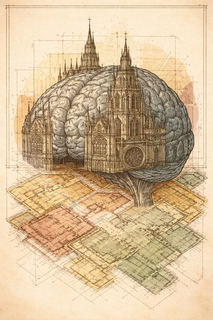
If the brain is a cathedral of wiring, glioblastoma is the contractor from hell - knocking through load-bearing walls, installing mystery doors, and somehow leaving you with the bill. The new twist is that this tumor does not just change which genes it uses. It keeps issuing weird alternate blueprints called isoforms, and a new study finally looked at those blueprints one cell at a time with the biological equivalent of reading the whole document instead of skimming the chapter titles (Tang et al., 2026).
Not just more genes - more versions
A quick translation from RNA nerd to normal human: one gene can produce multiple RNA isoforms, which are different edited versions of the same message. Think of it like a contractor submitting five versions of the same floor plan, each with a slightly different staircase and one suspiciously missing fire exit. In cancer, those edits can matter a lot.
Glioblastoma already has a nasty reputation for being wildly diverse from cell to cell. That diversity is part of why treatment keeps landing like a hedge fund pitch in a recession - lots of confidence, uneven returns. Short-read single-cell RNA sequencing helped map broad cell states in glioblastoma, but it often misses the full-length transcript details that tell you which isoform a cell is actually using (Eisenbarth and Wang, 2023; Yabo and Heiland, 2024).
Tang and colleagues used single-cell long-read RNA sequencing in seven patients with glioblastoma. That let them capture full-length transcripts and build an isoform-level atlas instead of the usual gene-level summary. Result: they found hundreds of isoforms with different usage across tumor cell populations, plus 6,524 isoforms missing from existing annotations, including 179 that looked tumor-specific (Tang et al., 2026). Which is a polite genomics way of saying, "the tumor has been freelancing off-menu."
Why this matters outside a sequencing bunker
This is not just a cataloging exercise for people who enjoy very large spreadsheets. Isoforms can create proteins that look different enough to become useful targets.
The study highlights two especially interesting possibilities. First, the authors prioritize tumor-restricted isoforms that might help distinguish cancer cells from normal brain cells. In glioblastoma, that is a big deal because the margin for error is not generous. You are operating in the brain, not repainting a guest bathroom.
Second, they identify surface-intracellular target pairs, which could support dual-specific ligand-based therapies. Translation: instead of aiming at one molecular flag and hoping the tumor does not quietly swap jerseys, you may be able to design smarter combinations. The paper also found peptides from some of these novel isoforms with strong predicted binding to MHC class I, which raises the possibility of neoantigen-based immunotherapy (Tang et al., 2026).
That fits a broader story in cancer biology. Abnormal splicing is not decorative weirdness. It can switch pathways on, alter protein domains, and help tumors survive treatment (Bradley and Anczuków, 2023). In glioma specifically, splicing changes can hit bona fide cancer drivers and even track with worse outcomes (Vitting-Seerup et al., 2022).
The part where biology meets the invoice
Now for the less glamorous part. A tumor-specific isoform on a sequencing plot is not yet a drug, a vaccine, or a survival gain. It still needs lab validation, proof that it really is absent from healthy tissue, proof that patients share it often enough to matter, and proof that a therapy can reach the brain, survive the immune and blood-brain-barrier obstacle course, and do all this without causing collateral damage. Cancer biology loves a plot twist. It is basically prestige television with worse reimbursement.
There is also the access problem. Long-read single-cell sequencing is powerful, but it is not exactly bargain-bin medicine. If this kind of profiling becomes part of personalized therapy design, the field will have to wrestle with an old oncology question wearing a new lab coat: who actually gets the fancy molecular map, and who gets told the future is promising while the invoice quietly bursts into flames?
Still, this study gives researchers something they badly need in glioblastoma: a sharper parts list. Not just which cells are present, but which transcript versions those cells are using, and which of those versions might be exploitable. In a disease where the tumor keeps changing the locks, seeing the full blueprint is a better starting point than pounding harder on the front door.
References
-
Tang W, Lo CWS, Chu ATW, et al. Mapping glioblastoma’s isoform diversity using long-read single-cell analysis. Nature Communications. 2026. DOI: https://doi.org/10.1038/s41467-026-72258-2
-
Bradley RK, Anczuków O. RNA splicing dysregulation and the hallmarks of cancer. Nature Reviews Cancer. 2023;23:135-155. DOI: https://doi.org/10.1038/s41568-022-00541-7
-
Eisenbarth D, Wang YA. Glioblastoma heterogeneity at single cell resolution. Oncogene. 2023;42:2155-2165. DOI: https://doi.org/10.1038/s41388-023-02738-y
-
Yabo YA, Heiland DH. Understanding glioblastoma at the single-cell level: Recent advances and future challenges. PLOS Biology. 2024;22:e3002640. DOI: https://doi.org/10.1371/journal.pbio.3002640
-
Vitting-Seerup K, Sandelin A, et al. Splicing is an alternate oncogenic pathway activation mechanism in glioma. Nature Communications. 2022;13:588. DOI: https://doi.org/10.1038/s41467-022-28253-4
Disclaimer: The image accompanying this article is for illustrative purposes only and does not depict actual experimental results, data, or biological mechanisms.