A healthy body parents its cells the way a decent adult handles a sugar-fueled toddler in a store: constant supervision, quick redirects, and the occasional hard stop before somebody knocks over the entire display. Most cells cooperate. A few go feral. Cancer, as usual, is what happens when the house rules stop working.
Now for the plot twist. Scientists do not just want to know which genes a cell uses. They also want to know where each RNA message begins. That starting point is called a transcription start site, or TSS, and changing it can produce different RNA isoforms from the same gene - basically alternate opening scenes for the same biological script. Sometimes that changes how much protein gets made. Sometimes it changes which version of the protein shows up. Sometimes it changes how long the RNA survives before the cell tosses it like expired hummus.
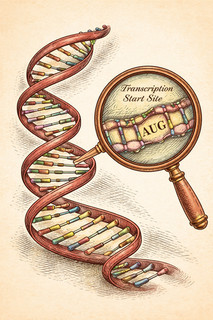
The new paper by Xu and colleagues argues that we have been underestimating one very annoying villain in this story: RNA degradation. Not glamorous. Not cinematic. Just molecules quietly falling apart and making your sequencing data lie to your face a little. Which, in genomics, is enough to ruin your weekend and maybe your conclusions too [1].
The Consensus Needed a Reality Check
The broad excitement around single-cell RNA sequencing has been justified. It lets researchers inspect tissues cell by cell instead of averaging everything together into one bland smoothie. But there is a catch. If you are studying 5' single-cell RNA-seq to map TSS usage, degraded RNA can create fake-looking start signals or distort the real ones. In other words, not every surprising transcript start is a deep new law of biology. Sometimes the sample is just a mess.
That is the contrarian heart of this paper: before you declare a sexy new isoform program, maybe ask whether the RNA got chewed up first.
So the authors built scATS, a computational method that estimates RNA degradation at both the sample and isoform level, then corrects TSS quantification accordingly [1]. The point is simple and important: if the measuring tape is warped, fix the tape before bragging about the architecture.
Why Transcript Start Sites Matter More Than They Sound
"Alternative transcript start site" sounds like something designed to clear a room at a party. Fair. But biologically, it matters a lot.
Cells can use different start sites to make distinct RNA isoforms, and those isoforms can shape cell identity, RNA processing, stability, and disease behavior [2]. Recent reviews have made the case that alternative TSS usage is not some niche molecular hobby. It is a widespread regulatory system tied to development, cell-state changes, and pathology [2,3]. Meanwhile, newer long-read and single-cell approaches are helping researchers see isoform diversity with much better resolution than older short-read methods could manage [3-5].
That matters in cancer because tumors are masters of transcript-level improvisation. Give a malignant cell three ways to bend the rules, and it will ask for a fourth.
What This Study Actually Found
Using scATS, the team looked at TSS dynamics in blood-cell development and disease contexts, and they found that corrected TSS information improved the ability to distinguish cell states at finer resolution [1]. That is not just a technical flex. Better resolution means a better shot at spotting rare or transitional cell populations that would otherwise blur into the crowd.
Then they pushed into lung cancer. The authors built a machine-learning framework called the lung cancer relevance score, or LRS, to flag TSSs associated with the disease [1]. They then tested several isoforms in lung cancer cell lines, including CCR6, CCR2, and RTKN2, and reported that isoforms with high transcription in lung cancer promoted cell proliferation and migration [1].
That is the part that raises eyebrows in a useful way. We often talk about genes as if each one is a single clean entity with a name tag and stable personality. Reality is messier. A gene can behave like a sketchy company with multiple subsidiaries, and some of those subsidiaries may be much more helpful to cancer than others.
Why You Should Care, Even If You Do Not Spend Weekends Reading Nature Communications
If these findings hold up, the practical payoff is obvious. Better TSS profiling could sharpen cell classification, improve our map of tumor heterogeneity, and reveal isoform-level biomarkers or therapeutic targets that standard gene-level analysis misses [3,6]. Clinical reviews of single-cell oncology already point toward tumor subtyping, treatment-response prediction, and target discovery as realistic directions for the field [6].
But let's not put on a startup hoodie and declare victory. This is still early. The cancer experiments here were done in cell lines, not as a proven patient-care strategy [1]. And transcriptomics has a long history of producing very smart, very beautiful datasets that still need years of validation before they change what happens in a clinic.
Still, the paper makes a strong case for a basic principle that science sometimes forgets when new tools get trendy: if your raw material is degraded, your conclusions might be too. Fixing that is not flashy. It is just how you avoid mistaking molecular damage for molecular genius.
References
-
Xu Z, Zhou Z, Tang C, et al. Accurate profiling of single-cell alternative transcript start sites by correcting RNA degradation. Nature Communications. 2026. DOI: https://doi.org/10.1038/s41467-026-72298-8
-
Alfonso-Gonzalez C, Hilgers V. (Alternative) transcription start sites as regulators of RNA processing. Trends in Cell Biology. 2024. DOI: https://doi.org/10.1016/j.tcb.2024.02.010
-
Belchikov N, Hsu J, Li XJ, et al. Understanding isoform expression by pairing long-read sequencing with single-cell and spatial transcriptomics. Genome Research. 2024;34(11):1735-1746. DOI: https://doi.org/10.1101/gr.279640.124. PMCID: https://pmc.ncbi.nlm.nih.gov/articles/PMC11610585/
-
Yuan CU, Qu FX, Hemberg M. Single-cell and spatial transcriptomics: Bridging current technologies with long-read sequencing. Molecular Aspects of Medicine. 2024;96:101255. DOI: https://doi.org/10.1016/j.mam.2024.101255
-
Sterne-Weiler T, Humphreys DT, Baty K, et al. Accurate long-read transcript discovery and quantification at single-cell, pseudo-bulk and bulk resolution with Isosceles. Nature Communications. 2024;15:6961. DOI: https://doi.org/10.1038/s41467-024-51584-3
-
Boxer E, Feigin N, Tschernichovsky R, et al. Emerging clinical applications of single-cell RNA sequencing in oncology. Nature Reviews Clinical Oncology. 2025;22:315-326. DOI: https://doi.org/10.1038/s41571-025-01003-3
Disclaimer: The image accompanying this article is for illustrative purposes only and does not depict actual experimental results, data, or biological mechanisms.