The key player here is calreticulin, a protein that can act like an "eat me" sign when stressed or dying cancer cells display it on their surface. That matters because immunogenic cell death, or ICD, is not just cancer cells dying. It is cancer cells dying loudly enough that the immune system actually pays attention. Think less "quiet hardware failure" and more "alarm panel, flashing lights, security team paging in" (Choi et al., 2023; Liu et al., 2024).
The problem is that some tumors keep calreticulin from reaching the cell surface. In this paper, the culprit is stanniocalcin 1, or STC1. STC1 basically grabs calreticulin and keeps it stuck in the mitochondria, which is a bit like locking the fire alarm in the basement and then acting surprised when nobody evacuates.
That matters because if antigen-presenting cells such as dendritic cells and macrophages cannot "see" the dying tumor properly, the whole downstream immune response gets weaker. Fewer tumor bits get picked up, fewer T cells get trained, and the tumor keeps running its weird little tax scam on the immune system.
Two-Part Fix, One Delivery Truck
The researchers used paclitaxel, a chemotherapy drug already known to induce ICD in some settings, and paired it with siRNA that silences STC1. On paper, that is elegant. One part stresses the tumor cell into dying in an immune-visible way. The other part stops the tumor from hiding the evidence.
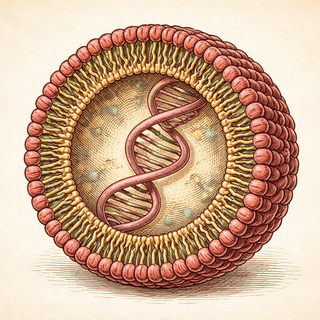
Then they wrapped both into a lipid nanoparticle, creating a co-delivery system called siSTC1/LNP-PTX. If you are a systems person, this is the satisfying bit: synchronize the payloads, improve delivery to the tumor, and reduce the odds that one component shows up to the job site while the other is still circling for parking.
In mouse Lewis lung carcinoma models, silencing STC1 boosted calreticulin surface exposure when paired with paclitaxel, improved phagocytosis by antigen-presenting cells, increased antigen presentation, and kicked off stronger cytotoxic T cell responses. The combo also made tumors more responsive to PD-1 blockade, which is a big deal because checkpoint inhibitors work much better when there is already an immune response to amplify (Li et al., 2026; Liu et al., 2024).
Why This Is Cool Without Pretending It Cures Tuesday
The fun idea here is not "nano solves cancer, film at 11." It is that the study targets a very specific immune-evasion checkpoint upstream of phagocytosis. Instead of only stepping on the gas with immunotherapy, the team also removes a foot from the brake.
That fits a broader trend in cancer research: turning "cold" tumors into "hot" ones by making tumor death more visible and more inflammatory in the useful, T-cell-activating sense (Galluzzi et al., 2024). Nanoparticles are especially attractive here because ICD can work in theory and then face-plant in real life due to lousy drug distribution, toxicity, or weak tumor localization. Delivery is the part where many beautiful mechanisms go to die, usually in a grant application or a liver (Banstola et al., 2021; Sun et al., 2021).
If this line of work holds up, the real-world appeal is obvious. You could imagine therapies that do not just kill tumor cells, but convert those dying cells into an in-place vaccine factory. That could improve responses to checkpoint inhibitors, reduce relapse risk, and maybe help in tumors that currently shrug at immunotherapy like a teenager ignoring a dishwasher request.
The Fine Print, Because Biology Is Never That Simple
There are catches. This is preclinical work, mainly in mouse models. The strongest effects appeared in STC1-high tumors, which means patient selection would matter. Not every tumor uses the same cheat codes. The paper also depends on a fairly engineered nanoparticle setup, and drug-delivery systems have a long history of looking great in rodents before running into manufacturing, safety, and consistency problems in humans.
There is also a more basic issue: ICD is powerful, but it is not magic. For it to work, the tumor still needs the right antigens, the right immune-cell traffic, and a microenvironment that is not actively hostile to immune priming. Cancer is less one broken switch and more a server room where several alarms, doors, and badge readers have all failed at once.
Still, this is a sharp piece of work. It identifies a specific concealment tactic, shows how to interrupt it, and plugs that fix into a delivery system designed to make the biology actually happen in tumors instead of just on slides.
References
-
Li W, Wang Z, Li M, et al. Boosting immunogenic tumour cell death via nanotherapeutic targeting of the Stanniocalcin 1 phagocytosis checkpoint for enhanced cancer immunotherapy. Nature Communications. 2026. DOI: https://doi.org/10.1038/s41467-026-72526-1
-
Choi M, Shin J, Lee CE, et al. Immunogenic cell death in cancer immunotherapy. BMB Reports. 2023;56(5):275-286. DOI: https://doi.org/10.5483/BMBRep.2023-0024. PMCID: https://pmc.ncbi.nlm.nih.gov/articles/PMC10230015/
-
Liu P, Kepp O, Kroemer G, Galluzzi L. Immunogenicity of cell death and cancer immunotherapy with immune checkpoint inhibitors. Cellular & Molecular Immunology. 2024. DOI: https://doi.org/10.1038/s41423-024-01245-8. PMCID: https://pmc.ncbi.nlm.nih.gov/articles/PMC11685666/
-
Galluzzi L, Guilbaud E, Schmidt D, et al. Targeting immunogenic cell stress and death for cancer therapy. Nature Reviews Drug Discovery. 2024;23:445-460. DOI: https://doi.org/10.1038/s41573-024-00920-9
-
Banstola A, Poudel K, Kim JO, Jeong JH, Yook S. Recent progress in stimuli-responsive nanosystems for inducing immunogenic cell death. Journal of Controlled Release. 2021;337:505-520. DOI: https://doi.org/10.1016/j.jconrel.2021.07.038
-
Sun Y, Feng X, Wan C, Lovell JF, Jin H, Ding J. Role of nanoparticle-mediated immunogenic cell death in cancer immunotherapy. Asian Journal of Pharmaceutical Sciences. 2021;16(2):129-132. DOI: https://doi.org/10.1016/j.ajps.2020.05.004. PMCID: https://pmc.ncbi.nlm.nih.gov/articles/PMC8105413/
Disclaimer: The image accompanying this article is for illustrative purposes only and does not depict actual experimental results, data, or biological mechanisms.