Today’s forecast inside the tumor microenvironment: low oxygen, scattered immune dysfunction, and a high chance of trouble drifting into nearby lymph nodes by evening. In other words, the neighborhood around a breast tumor is less “healthy tissue” and more “storm front with bad management,” which is exactly why this new paper caught my eye.
In a 2026 Small study, Minghao Sun and colleagues built a nanoparticle system called OPD@PSF that tries to do something unusually clever: hit both the primary tumor and the tumor-draining lymph nodes, then use different ultrasound settings in each place to create different amounts of reactive oxygen species, or ROS - those chemically twitchy molecules cells generally do not enjoy hosting at dinner (Sun et al., 2026).
Two Venues, One Set List
Most cancer treatments focus on the main tumor like that is the whole show. But tumor-draining lymph nodes are not just side rooms off the lobby. They are where immune cells get briefed, activated, confused, suppressed, or occasionally all four before lunch. Recent reviews describe these lymph nodes as a crossroads of metastasis and immune surveillance, which is a very elegant way of saying they can either help stop cancer or help it travel with suspicious efficiency (Karakousi et al., 2024; J Immunother Cancer, 2024).
That is the core riff of this paper. The authors gave their nanoplatform peritumorally, so it could accumulate in the tumor and also drain into nearby lymph nodes. Then they played the ultrasound like a sound engineer with two very different venues. High-power ultrasound at the tumor generated lots of ROS, which can injure cancer cells and trigger immunogenic cell death - basically the tumor dies loudly enough that the immune system finally notices. Low-power ultrasound in the lymph nodes made more moderate ROS levels, which the authors say helped activate immune cells without just turning the node into biological scrambled eggs (Sun et al., 2026).
That spatiotemporal part in the title is not just grant-writing confetti. It means the team is trying to control where and when oxidative stress happens, instead of blasting everything with one setting and hoping for the best. In cancer biology, hope is not a strategy. It is a coping mechanism.
Why Sound Waves and STING Make a Weirdly Good Duet
Sonodynamic therapy has been getting more attention because ultrasound reaches deeper tissue than light-based approaches and can be externally controlled. Reviews over the last couple of years argue that ultrasound-based nanomedicines may help turn “cold” tumors into more immune-active ones, partly by boosting antigen release and dendritic-cell activity (Liang et al., 2024; Recent Advances and Future Directions in Sonodynamic Therapy for Cancer Treatment, 2024).
Then there is STING, one of immunology’s favorite alarm systems. Activate it in the right cells and you can drive type I interferon signaling, improve antigen presentation, and help T cells join the fight. The catch is that STING drugs are notoriously hard to deliver well, and off-target activation can backfire. A 2024 review on STING delivery basically says, in polite scientific language, “this is promising, but please stop assuming it is easy” (Khorsandi et al., 2024).
This paper combines both ideas. ROS makes the tumor more visible. The STING agonist tries to make the immune system more alert. Put together, the authors are aiming for less of a solo and more of a tight rhythm section.
The Part Where We Keep Our Lab Goggles On
This is a fun paper, but the fine print matters.
First, this is preclinical work, not a treatment ready for your local oncology clinic next Thursday. Second, the STING agonist used here, DMXAA, is a famous mouse-world success story that does not activate human STING the same way. That has been a major translational headache for the whole field, not just this paper (Khorsandi et al., 2024; Conlon et al., 2013, cited therein).
Third, dual targeting sounds gorgeous on paper, but human tumors and lymphatics are messier than mouse models. Delivery, dosing, ultrasound standardization, and safety all have to behave outside the controlled theater of preclinical experiments. Reviews of newer ultrasound-triggered immunotherapy systems make the same point: the biology is exciting, the engineering is slick, and the road to humans is still wearing construction cones (Xu et al., 2026).
Why It Still Matters
Even with those caveats, this study is interesting because it treats cancer like a network problem, not just a lump problem. That is smart. If tumors are the loud frontman, the draining lymph nodes are the venue manager, the booking agent, and the back door where metastasis tries to sneak out with the cash box.
If this strategy or a human-compatible version holds up, the real-world upside is obvious: more precise local treatment, better immune priming, and a better shot at blocking spread before it turns a local disease into a systemic one. For breast cancer, where lymph node involvement can change prognosis and treatment decisions fast, that is not a small idea. It is a key change.
References
Sun M, Huang Y, Hou Y, Li X, Ni P, Xu Y, Wang Q, Wang J, Ren M, Huang E, Hao J, Wang Y, Tian S, Feng C, Zhu Y, Du T, Fan W. Tumor/Lymph Node Dual-Targeting Ultrasonic Nanoconverter Orchestrates Spatiotemporal ROS Regulation for Dual-Zone Programmed Sono-STING Immunotherapy. Small. 2026. DOI: https://doi.org/10.1002/smll.202600058
Liang J, Qiao X, Qiu L, Xu H, Xiang H, Ding H, Chen Y. Engineering Versatile Nanomedicines for Ultrasonic Tumor Immunotherapy. Advanced Science. 2024;11(3):e2305392. DOI: https://doi.org/10.1002/advs.202305392 PMCID: https://pmc.ncbi.nlm.nih.gov/articles/PMC10797440/
Karakousi T, Mudianto T, Lund AW. Lymphatic vessels in the age of cancer immunotherapy. Nature Reviews Cancer. 2024;24:363-381. DOI: https://doi.org/10.1038/s41568-024-00681-y
Tumor-draining lymph nodes: opportunities, challenges, and future directions in colorectal cancer immunotherapy. Journal for ImmunoTherapy of Cancer. 2024;12:e008026. DOI: https://doi.org/10.1136/jitc-2023-008026
Khorsandi SK, Huntoon K, Lux JL. Putting the sting back in STING therapy: novel delivery vehicles for improved STING activation. Frontiers in Chemical Biology. 2024;3. DOI: https://doi.org/10.3389/fchbi.2024.1386220
Xu X, Jin P, Chen Y, Wu B, Fang X, Song Y, Luo J, Wang G, Huang P. Ultrasound-triggered carrier-free nanoprodrugs activate cGAS-STING pathway to enhance tumor-targeting chemo-immunotherapy. Materials Today Bio. 2026. DOI: https://doi.org/10.1016/j.mtbio.2026.102858 PMCID: https://pmc.ncbi.nlm.nih.gov/articles/PMC12907047/
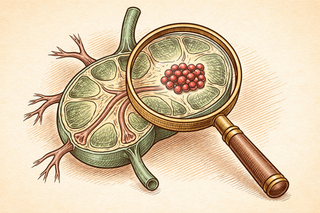
Disclaimer: The image accompanying this article is for illustrative purposes only and does not depict actual experimental results, data, or biological mechanisms.