The thing that makes this study different is its villain: not just KRAS, the usual pancreatic cancer supervillain with excellent job security, but a sticky trio of cancer-associated mucins that appear to help tumors ghost the immune system.
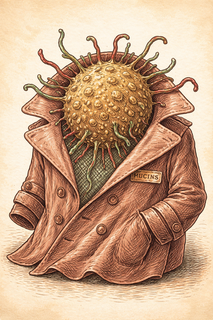
Those mucins - MUC4, MUC16, and MUC5AC - are not random biology confetti. They are huge sugar-coated proteins that normally help protect wet surfaces like airways and digestive tissues. In the right place, mucins are mucus-making civil servants. In pancreatic ductal adenocarcinoma, they can become oncoMUCs: molecular trench coats that help cancer cells look busy while doing extremely suspicious things.
Bhyravbhatla and colleagues, writing in Gastroenterology, asked a deceptively simple question: what happens when pancreatic tumors build not one mucin disguise, but a whole mucin wardrobe? Their answer: the tumor microenvironment gets more immunosuppressive, more checkpoint-heavy, and less friendly to CD8 T cells, the immune system’s tiny bodyguards with regrettably difficult working conditions.1
Pancreatic Cancer Is Already Playing on Hard Mode
Pancreatic cancer is notoriously hard to treat. In the United States, SEER estimates 67,530 new pancreatic cancer cases and 52,740 deaths in 2026, which is grim math even before coffee.2 Pancreatic ductal adenocarcinoma, the common form, often arrives late, hides inside dense scar-like tissue, and tends to ignore immunotherapies that work in cancers like melanoma or lung cancer.
Why? Partly because pancreatic tumors are not just clumps of cancer cells. They are little ecosystems: fibroblasts, immune cells, blood vessels, extracellular matrix, signaling molecules, and enough biological side plots to make a streaming-service writers’ room nervous. Recent reviews describe pancreatic cancer’s tumor microenvironment as a major reason checkpoint inhibitors have helped only small subsets of patients.3
That is where this study gets interesting. Instead of treating mucins as passive goo on the tumor surface, the authors treated them like active political operatives in the tumor neighborhood.
Meet the Oncomucinome, Which Sounds Fake but Isn’t
Using single-cell RNA sequencing from 34 human samples, multiplex and sequential immunostaining, gene silencing, and mouse models, the team mapped what they call the “oncomucinome.” Translation: they looked at which tumor cell populations were expressing these cancer-associated mucins, how those populations changed during disease, and what they were doing to nearby immune cells.
They found that oncoMUC expression was diverse across tumor clones, and patients with more of this oncoMUC signature did worse. MUC4 and MUC16-rich populations became more common after stage IIA/B disease. That matters because cancer evolution is basically natural selection in a bad hoodie: the clones that survive therapy, immune pressure, and low oxygen are the ones that get to keep causing trouble.
The comparative biology lesson practically writes itself. Fish use mucus to avoid infection. Snails use slime to move. Your stomach uses mucins so it does not digest itself, which is a nice feature. Pancreatic cancer, apparently, looked at this ancient protective toolkit and said, “Great, I’ll use that to keep T cells out.” Nature is innovative. Nature is also occasionally a menace.
The Immune System Gets Put on Hold
When the researchers deleted or reduced transmembrane oncoMUCs, especially MUC4 and MUC16, immune checkpoint signals dropped. VISTA and TIM3, two molecules linked to T-cell suppression and exhaustion, decreased significantly. CD8 T-cell infiltration increased.
That is a big deal because pancreatic tumors often create a “cold” immune environment, meaning T cells are scarce, sleepy, excluded, or otherwise being professionally ignored. Other work has shown VISTA and TIM3 are part of the immune checkpoint landscape in pancreatic cancer, with VISTA often tied to suppressive myeloid cells and poor immune responsiveness.4 This new paper connects that checkpoint fog to mucin-driven signaling.
Mechanistically, the authors point to EGFR and UNC5B signaling as part of the route by which transmembrane oncoMUCs promote immune evasion. If KRAS is the stuck accelerator in many pancreatic cancers, mucins may be helping build the tinted windows, fake license plates, and “nothing to see here” bumper sticker.
Why Pair This With KRAS Targeting?
KRAS mutations drive most pancreatic ductal adenocarcinomas, and KRAS G12D is a major target of current drug development. That has researchers understandably excited, though we should keep our lab coats zipped: KRAS G12D inhibitors remain an evolving clinical area, not a magic wand with a copay.
In this study, pharmacologic targeting of oncoMUC biology with istradefylline improved the effect of KRAS G12D inhibition in preclinical pancreatic cancer models.1 That combination logic makes sense. Hitting KRAS attacks a core cancer growth program. Reducing mucin-driven immunosuppression may make the tumor less like a locked bunker and more like a building where immune cells can actually find the elevator.
This fits a broader theme in pancreatic cancer research: one lever rarely moves the whole machine. Studies targeting other suppressive pathways, such as vasoactive intestinal peptide signaling, have also shown that reshaping immune function can make pancreatic tumors more responsive to checkpoint therapy in models.5 Same genre, different villain.
The Real-World Hope, With the Usual Science Seatbelt
If these findings hold up, oncoMUC signatures could help identify patients whose tumors are using mucins as immune camouflage. That could guide combination strategies: KRAS inhibition plus mucin pathway targeting, maybe alongside immune therapy in carefully chosen settings.
The caveat parade still matters. This is not proof that istradefylline plus a KRAS inhibitor will help patients. Mouse models are useful, but mice are not tiny humans with lab memberships. Mucin biology also varies by species, tissue, glycosylation pattern, and tumor clone. The paper itself notes challenges like mucin shedding, low transcript abundance, and species-specific mucin behavior.1
Still, the core idea is sharp: pancreatic cancer may not only grow because KRAS tells it to. It may also survive because mucins help it remodel the immune neighborhood into a place where T cells keep getting their badges revoked.
And honestly, for a disease this stubborn, finding a new weak spot in the slime coat is worth paying attention to.
References
-
Bhyravbhatla N, Alsafwani ZW, Thapa I, et al. Targeting oncomucin-driven immunosuppression improves the efficacy of K-rasG12D inhibition in pancreatic cancer. Gastroenterology. 2026. doi: 10.1053/j.gastro.2026.04.041. PMID: 42191046. ↩
-
National Cancer Institute SEER. Pancreatic Cancer - Cancer Stat Facts. 2026 estimates. https://seer.cancer.gov/statfacts/html/pancreas.html ↩
-
Bear AS, Vonderheide RH, O’Hara MH. The immunological landscape in pancreatic ductal adenocarcinoma and overcoming resistance to immunotherapy. Lancet Gastroenterol Hepatol. 2023;8(12):1129-1142. doi: 10.1016/S2468-1253(23)00207-8. ↩
-
Hou Z, Pan Y, Fei Q, et al. The immune checkpoint landscape in tumor cells of pancreatic ductal adenocarcinoma. Int J Mol Sci. 2023;24(3):2160. doi: 10.3390/ijms24032160. PMCID: PMC9917344. ↩
-
Ravindranathan S, Passang T, Li JM, et al. Targeting vasoactive intestinal peptide-mediated signaling enhances response to immune checkpoint therapy in pancreatic ductal adenocarcinoma. Nat Commun. 2022;13:6418. doi: 10.1038/s41467-022-34242-4. PMCID: PMC9613684. ↩
-
Lakshmanan I, Marimuthu S, Chaudhary S, et al. Muc16 depletion diminishes KRAS-induced tumorigenesis and metastasis by altering tumor microenvironment factors in pancreatic ductal adenocarcinoma. Oncogene. 2022;41:5147-5159. doi: 10.1038/s41388-022-02493-6. PMCID: PMC9841597. ↩
Disclaimer: The image accompanying this article is for illustrative purposes only and does not depict actual experimental results, data, or biological mechanisms.