A fly on the wall in this lab would see scientists coaxing breast cancer samples into revealing their inner scaffolding, while computers squint at 3D images like tiny art critics muttering, “Ah yes, the malignant lattice period.”
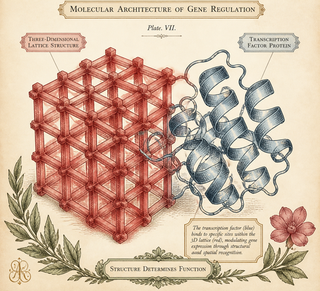
That is not usually how we talk about metastasis. The standard story goes like this: cancer cells break away, travel through the body, land somewhere unfortunate, and start making trouble. It is a jailbreak movie with worse lighting. But Caire and colleagues, writing in Cell, suggest that for breast cancer metastases, the plot is not just escape. It is construction.
Their paper asks a deceptively simple question: once breast cancer cells reach a distant organ, how do they grow into large, clinically dangerous metastases? Not just “what genes are on,” but “what shape does the disease build?” That distinction matters, because biology, like human society and bad group projects, is not only about who is present. It is about how everyone arranges themselves.
The Tumor Is Not a Blob, It Is a Building Project
Using single-cell RNA sequencing, spatial transcriptomics, AI-supported 3D imaging, and mouse experiments, the team found that breast cancer macrometastases often organize themselves into a branching, three-dimensional lattice of epithelial cords. They call this program metastatic trabecular morphogenesis, or MTM.
“Trabecular” means beam-like or lattice-like. “Morphogenesis” means the process by which tissues take shape. Put together, MTM is basically cancer borrowing the architectural software normally used during development, then using it to build a hostile little city-state in someone’s body. Plato worried about forms; cancer, apparently, worries about form too, which feels rude.
This is where the paper gets especially interesting. The researchers found that MTM-high cells can already exist in primary tumors that are destined to metastasize. In contrast, MTM-low primary tumors tended to grow in a more compact, pushing-outward style. Same broad category of disease, different construction philosophy. One says, “Let us expand as a lump.” The other says, “Let us build a branching empire.” Nobody invited the second one.
Developmental Biology, But Make It Sinister
Branching morphogenesis is normally a beautiful thing. It helps build lungs, kidneys, mammary ducts, and other organs that need tubes, branches, and efficient surfaces. In ordinary development, cells cooperate to make a body. In metastasis, the same logic can get redeployed for betrayal. Aristotle might have called humans political animals; cells are political too, and sometimes the party platform is “more tumor.”
The team identified transcription factors ETV1, ETV4, and ETV5 as master regulators of this MTM program. Transcription factors are proteins that help decide which genes get expressed, like overcaffeinated editors with access to the whole manuscript. In metastatic organoids, ChIP-seq pointed to ETV1/4/5 as major drivers of branching cancer morphogenesis. When these regulators were disrupted, cancer cells could still start the metastatic journey, but they struggled to build full-blown macrometastases.
That detail is the philosophical knife twist. Metastasis is not one event. It is a sequence: leave, survive, arrive, adapt, expand. Blocking the last step may require different thinking than blocking the first. You can stop a traveler by closing the road, but you can also stop a colonizer by taking away the blueprints.
The Neighborhood Matters
The study also points to stromal fibroblast growth factor, or FGF, signaling through FGFR receptors as an actionable dependency of MTM. FGF signaling normally helps guide development, tissue repair, and branching. Here, the surrounding stromal cells seem to provide signals that cancer cells use to execute their lattice-building routine.
So yes, the tumor microenvironment is once again involved, because apparently no cancer cell commits villainy without a supporting cast. Fibroblasts, matrix, growth factors, immune cells: the whole neighborhood can become complicit, sometimes knowingly, sometimes as the biological equivalent of “I was just holding the ladder.”
This fits with a broader shift in cancer research. Single-cell and spatial studies have shown that breast tumors are ecosystems, not uniform piles of identical cells. A 2021 Nature Genetics atlas mapped breast cancer cell types and spatial neighborhoods. More recent work in metastatic breast cancer has emphasized rare cell states, plasticity, immune escape, and therapy resistance. The new Cell paper adds a structural layer: not only which cells are there, and not only which genes they express, but what three-dimensional form they collectively create.
Why This Could Matter
If these findings hold up across larger cohorts and different metastatic sites, MTM could become useful in several ways.
First, it might help identify primary tumors with higher metastatic potential by detecting MTM-high programs or architectural features earlier. That would be a serious upgrade from staring at cancer and asking, “Are you going to behave?” while cancer looks back with the emotional transparency of a tax form.
Second, MTM may reveal treatment vulnerabilities specific to macrometastatic growth. Therapies often target proliferation, mutations, or immune checkpoints. But if metastatic expansion depends on a developmental architecture program, then drugs targeting FGF-FGFR signaling or ETV-driven states could, in principle, interfere with the building process itself.
Third, it gives researchers a better conceptual map. Cancer is often described as chaos, but this paper argues that lethal growth can be organized. That is unsettling, but also useful. A burglar rummaging randomly is hard to predict. A construction crew leaves permits, scaffolds, supply chains, and, if we are lucky, weak points.
The caution: this is not a new clinical test or treatment yet. It is a powerful biological model supported by human data, organoids, spatial methods, AI imaging, and mouse work. Translation will require validation, drug testing, safety work, and the usual long march through the valley of “biology is more complicated than our grant aims.”
Still, the idea is elegant: metastasis may not merely spread. It may remember how bodies are built, then misuse that memory. The tragedy is ancient. The therapeutic opportunity may be new.
References
-
Caire R, Bordo R, Zanconato F, et al. A 3D morphogenetic blueprint for metastatic outgrowth in breast cancer. Cell. 2026. DOI: 10.1016/j.cell.2026.03.009
-
Wu SZ, Al-Eryani G, Roden DL, et al. A single-cell and spatially resolved atlas of human breast cancers. Nature Genetics. 2021;53:1334-1347. DOI: 10.1038/s41588-021-00911-1. PMCID: PMC9044823
-
Winkler J, Tan W, Diadhiou CMM, et al. Single-cell analysis of breast cancer metastasis reveals epithelial-mesenchymal plasticity signatures associated with poor outcomes. Journal of Clinical Investigation. 2024. DOI: 10.1172/JCI164227
-
Han X, Li X, Bai L, Zhang G. Single-cell transcriptomics in metastatic breast cancer: mapping tumor evolution and therapeutic resistance. Frontiers in Genetics. 2025;16:1669741. DOI: 10.3389/fgene.2025.1669741. PMCID: PMC12588578
Disclaimer: The image accompanying this article is for illustrative purposes only and does not depict actual experimental results, data, or biological mechanisms.