A cancer cell can change outfits like it is late for a molecular makeover show, but this new study asks a sneakier question: what happens if we stop stocking one tiny accessory it needs to pull the whole look together?
That accessory is copper. Not copper pipes, not a shiny saucepan, not the penny hiding under your car seat. Copper the micronutrient. Your cells use it in small, carefully guarded amounts, the way a good cook uses saffron: a little can make the dish work, too much and everyone starts asking questions.
In a new Nature Cancer paper, Wong and colleagues studied acute lymphoblastic leukemia, or ALL, when it spreads into the central nervous system, the brain-and-spinal-cord neighborhood bathed in cerebrospinal fluid, or CSF. CSF is not exactly a buffet. It is more like a very strict pantry with one sad bag of lentils and a label maker. Yet leukemia cells still manage to set up shop there, which forces doctors to use CNS-directed treatment that can help cure disease but can also bring neurotoxicity, especially in children Wong et al., 2026.
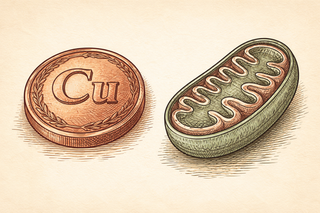
The Brain Pantry Is Weird
ALL is a cancer of immature lymphocytes, the white blood cells that were supposed to grow up into responsible immune citizens and instead started following a bad recipe. Treating ALL often works remarkably well compared with many cancers, but the CNS remains a tricky hiding place. Drugs that season the bloodstream nicely do not always reach the brain and spinal fluid in the right amounts.
That is why CNS therapy often includes intrathecal chemotherapy, meaning drugs delivered into the spinal fluid. It is effective, but not dainty. Reviews of childhood ALL describe the CNS as both a sanctuary for leukemia cells and a place where therapy has to balance cure against long-term side effects Thastrup et al., 2022; Rives, 2023. In kitchen terms, clinicians are trying to burn the bad stew without scorching the pot.
Copper: Tiny Ingredient, Big Drama
The research team used an in vivo CRISPR screen, which is basically a high-throughput recipe test where genes get crossed off the shopping list one by one. They looked for nutritional dependencies in leukemia growing systemically and in the CNS.
One dependency stood out: copper handling.
When the scientists deleted SLC31A1, a gene encoding a major copper transporter, leukemia growth slowed. When they reduced dietary copper in mouse models, leukemia growth also slowed. This happened not just in regular disease sites, but in CNS leukemia models too Wong et al., 2026.
Now, before anyone starts throwing lentils at their copper supplement bottle: this is preclinical work. Copper is essential. Your body does not treat micronutrients like optional garnish. Copper helps enzymes, mitochondria, connective tissue, and other hardworking cellular kitchen staff do their jobs. The goal here is not "copper is bad." The goal is "some leukemia cells may be especially vulnerable when copper gets rationed under controlled conditions."
Big difference. One is science. The other is a wellness TikTok wearing a lab coat it found in lost and found.
The Mitochondrial Stove Loses Its Flame
So why does copper matter to leukemia cells?
The study points to mitochondrial complex IV, also called cytochrome c oxidase. Think of mitochondria as the cell’s stove, and complex IV as one of the burners that helps keep the energy kitchen running. Complex IV needs copper to work properly. When copper runs low, the burner sputters.
But the really tasty part is what happens next. Leukemia cells need to make nucleotides, the building blocks of DNA and RNA. Fast-growing cancer cells are always trying to bake more copies of themselves, and nucleotides are the flour. No flour, no cake. No nucleotides, no easy cell division.
Cancer metabolism researchers have been circling nucleotide synthesis for years because many tumors depend on it heavily Zhu and Thompson, 2023. Methotrexate, an old and still essential ALL drug, also hits nucleotide-related pathways. It is one of oncology’s classic pantry-locking moves.
Wong and colleagues found that copper depletion impaired complex IV activity and disrupted nucleotide synthesis. Then they combined dietary copper depletion with methotrexate in cell-line-derived and patient-derived xenograft models. The combo inhibited leukemia progression more than either idea alone Wong et al., 2026.
That is the kind of pairing a cancer biologist notices. Not "peanut butter and jelly." More like "turn down the oven and hide the flour."
Why This Is Intriguing
Copper has already been showing up in cancer metabolism research as a surprisingly influential ingredient. Reviews describe copper as a double-edged micronutrient in tumor growth and therapy, with roles in mitochondrial respiration and copper-linked cell death pathways Tang et al., 2024. In breast cancer models, copper depletion has also been linked to impaired mitochondrial oxidative phosphorylation and reduced metastatic behavior Ramchandani et al., 2021.
What makes this ALL study especially interesting is the CNS angle. The brain’s fluid environment is nutritionally sparse, so leukemia cells that survive there may rely on certain pantry items in very particular ways. If researchers can exploit those dependencies, future treatments might improve CNS control without simply adding more toxic seasoning.
That is the dream, anyway. The next steps are not small. Scientists need to confirm the effect across more models, understand safety, define who might benefit, and figure out whether copper depletion can be done precisely enough in humans without harming normal tissues. Cancer therapy is not a casual weeknight casserole. You measure twice, taste carefully, and do not let the soufflé make treatment decisions.
Still, this paper offers a clever idea: instead of only attacking leukemia cells with stronger drugs, maybe we can also make their favorite growth recipe harder to cook. Take away just the right ingredient, and the cellular rebels may find the CNS pantry a lot less cozy.
References
-
Wong AYL, Myers JW, Prakash G, et al. Copper depletion boosts CNS leukemia therapy by inhibiting nucleotide synthesis through impairment of mitochondrial complex IV activity. Nature Cancer. 2026. DOI: 10.1038/s43018-026-01177-4
-
Thastrup M, Duguid A, Mirian C, Schmiegelow K, Halsey C. Central nervous system involvement in childhood acute lymphoblastic leukemia: challenges and solutions. Leukemia. 2022;36:2751-2768. DOI: 10.1038/s41375-022-01714-x. PMCID: PMC9712093
-
Rives S. Central nervous system therapy in acute lymphoblastic leukemia: no more, no less. Haematologica. 2023;108:3193-3194. DOI: 10.3324/haematol.2023.283275. PMCID: PMC10690892
-
Zhu J, Thompson CB. Nucleotide metabolism: a pan-cancer metabolic dependency. Nature Reviews Cancer. 2023;23:275-294. DOI: 10.1038/s41568-023-00557-7. PMCID: PMC10041518
-
Tang D, Kroemer G, Kang R. Targeting cuproplasia and cuproptosis in cancer. Nature Reviews Clinical Oncology. 2024;21:370-388. DOI: 10.1038/s41571-024-00876-0
-
Ramchandani D, Berisa M, Tavarez DA, et al. Copper depletion modulates mitochondrial oxidative phosphorylation to impair triple negative breast cancer metastasis. Nature Communications. 2021;12:7311. DOI: 10.1038/s41467-021-27559-z. PMCID: PMC8674260
Disclaimer: The image accompanying this article is for illustrative purposes only and does not depict actual experimental results, data, or biological mechanisms.