Meanwhile, in the esophagus, a tumor is trying to dodge the immune system while calling in backup from the blood-clotting department.
That is the strange little drama behind a new study in Molecular Cancer. The researchers focused on esophageal squamous cell carcinoma, or ESCC, a common and aggressive form of esophageal cancer. Immunotherapy has helped many patients, especially drugs that block PD-1, one of the “please stand down” signals tumors use on T cells.
But the wins are uneven. Some tumors respond. Many do not. Some respond, then learn new tricks. Cancer is annoying like that. It reads the employee handbook and finds the loopholes.
The Protein With a Suspicious Resume
The study’s main suspect is CTHRC1, short for Collagen Triple Helix Repeat Containing 1. Great name if you are a protein. Terrible name if you are trying to order it at a bar.
CTHRC1 has shown up before in cancer biology, often linked to invasion, tissue remodeling, and poor outcomes. In this paper, Liu and colleagues found that ESCC tumors with high CTHRC1 were more likely to resist immune checkpoint blockade. That alone would be interesting. Then the plot got weirder.
High CTHRC1 came with more platelet activity and more megakaryocytes inside the tumor microenvironment. Megakaryocytes are the giant bone marrow cells that make platelets, the tiny cell fragments best known for helping blood clot. Useful when you cut your finger. Less charming when a tumor recruits them as bouncers.
The Tumor Microenvironment Gets a Bad Landlord
The tumor microenvironment is the neighborhood around cancer cells: immune cells, blood vessels, fibroblasts, signaling molecules, and assorted biological clutter. T cells are supposed to patrol this area and kill cancer cells. In a good setup, they are tiny bodyguards with excellent focus.
In a bad setup, the tumor turns the neighborhood hostile. T cells get excluded, exhausted, or talked into doing very little. The scientific term is immunosuppression. The bar term is “the security team got locked outside while the cellular rebels kept the jukebox.”
This study suggests CTHRC1 helps recruit and activate megakaryocytes through the integrin alphaIIb beta3/Rap1 pathway. Integrins are cell-grip proteins. Rap1 helps control that grip. Together, they can change how these platelet-lineage cells behave.
The result: more megakaryocyte activity in the tumor, weaker cytotoxic T-cell function, and more T-cell exhaustion. The immune system still shows up. It just looks tired and underpaid.
The Vaccine Twist
Then the researchers tried something bold. They built a lipid nanoparticle mRNA vaccine encoding CTHRC1.
That sounds futuristic, but the basic idea is simple. mRNA is an instruction note. Lipid nanoparticles are the delivery envelope. The vaccine teaches the immune system to recognize CTHRC1 as a target. Not the whole tumor. One useful flag on the tumor’s escape machinery.
In preclinical ESCC models, the CTHRC1 mRNA-LNP vaccine triggered antitumor immunity. Even better, when researchers combined it with anti-PD-1 therapy, the two worked together. Tumors had more T-cell infiltration, fewer megakaryocytes, less immunosuppression, and durable regression.
Translation: anti-PD-1 took the brakes off the immune response, while the vaccine helped point the response at a bad actor. A map and a gas pedal. Not bad for molecular paperwork.
Why This Matters
Checkpoint inhibitors have changed ESCC treatment. Phase III trials show that adding PD-1 blockade to chemotherapy can improve survival in advanced disease. The NCI now lists chemoimmunotherapy as a standard option for advanced esophageal cancer with PD-L1 expression, though the best biomarker cutoff remains unsettled.
That last part matters. Doctors still need better ways to know whose tumor will respond, whose will resist, and what to do when resistance appears. PD-L1 helps, but it is not a crystal ball. It is more like a weather app with commitment issues.
CTHRC1 could matter in two ways. First, it may help identify tumors that are building a platelet-megakaryocyte shield against immunotherapy. Second, it may become a treatment target, if the vaccine approach works beyond the lab.
That is the big “if.” This was preclinical work, supported by patient tumor analyses and animal models. It is not proof that a CTHRC1 vaccine will help people with ESCC. Mice are not tiny patients wearing lab coats. They are a necessary step, not the finish line.
The Clean Takeaway
This paper adds a new character to the immunotherapy resistance story: CTHRC1, a protein that may help ESCC tumors recruit megakaryocyte and platelet biology to quiet T cells.
If future studies confirm the finding, CTHRC1 could become both a warning sign and a target. That would give oncologists another way to turn cold, resistant tumors into places where T cells can actually work.
Cancer does not usually lose because we yell at it. It loses when we find the wiring and cut the right wire.
References
-
Liu Y, Zhou J, Song M, et al. CTHRC1 drives megakaryocyte-mediated immunotherapy resistance in esophageal squamous cell carcinoma via the integrin alphaIIb beta3/Rap1 pathway and is targetable by mRNA vaccination. Molecular Cancer. 2026. https://doi.org/10.1186/s12943-026-02670-1
-
Li S, Lu Z, Wu S, et al. The dynamic role of platelets in cancer progression and their therapeutic implications. Nature Reviews Cancer. 2024;24:72-87. https://doi.org/10.1038/s41568-023-00639-6
-
Philip M, Schietinger A. CD8+ T cell differentiation and dysfunction in cancer. Nature Reviews Immunology. 2022;22:209-223. https://doi.org/10.1038/s41577-021-00574-3
-
Kon E, Ad-El N, Hazan-Halevy I, Stotsky-Oterin L, Peer D. Targeting cancer with mRNA-lipid nanoparticles: key considerations and future prospects. Nature Reviews Clinical Oncology. 2023;20:739-754. https://doi.org/10.1038/s41571-023-00811-9
-
Wang ZX, Cui C, Yao J, et al. Toripalimab plus chemotherapy in treatment-naive, advanced esophageal squamous cell carcinoma (JUPITER-06): a multi-center phase 3 trial. Cancer Cell. 2022;40:277-288.e3. https://doi.org/10.1016/j.ccell.2022.02.007
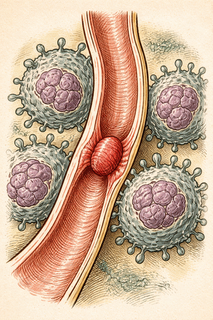
Disclaimer: The image accompanying this article is for illustrative purposes only and does not depict actual experimental results, data, or biological mechanisms.