In poker, the ugliest hand at the table is the one that looks harmless until somebody flips over a straight. That is more or less the problem with prostate cancer screening - sometimes an MRI shrugs, the risk factors keep waving their arms like a panicked guy at a blackjack table, and doctors still have to decide whether to go all-in on a biopsy.
A new phase 3 trial in The Lancet Oncology asked a very practical question: if a man has a non-suspicious or only mildly suspicious prostate MRI, but his other risk signals still look concerning, can PSMA PET scanning help decide who actually needs a biopsy? That is not a niche little puzzle. It is one of those irritating real-world gray zones where medicine has to make decisions without the courtesy of a neon sign.
The awkward middle child of prostate testing
Here is the setup. MRI has become a major tool for spotting prostate cancers that actually matter - the kind likely to grow, spread, or cause trouble. But MRI is not magic. Some men have a low-key MRI result, like PI-RADS 2 or 3, while still carrying enough other risk factors to make clinicians nervous. Elevated PSA density, family history, a suspicious rectal exam, BRCA mutations - the whole "something smells off here" package.
Traditionally, many of these men still get a biopsy. And biopsies are useful, but they are not exactly a spa treatment. They can cause pain, bleeding, infection, anxiety, and they often uncover tiny, slow-growing prostate cancers that were basically minding their own business. That creates a different mess: overdiagnosis, overtreatment, and a lot of men suddenly learning more than they ever wanted to about Gleason scores over breakfast.
Enter PSMA PET, stage left
PSMA PET imaging has been one of the flashiest arrivals in prostate cancer over the past few years. PSMA stands for prostate-specific membrane antigen, a protein often found in high amounts on prostate cancer cells. Radiotracers such as gallium-68-labeled PSMA compounds act a bit like tiny GPS trackers for suspicious cancer cells. If MRI is the wide-angle lens, PSMA PET can sometimes behave like the suspiciously observant friend who notices the one guy in the corner acting weird.
This new multicenter, randomized, phase 3 Australian trial enrolled 660 biopsy-naive men with clinical suspicion of significant prostate cancer, but with MRI findings that were equivocal or non-suspicious - specifically PI-RADS 2 or 3 - plus high clinical risk features. Participants were assigned either to standard systematic transperineal biopsy or to a strategy involving PSMA PET to help determine whether biopsy was needed. The full abstract in PubMed is truncated, so some final details and outcome numbers are not visible there, but the study’s core goal is clear: reduce unnecessary biopsies without missing clinically significant cancer.1
That is the whole trick. Not "find every cell doing anything mildly rude." Find the cancers worth catching, and skip the biopsies that mostly generate stress, side effects, and pathology reports that read like aggressively boring fortune cookies.
Why this matters outside the radiology bunker
This is where the paper gets interesting fast.
A better triage test could mean fewer men getting biopsies they did not need. Fewer unnecessary biopsies means fewer complications, fewer false alarms, and less overdiagnosis of low-risk disease. That has ripple effects on quality of life, health-care costs, and the number of people stuck in the very modern nightmare of "good news, we found cancer you maybe never needed to know about."
And yes, medicine loves a good acronym almost as much as it loves making things complicated. But underneath the alphabet soup, this is a pretty human issue: if your scan looks mostly okay but your risk profile does not, what do you do next without either overreacting or missing something important?
That decision has been annoyingly blunt for years. This study is trying to give clinicians a sharper tool.
The bigger trend: less random poking, more targeted thinking
Prostate cancer diagnosis has been moving away from the old "biopsy first, ask questions later" era. MRI already helped. PSMA PET may push that shift further, especially in difficult borderline cases.
Recent literature backs up the growing role of imaging in making prostate cancer diagnosis and staging smarter. Reviews in major journals have highlighted PSMA PET’s strong performance, especially for identifying clinically meaningful disease and refining management decisions.23 At the same time, experts keep emphasizing the balancing act - improve detection of dangerous cancers while reducing the discovery of harmless ones that trigger a whole cascade of stress and treatment.45
Which, honestly, is one of oncology’s recurring plot twists. The problem is not always failing to find cancer. Sometimes the problem is finding too much of the wrong kind.
A few chips still on the table
Before anyone starts acting like this settles everything forever, a few caveats.
First, this trial focuses on a specific group: men with concerning clinical risk but MRI that does not strongly point to cancer. That is a very useful group, but not every patient. Second, PSMA PET is more expensive and less available than MRI or biopsy in many settings. Third, any new diagnostic pathway has to prove not just that it is clever, but that it improves outcomes in everyday practice without quietly introducing new blind spots.
Also, cancer biology remains a chaotic little gremlin. Some significant tumors hide. Some scans mislead. Some test strategies look fantastic in one health system and become logistical nonsense in another.
Still, this is exactly the kind of study clinicians need - not sci-fi, not hype, just a serious attempt to make a murky decision less murky.
The bottom line
If these results hold up and become widely reproducible, PSMA PET could help spare some men unnecessary biopsy while still catching the prostate cancers that deserve attention. That is a better bet than the current situation, where medicine sometimes has to choose between too much intervention and not quite enough certainty.
And if you can reduce the number of needles involved in a prostate workup without getting reckless, that is not just good science. That is what we in the technical writing business call a very popular idea.
References
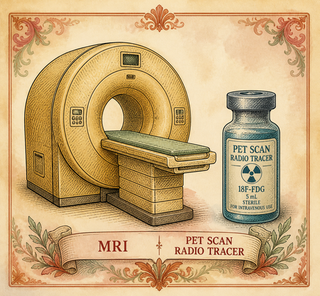
Disclaimer: The image accompanying this article is for illustrative purposes only and does not depict actual experimental results, data, or biological mechanisms.
-
Buteau JP, Moon D, Fahey MT, et al. Effect of [study title truncated in PubMed abstract]. Lancet Oncol. 2026. doi:10.1016/S1470-2045(26)00120-8 ↩
-
Emmett L, Buteau J, Papa N, et al. The additive diagnostic value of prostate-specific membrane antigen PET-CT to multiparametric MRI triage in prostate cancer diagnosis - a systematic review and meta-analysis. Eur Urol Oncol. 2024;7(1):10-21. doi:10.1016/j.euo.2023.05.002 ↩
-
Ceci F, Oprea-Lager DE, Emmett L, et al. EANM/SNMMI procedure guideline for prostate-specific membrane antigen PET imaging. Eur J Nucl Med Mol Imaging. 2023;50(5):1467-1486. doi:10.1007/s00259-023-06136-y ↩
-
Mottet N, van den Bergh RCN, Briers E, et al. EAU-EANM-ESTRO-ESUR-ISUP-SIOG guidelines on prostate cancer. Eur Urol. 2024;85(1):17-42. doi:10.1016/j.eururo.2023.08.018 ↩
-
Drost FH, Osses D, Nieboer D, et al. Prostate MRI, with or without MRI-targeted biopsy, and systematic biopsy for detecting clinically significant prostate cancer - updated evidence and ongoing controversies. BMJ. 2023;381:e073761. doi:10.1136/bmj-2022-073761 ↩