The jury files back in to decide whether the treatment worked: the adenoma was removed, the colon got its procedural victory lap, and the invoice probably achieved sentience. Verdict? The polyp is gone. But according to a new study in Cell Host & Microbe, the gut microbiome may still be loitering near the courthouse with a suspicious briefcase.
The Polyp Left, But the Neighborhood Remembered
Colorectal adenomas are precancerous growths, the kind doctors like to remove before they start auditioning for a much worse role. Colonoscopy and adenoma removal are among the best prevention tools we have for colorectal cancer. Good value, high clinical return, strong public health dividend. If preventive medicine had a blue-chip stock, this would be on the shortlist.
But there has always been an awkward footnote: people who have had adenomas removed still carry a higher future risk of colorectal cancer than people who never had them. That raises a biologically expensive question: after the visible threat is cut out, does the gut go back to business as usual?
Ana Nogal and colleagues looked at stool samples from 354 women who had adenomas removed, matched them 1:1 with adenoma-free controls, and did this long after the procedure: on average 12.1 years later. They also profiled fecal metabolites in 184 matched pairs. That is not a quick post-op snapshot. That is the microbiome equivalent of checking the balance sheet a decade after the merger.
The answer: differences were still there.
Your Gut Has a Memory, Apparently
The team found that microbial composition differed between women with a history of adenoma and controls. Even more eyebrow-raising, those differences partly matched patterns seen in colorectal cancer across 14 independent case-control studies. The correlation was modest, but real: Pearson's rho of 0.26, with p < 0.0001. In plain English, the microbiome was not screaming "cancer," but it was humming a tune from the same unsettling playlist.
Thirty-one microbes were altered in both adenoma history and colorectal cancer, including Faecalibacterium prausnitzii and Flavonifractor plautii. The study also found 30 metabolites and 7 metabolic sub-pathways associated with adenomas, with sphingolipids standing out. Sphingolipids are fatty molecules involved in cell membranes and signaling, which sounds boring until you remember cancer loves hijacking normal cellular logistics like a hedge fund with a lab coat.
The researchers also spotted disease-specific microbe-metabolite relationships, including links between Bilophila wadsworthia and alanine-containing dipeptides. Translation: this is not just "which bacteria are there?" It is also "what chemical messages are they sending, and who is cashing the checks?"
Why This Matters Beyond the Petri Dish
The gut microbiome is the vast community of bacteria, fungi, viruses, and other tiny tenants living in your digestive tract. The metabolome is the chemical trail they and your body leave behind: nutrients, fats, amino acids, bile acid products, and other molecular receipts. When these systems shift, they can affect inflammation, immune tone, metabolism, and the lining of the colon.
Prior studies have already connected gut microbes and metabolites with colorectal cancer and adenomas. Integrated metagenomic and metabolomic work has identified microbial and chemical signatures that may help detect colorectal cancer and adenoma Chen et al., 2022, while other studies have tied altered gut metabolites and microbial interactions to colorectal carcinogenesis Coker et al., 2022. A 2023 systematic review also found that microbiome-derived biomarkers are promising for early colorectal cancer detection, although not ready to replace standard screening Zwezerijnen-Jiwa et al., 2023.
What makes this new paper different is the time horizon. These changes were detectable more than a decade after adenoma removal. That suggests the adenoma-cancer pathway may involve a long-running gut ecosystem shift, not just a one-time bad polyp with poor career choices.
The Access Question, Because Reality Always Sends a Bill
If these findings hold up, they could eventually help refine risk prediction after adenoma removal. Maybe some people need closer surveillance. Maybe stool-based microbial or metabolite markers could complement existing tests. Maybe lifestyle changes, especially diet and physical activity, could be targeted more precisely in people whose gut ecosystem looks higher risk.
But let us not start pricing the Microbiome Crystal Ball at $4,999 and calling it innovation. This study shows association, not causation. It included women from the Nurses' Health Study II, so broader validation across sexes, ages, ancestries, geographies, and healthcare settings matters. The future value comes only if the science becomes reproducible, clinically useful, affordable, and accessible. Otherwise we have invented another boutique biomarker for people whose insurance plans already have a concierge.
Still, the idea is compelling: adenoma removal may fix the visible problem, while the gut environment remains a longer-term risk signal. The tumor may be gone, but the neighborhood watch is still underfunded, the streetlights are flickering, and several microbial characters are hanging around with unclear intentions.
That is not a reason to panic. It is a reason to keep screening, study prevention smarter, and ask whether the gut microbiome can help us spend our cancer-prevention dollars where they buy the most health.
References
Nogal A, Wang K, Thompson KN, et al. Long-lasting gut microbiome and fecal metabolome alterations after colorectal adenoma removal and their relationship to colorectal cancer. Cell Host & Microbe. 2026. https://doi.org/10.1016/j.chom.2026.05.001
Chen F, Dai X, Zhou CC, et al. Integrated analysis of the faecal metagenome and serum metabolome reveals the role of gut microbiome-associated metabolites in the detection of colorectal cancer and adenoma. Gut. 2022;71:1315-1325. https://doi.org/10.1136/gutjnl-2020-323476
Coker OO, Liu C, Wu WKK, et al. Altered gut metabolites and microbiota interactions are implicated in colorectal carcinogenesis and can be non-invasive diagnostic biomarkers. Microbiome. 2022;10:35. https://doi.org/10.1186/s40168-021-01208-5
Zwezerijnen-Jiwa FH, Sivov H, Paizs P, Zafeiropoulou K, Kinross J. A systematic review of microbiome-derived biomarkers for early colorectal cancer detection. Neoplasia. 2023;36:100868. https://doi.org/10.1016/j.neo.2022.100868
Zepeda-Rivera M, et al. A distinct Fusobacterium nucleatum clade dominates the colorectal cancer niche. Nature. 2024;628:424-432. https://doi.org/10.1038/s41586-024-07182-w
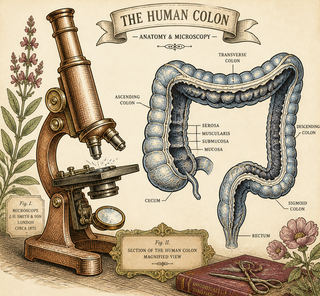
Disclaimer: The image accompanying this article is for illustrative purposes only and does not depict actual experimental results, data, or biological mechanisms.