Most people think the Y chromosome is basically a biological light switch for male development, but actually it may be more like a tiny, weirdly understaffed space station that keeps sending signals long after the opening credits.
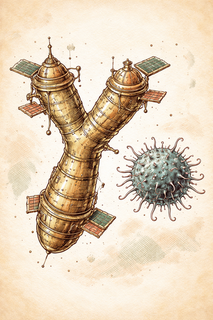
That is the argument behind a new review in Nature Reviews Cancer by Hany Abdel-Hafiz, Lena Hoelzen, and Dan Theodorescu: the Y chromosome is not just hanging around wearing a “sex determination” name tag. It carries genes involved in transcription, chromatin remodeling, immune behavior, androgen signaling, and other cellular operations that sound suspiciously like command-center duties. When cancer cells lose it, which happens more often than you might expect, the tumor may change how it grows, hides, repairs damage, and negotiates with the immune system. Negotiates badly, of course. Cancer is not famous for being a team player.
The Chromosome That Quietly Vanishes
Loss of the Y chromosome, or LOY, means exactly what it sounds like: some cells in a male body lose their Y chromosome. Not all cells. Not everywhere. More like a few rooms on the ship start ignoring central command.
This is called mosaic loss because the body becomes a patchwork of Y-positive and Y-negative cells. LOY increases with age and can be pushed along by environmental exposures, cell-division mistakes, and inherited risk factors. It is especially common in blood cells, but researchers also find it in other tissues and tumors. The new review calls LOY the most common somatic genomic alteration in males, which is a very formal way of saying: this is not some obscure genomic typo hiding in the footnotes.
For years, LOY looked like cellular lint. Aging cells lose stuff. Genomes get messy. Everybody shrugs. But newer research has made that shrug look premature.
The Immune System Notices When the Y Goes Missing
One of the most dramatic clues came from bladder cancer. In a 2023 Nature study, researchers found that bladder tumors missing the Y chromosome were linked to worse outcomes. When they used CRISPR-Cas9 to delete the Y chromosome in bladder cancer models, the Y-negative tumors did not grow faster in a dish. In the body, though, they became nastier.
That distinction matters. A petri dish has nutrients, plastic, and vibes. A body has immune cells, blood vessels, pressure, surveillance, and tiny biological security droids asking for ID. The Y-negative tumors seemed better at exhausting CD8+ T cells, the immune system’s elite strike team. The T cells showed up, but the tumor microenvironment turned into the sci-fi hallway where the lights flicker and everyone’s radio cuts out.
Here is the twist: those same Y-negative tumors may respond better to PD-1 checkpoint blockade, a type of immunotherapy that can revive exhausted T cells. So LOY might be both bad news and useful intelligence. The tumor may be sneakier, but it may also leave a thermal signature on the scanner.
Not Every Y Story Has the Same Plot
Cancer biology loves ruining tidy narratives. In colorectal cancer, the issue may not always be losing the Y chromosome. A separate 2023 Nature study found that higher activity of a Y-linked gene called KDM5D helped drive male-biased aggressiveness in colorectal cancer models, partly by reshaping chromatin and immune-related pathways.
So in one cancer type, losing Y-linked material may help the tumor dodge immune attack. In another, an active Y-linked gene may help the tumor invade. The Y chromosome is apparently not a single character. It is an ensemble cast, and at least one of them has a mysterious trench coat.
A broader 2023 Cell analysis of more than 5,000 primary tumors also found that LOY can look different across cancer types. Sometimes it behaves like a passenger event, a genomic scar from chaos elsewhere. Sometimes it may help drive the story. In uveal melanoma, for example, LOY was associated with age, survival, and poor outcome.
Why This Could Matter in Real Life
If these findings hold up across larger, more diverse patient groups, LOY could become a useful cancer biomarker. Doctors might one day track Y chromosome loss in tumor tissue, blood, urine, or cheek cells to help estimate risk, monitor progression, or choose therapy. That is not routine clinical practice yet, but the technology is catching up fast.
Bulk sequencing can estimate LOY across many cells. Single-cell sequencing can ask which exact cells lost the Y. Newer Y chromosome reference maps, including the complete human Y sequence reported in 2023, should make this detective work less like reading a shredded star map.
The hard part is interpretation. Does LOY cause cancer behavior, cooperate with other mutations, or merely ride along while the tumor does its villain monologue? The answer may be “yes, depending on the tumor,” which is scientifically honest and emotionally inconvenient.
Still, the big idea is powerful: male cancer biology may not be explained only by hormones, lifestyle exposures, or bad luck. The Y chromosome itself may shape risk, immune response, and treatment sensitivity. That turns a once-neglected chromosome into a possible clinical signal.
Not bad for a tiny space station everyone thought was just running the prologue.
References
-
Abdel-Hafiz HA, Hoelzen L, Theodorescu D. Beyond sex determination: the Y chromosome in male cancers. Nature Reviews Cancer. 2026. doi:10.1038/s41568-026-00935-x
-
Abdel-Hafiz HA, Schafer JM, Chen X, et al. Y chromosome loss in cancer drives growth by evasion of adaptive immunity. Nature. 2023;619:624-631. doi:10.1038/s41586-023-06234-x
-
Qi M, Pang J, Mitsiades I, Lane AA, Rheinbay E. Loss of chromosome Y in primary tumors. Cell. 2023;186:3125-3136.e11. doi:10.1016/j.cell.2023.06.006
-
Li J, Lan Z, Liao W, et al. Histone demethylase KDM5D upregulation drives sex differences in colon cancer. Nature. 2023;619:632-639. doi:10.1038/s41586-023-06254-7
-
Bruhn-Olszewska B, Markljung E, Rychlicka-Buniowska E, Sarkisyan D, Filipowicz N, Dumanski JP. The effects of loss of Y chromosome on male health. Nature Reviews Genetics. 2025;26:320-335. doi:10.1038/s41576-024-00805-y
Disclaimer: The image accompanying this article is for illustrative purposes only and does not depict actual experimental results, data, or biological mechanisms.