Breakfast betrayal.
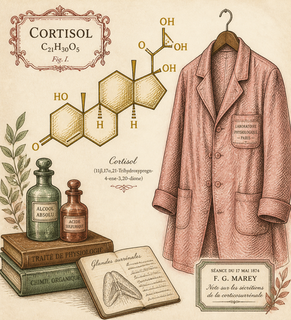
The meal you skip may be doing more than making your 10 a.m. meeting feel like a hostage situation. In a recent New England Journal of Medicine “Clinical Implications of Basic Research” article, Nima Sharifi discusses a Nature study with a wonderfully inconvenient idea: fasting may help anti-estrogen therapy work better in estrogen receptor-positive breast cancer by waking up glucocorticoid signaling, the same stress-hormone pathway your body uses when life becomes emails, traffic, and one Western blot that absolutely refuses to behave.
The Tumor Has a Hormone Inbox
Most breast cancers are hormone receptor-positive, meaning their cells carry receptors that listen to hormones, especially estrogen. If estrogen is the “grow, grow, grow” memo, endocrine therapies like tamoxifen or fulvestrant try to jam the printer, block the inbox, or shred the paperwork.
That strategy has helped many patients. But cancer cells, those overachieving little rebels, can learn new tricks. They reroute signals. They change which genes are accessible. They recruit help from the tumor microenvironment, which is basically a sketchy neighborhood full of fibroblasts, immune cells, blood vessels, and suspiciously cooperative molecules. Endocrine resistance remains one of the big headaches in HR-positive breast cancer, and not the kind solved by drinking water and staring into the middle distance.
Fasting Enters, Wearing a Lab Coat
The Nature paper by Padrão and colleagues asked a deceptively simple question: when fasting makes endocrine therapy work better in breast cancer models, what is actually doing the work?
Their answer was not just “less sugar” or “lower insulin,” though those metabolic shifts matter. The team found that fasting, when paired with endocrine therapy, caused broad epigenetic reprogramming in estrogen receptor-positive breast cancer xenografts. Translation: the cells did not merely change fuel sources. They changed which instruction manuals were open on the bench.
The standout signal was activation of the glucocorticoid receptor, or GR. Glucocorticoids include cortisol, the body’s built-in stress hormone, and synthetic cousins like dexamethasone. When these hormones bind GR, the receptor can move into the nucleus and influence gene expression. Tiny molecular clipboard. Very bossy.
In the study, fasting activated GR and progesterone receptor programs while reducing AP-1 activity, a transcription factor family linked to growth and resistance. When researchers knocked out GR, fasting lost much of its boost to tamoxifen. When they gave glucocorticoid ligands directly, they could mimic some fasting effects and promote tumor regression in models. That is the sort of result that makes a lab meeting go quiet for three seconds before everyone starts asking whether the antibody control was clean.
Wait, Aren’t Steroids Complicated?
Yes. Spectacularly.
Glucocorticoids are not “good” or “bad” in cancer in any tidy, refrigerator-magnet way. Reviews of breast cancer biology show that GR signaling can have different effects depending on tumor subtype, dose, timing, immune context, and probably several other variables hiding behind the centrifuge. In ER-positive breast cancer, GR activity has often looked more favorable. In ER-negative or triple-negative settings, GR can be linked to survival programs, migration, immune evasion, or chemotherapy resistance.
This is why nobody should read this and decide that fasting plus steroids is now a do-it-yourself oncology side quest. Cancer treatment is already enough of a group project. Please do not add solo experimental nutrition pharmacology to the spreadsheet without your oncology team.
The Human Clue
The Nature team also looked at patients undergoing cyclic fasting-mimicking diets. These are low-calorie, low-protein, low-sugar diets designed to imitate fasting while allowing some food, which sounds like fasting’s slightly more civilized cousin. Patient samples showed increased progesterone and cortisol, and tumors after fasting-mimicking diet cycles showed an inverse relationship between GR activation and proliferation markers.
That is not the same as proving better survival. It is a mechanistic clue. A strong one, but still a clue. Bench scientists learn to respect clues while glaring at them suspiciously, because biology has a long history of acting innocent and then ruining your weekend.
Why This Could Matter
If this biology holds up in larger clinical trials, the impact could be practical. Endocrine therapy often lasts years. Asking patients to repeatedly fast for long periods may be difficult, unsafe for some, or just miserable. If glucocorticoid activation is the key piece, researchers might test whether carefully timed, clinically familiar medications could reproduce the useful part of fasting without requiring everyone to become a monk with a pill organizer.
The broader idea is even bigger: metabolism is not just background scenery. Meal timing, stress hormones, growth factors, immune cells, and cancer signaling all talk to each other. The tumor is not sitting alone in a dish, no matter how much we wish our clean cell-culture experiments reflected real life. In the body, every intervention lands in a crowded room.
For now, the message is measured but intriguing: fasting may boost endocrine therapy in HR-positive breast cancer through GR activation, and that mechanism gives researchers something testable. Not a miracle. Not a menu plan. A biological handle. And in cancer research, a good handle is worth a lot, especially when your last one snapped off during month seven of optimization.
References
-
Sharifi N. Fasting, Glucocorticoids, and Breast Cancer. New England Journal of Medicine. 2026. DOI: 10.1056/NEJMcibr2600647
-
Padrão N, Severson TM, Gregoricchio S, et al. Fasting boosts breast cancer therapy efficacy via glucocorticoid activation. Nature. 2026;649:1013-1021. DOI: 10.1038/s41586-025-09869-0. PMCID: PMC12823405
-
Yuan J, Yang L, Li Z, et al. The role of the tumor microenvironment in endocrine therapy resistance in hormone receptor-positive breast cancer. Frontiers in Endocrinology. 2023;14:1261283. DOI: 10.3389/fendo.2023.1261283
-
Vernieri C, Fucà G, Ligorio F, et al. Fasting-Mimicking Diet Is Safe and Reshapes Metabolism and Antitumor Immunity in Patients with Cancer. Cancer Discovery. 2022;12:90-107. DOI: 10.1158/2159-8290.CD-21-0030. PMCID: PMC9762338
-
Gómez-Escobar LG, et al. The Role of Glucocorticoids in Breast Cancer Therapy. Current Oncology. 2023;30:298-314. DOI: 10.3390/curroncol30010024. PMCID: PMC9858160
Disclaimer: The image accompanying this article is for illustrative purposes only and does not depict actual experimental results, data, or biological mechanisms.