What is a tumor, really, if not a group project where one cell did absolutely none of the reading and then took over the room?
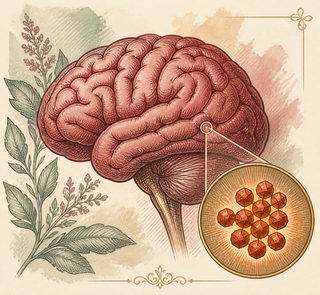
Glioblastoma is especially rude about it. It grows in the brain, which is already premium real estate. It dodges drugs behind the blood-brain barrier, the body’s velvet rope. And it remodels its surroundings into an immunologic swamp where T cells arrive, look around, and quietly reconsider their life choices.
A new paper in Signal Transduction and Targeted Therapy tries to attack that whole mess at once. Not one lever. Several. Light. Heat. Reactive oxygen species. CRISPR. Immune remodeling. Nanoparticles wearing neutrophil camouflage.
It is a lot. Oncology papers now sometimes read like someone emptied a biotech junk drawer onto a tumor model and said, “Let’s see what scares it.” But this one has a coherent idea under the gadget pile.
The Tumor Microenvironment: A Bad Neighborhood With Great Security
Cancer treatment is not just about killing cancer cells. If only. We would all sleep more.
Tumors live inside a tumor microenvironment, which includes blood vessels, immune cells, chemical signals, scar-like tissue, and various cellular bystanders who claim they “just work here.” In glioblastoma, that environment is hostile to treatment. Immune cells often cannot get in, cannot stay active, or get talked into helping the tumor instead.
One of the chemical tricks involves CD73. CD73 helps convert ATP, a danger signal that can wake up immunity, into adenosine, which tells immune cells to calm down and maybe take a nap. In a tumor, that is not serenity. That is witness tampering.
Reviews of glioblastoma immunotherapy keep circling the same problems: the blood-brain barrier, tumor heterogeneity, immune suppression, and disappointing responses to treatments that work better in other cancers. The brain is not “immune privileged” in the old cartoonish sense, but it is picky, guarded, and complicated. Very on brand for the brain.
The New Platform: Tiny Trojan Horses With Laser Plans
Luo and colleagues built a nanoparticle system called bNe@AIE/Cas9-CD73. The name has all the elegance of a hospital Wi-Fi password, but the concept is interesting.
The platform includes an AIEgen, a molecule with aggregation-induced emission properties. In plain English: it can glow and produce therapeutic effects when packaged in certain ways and activated by near-infrared light. Here, the AIEgen supported imaging plus two forms of light-based therapy: photothermal therapy, which heats tumor tissue, and photodynamic therapy, which generates reactive oxygen species that damage cells.
Then the researchers added CRISPR/Cas9 aimed at CD73. The goal was not just to punch the tumor. It was to turn down the tumor’s “everybody relax, nothing to see here” adenosine signaling.
Finally, they wrapped the payload in bone-derived neutrophil-based biomimetic nanoparticles. Neutrophils naturally traffic toward inflammation, and tumors are basically inflammation with a marketing problem. The coating helped the particles cross blood-brain barrier models and accumulate in glioblastoma tissue.
Why CD73 Is Such a Tempting Target
When cancer cells die from phototherapy, they can release ATP and other danger signals. That can be good. It can alert the immune system. But if CD73 is sitting there converting the signal into adenosine, the message changes from “attack” to “please enjoy this warm blanket.”
That is why CD73 blockade has drawn attention in glioblastoma and cancer immunotherapy more broadly. Prior reviews describe CD73 and the adenosine pathway as drivers of immune escape, invasion, angiogenesis, and treatment resistance in glioblastoma models. Lovely résumé. Would not hire.
In this study, CRISPR-mediated CD73 silencing reduced CD73 expression, disrupted the ATP-adenosine axis, and appeared to make the tumor environment more immune-supportive. In treated glioblastoma-bearing mice, the combination of CD73 editing plus light activation increased immune signals, boosted infiltration of CD8 T cells and NK cells, shifted macrophages toward a more inflammatory phenotype, reduced tumor growth, and prolonged survival compared with controls.
That is the preclinical dream: make the tumor visible, damage it locally, and wake up immune cells so they stop behaving like underpaid security guards at a suspicious warehouse.
The Catch, Because There Is Always a Catch
This is not a treatment for patients yet. It is a mouse and cell-model study. Glioblastoma has humbled many gorgeous preclinical ideas. The graveyard is full. Bring comfortable shoes.
Several questions matter before anyone gets too cheerful. Can this delivery system work reliably in human brain tumors, which are larger, more heterogeneous, and less cooperative than mouse tumors? Can CRISPR editing be controlled safely enough in the brain? Can near-infrared light reach the right tissue in real clinical settings? Will the immune activation help without causing unacceptable inflammation? And can manufacturing such a multi-part platform be standardized without making every regulatory reviewer reach for antacids?
Still, the strategy is worth watching because it tackles glioblastoma as an ecosystem problem. Not just “kill cells.” More like “break the tumor’s communications network, open the gates, mark the target, and call in backup.” Subtle? No. But glioblastoma has not exactly responded to polite conversation.
Why This Matters
If this approach, or something like it, proves reproducible and scalable, it could point toward smarter combination therapies for brain tumors: drug delivery systems that cross the blood-brain barrier, imaging tools that show where therapy goes, local light-triggered tumor killing, and gene editing that makes the immune neighborhood less useless.
That is a big if. A clinically responsible if. The kind of if you write in capital letters after a long clinic day.
But the paper captures a direction oncology badly needs: stop treating the tumor as a lonely villain and start treating the whole corrupted neighborhood. Because in glioblastoma, the cancer cells are bad enough. The neighborhood watch has also been bribed.
References
-
Luo G, Ma F, Yang Y, et al. Engineering an AIEgen-based platform integrating CRISPR/Cas9 to remodel the tumor microenvironment and reinforce photo-immunotherapy against glioblastom. Signal Transduction and Targeted Therapy. 2026. DOI: 10.1038/s41392-026-02699-0
-
Liu Y, Zhou F, Ali H, Lathia JD, Chen P. Immunotherapy for glioblastoma: current state, challenges, and future perspectives. Cellular & Molecular Immunology. 2024;21:1354-1375. DOI: 10.1038/s41423-024-01226-x
-
Mirzaei R, Arefnezhad R, Javar HA, et al. Adenosinergic pathway: a hope in the immunotherapy of glioblastoma. Cancers. 2021;13(2):229. DOI: 10.3390/cancers13020229
-
Park JH, Lee HK. An overview of current therapeutic strategies for glioblastoma and the role of CD73 as an alternative curative approach. Clinical and Translational Oncology. 2022;24:385-397. DOI: 10.1007/s12094-021-02717-5
-
Zhou J, Gao Z, Liu S, et al. Aggregation-induced emission photosensitizer-based photodynamic therapy in cancer: from chemical to clinical. Journal of Nanobiotechnology. 2022;20:344. DOI: 10.1186/s12951-022-01553-z
-
Li X, Lovell JF, Yoon J, Chen X. Clinical development and potential of photothermal and photodynamic therapies for cancer. Nature Reviews Clinical Oncology. 2020;17:657-674. DOI: 10.1038/s41571-020-0410-2
Disclaimer: The image accompanying this article is for illustrative purposes only and does not depict actual experimental results, data, or biological mechanisms.