Checkpoint inhibitors work by blocking molecular brakes. PD-1, PD-L1, and CTLA-4 are part of the immune system’s built-in restraint system, which normally keeps T cells from attacking everything with a pulse and a nametag. Cancer cells, those slippery little freeloaders, can exploit these brakes to avoid immune attack.
So drugs that block PD-1, PD-L1, or CTLA-4 can let T cells get back in the groove. In HCC, combinations such as tremelimumab plus durvalumab have changed the setlist for unresectable disease, giving patients options beyond older targeted drugs like sorafenib.2
But when you take the brakes off the immune system, sometimes it does not just attack the tumor. Sometimes it attacks the colon, liver, skin, lungs, endocrine glands, and anything else that looks at it funny. These immune-related adverse events, or irAEs, can range from annoying to life-threatening. Combination therapy, especially when CTLA-4 is involved, tends to turn the volume knob higher.
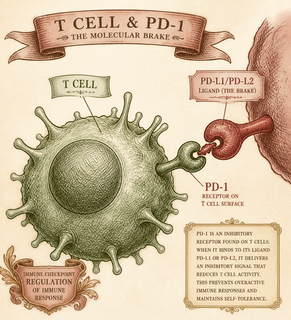
And HCC brings extra drama because the liver is already complicated. Many patients have cirrhosis, hepatitis history, fatty liver disease, or reduced liver reserve. Asking clinicians to distinguish tumor progression, baseline liver disease, drug injury, and immune hepatitis is like asking someone to identify a single wrong saxophone note during a 3 a.m. jam session in a thunderstorm.
Steroids: Villain, Fire Extinguisher, or Both?
Corticosteroids are the standard first move when serious irAEs happen. If the immune system lights the curtains on fire, steroids are the extinguisher. Nobody argues much about that.
The controversy is timing. Treating toxicity after it appears is accepted. Giving steroids ahead of time has been treated as suspicious, because steroids can suppress immune activity. The fear is obvious: what if you prevent side effects by also preventing the cancer response?
Shen and colleagues argue the story may be more nuanced. In lung cancer immunochemotherapy, patients often receive prophylactic steroids to prevent chemotherapy-related nausea or allergic reactions, and some data suggest this does not necessarily erase immunotherapy benefit. More provocatively, the authors report preclinical HCC work showing corticosteroid premedication did not impair T-cell activation or anti-tumor activity from dual ICI therapy.1
That is not a free pass to sprinkle dexamethasone on every infusion like parmesan. Dose, timing, indication, tumor type, and regimen probably matter. A patient taking chronic high-dose steroids because they are very ill is not the same biological situation as a short, planned premedication course in an otherwise eligible patient. Same instrument, different song.
Why This Matters in Real Life
Severe irAEs do not just create scary lab values. They send people to hospitals, interrupt treatment, force permanent discontinuation, and sometimes leave long-term damage. A meta-analysis of ICI-based therapies in unresectable HCC found that adverse events remain a major practical limitation, even as immunotherapy improves outcomes.3 Another large review found ICIs improved response and survival measures in HCC, but also emphasized that there is still room to improve the balance between benefit and harm.4
That balance is the whole tune.
If prophylactic steroids can reduce severe immune toxicity without flattening anti-cancer immunity, the impact could be very real: fewer emergency admissions, fewer treatment stoppages, less fear around CTLA-4-containing regimens, and more patients able to stay on therapies that may help them. It could also make oncologists more comfortable using potent combinations in carefully selected patients.
But the keyword is “if.” This paper is an Expert Opinion, not a definitive randomized trial. The right next step is prospective testing: pick the regimen, define the steroid schedule, measure severe irAEs, track response and survival, and watch for infections or other steroid-related trouble. Science loves a good riff, but eventually someone has to write the chart.
The Key Change
The most interesting idea here is not “steroids good” or “steroids bad.” It is that immune control is not a light switch. It is a mixer board. You may be able to lower the feedback without muting the solo.
For HCC, where the liver is both the stage and one of the instruments, that subtlety matters. The old dogma said prophylactic steroids might sabotage immunotherapy. The new question is cooler and more useful: can we use a short steroid cue to keep the immune band from blowing out the speakers while the T cells keep playing the cancer offstage?
That is a clinical trial worth hearing.
References
-
Shen YC, Pinato DJ, Liu TH, et al. Revisiting prophylactic corticosteroids to mitigate severe immune-related adverse events in hepatocellular carcinoma. Journal of Hepatology. 2026. DOI: 10.1016/j.jhep.2026.01.009 ↩
-
Abou-Alfa GK, Lau G, Kudo M, et al. Tremelimumab plus Durvalumab in Unresectable Hepatocellular Carcinoma. NEJM Evidence. 2022;1(8):EVIDoa2100070. DOI: 10.1056/EVIDoa2100070 ↩
-
Adverse Events of Immune Checkpoint Inhibitor-Based Therapies for Unresectable Hepatocellular Carcinoma in Prospective Clinical Trials: A Systematic Review and Meta-Analysis. Liver Cancer. 2022;12(6):521-538. DOI: 10.1159/000528698. PMCID: PMC10928812 ↩
-
Zhang R, Wang F, You Z, et al. Approved immune checkpoint inhibitors in hepatocellular carcinoma: a large-scale meta-analysis and systematic review. Journal of Cancer Research and Clinical Oncology. 2024;150:82. DOI: 10.1007/s00432-023-05539-8. PMCID: PMC10847200 ↩
-
van Not OJ, Verheijden RJ, van den Eertwegh AJM, Haanen JBAG, Aarts MJB, van den Berkmortel FWPJ. Immunosuppression for immune-related adverse events during checkpoint inhibition: an intricate balance. npj Precision Oncology. 2023;7:41. DOI: 10.1038/s41698-023-00380-1. PMCID: PMC10182067 ↩
Disclaimer: The image accompanying this article is for illustrative purposes only and does not depict actual experimental results, data, or biological mechanisms.