This paper describes a nanoparticle vaccine for HPV-related cervical disease. Then it casually turns that nanoparticle into a microscopic immune-system food truck with viral peptides, tumor membrane bits, and bacterial “please notice me” signals on the menu.
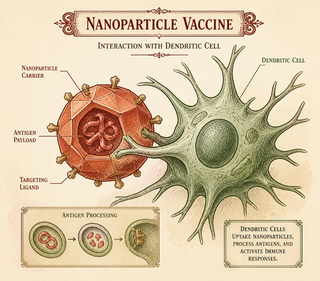
The study, published in Signal Transduction and Targeted Therapy, tests a personalized nanovaccine called HM-NPs@LP for HPV-related cervical disease. The name is not exactly beach-reading material, but the idea is genuinely fascinating, and yes, I know I am legally required as a grad-student-adjacent human to say “fascinating” at least twice before the references.
HPV Is Not Just Hanging Out
Most HPV infections clear on their own, because your immune system usually notices the problem and escorts the virus out with a tiny clipboard and moderate authority. But persistent high-risk HPV, especially HPV16, can push cervical cells toward precancer and cancer. The viral proteins E6 and E7 are infamous here because they interfere with p53 and Rb, two tumor-suppressor systems that normally keep cells from making extremely poor life choices.
Current HPV vaccines are excellent at prevention, but they do not reliably treat infections or lesions that already exist. Screening and procedures like excision save lives, absolutely. But they can come with recurrence, repeated surveillance, anxiety, and in some cases effects on cervical tissue. So researchers keep asking: can we train the immune system to clean up HPV-driven disease after the virus has already set up camp?
The Nanoparticle Is Basically a Wanted Poster With Snacks
Wang and colleagues built HM-NPs@LP using PLGA nanoparticles, a biodegradable delivery material already familiar in biomedical research. Into this little package they loaded long peptides from HPV16 E5, E6, and E7. That matters because many therapeutic HPV vaccines focus on E6 and E7, while E5 may be relevant earlier in HPV-driven disease.
Then they added two membrane ingredients. First: tumor cell membranes, which carry a broader set of tumor-associated clues, like a personalized “have you seen this suspicious cell?” flyer. Second: bacterial cytoplasmic membranes, used as natural adjuvants. Translation: immune cells are more likely to wake up when bacterial-looking patterns are nearby. Dendritic cells, the immune system’s professional show-and-tell presenters, take up antigens and display them to T cells. Without dendritic cells, T cells are basically security guards with no incident report.
The final particles were about 177 nm, stable, and taken up efficiently by mouse dendritic cells. The bacterial membrane component appeared to help activate immune signaling through TLR2-MyD88-NF-kB pathways, which is the immunology equivalent of setting off a very specific smoke alarm.
What Happened in the Mice?
In mouse models, the vaccine accumulated in lymph nodes, strengthened tumor-specific T-cell responses, and suppressed tumor growth. The researchers also tested immune memory by rechallenging surviving mice with tumor cells. The vaccinated mice resisted tumor recurrence during the observation period, which is the sort of result that makes everyone in journal club sit up straighter and pretend they understood the supplementary figures on the first pass.
They also used HLA-A*02:01 transgenic mice, which is a step toward modeling human antigen presentation. That does not make the model “basically a human,” despite what my sleep-deprived brain wants at 1:12 a.m., but it does make the translational argument more interesting. In that setting, the vaccine generated HPV16 E5/E6/E7-specific T-cell responses and reduced tumor burden.
The team also combined the vaccine with taxane-platinum chemotherapy and anti-PD-1 therapy. That combination further improved tumor suppression in the model. This fits the broader direction of the field: therapeutic HPV vaccines may work best when paired with treatments that make tumors less cozy and more visible to immune attack.
Why This Is Worth Watching
Therapeutic HPV vaccination is having a moment. A 2025 phase II trial of Vvax001, a Semliki Forest virus-based vaccine targeting HPV16 E6/E7, reported complete histopathologic response in 50% of treated patients with HPV16-positive CIN3 and HPV16 clearance in 63% of evaluable patients, with no serious adverse events reported [2]. Other platforms, including mRNA vaccines and DNA vaccines paired with checkpoint blockade, are also pushing the idea forward [3,4].
That said, this new HM-NPs@LP study remains preclinical. Mouse tumors are useful, but they are not patients. The vaccine uses personalized tumor membrane material, so manufacturing, quality control, cost, timing, and real-world scalability all matter. Also, “minimal toxicity in mice” is encouraging, but it is not the same as “safe in diverse humans with messy clinical histories and calendars.”
Still, the concept is compelling: combine fixed HPV targets with patient-specific tumor clues, package them in a nanoparticle, and add immune-alerting membrane signals so dendritic cells pay attention. If future studies reproduce and expand these results, this kind of platform could help treat persistent HPV-related lesions, reduce recurrence, or support therapy for HPV-driven cancers.
That is a lot for a 177 nm particle. I personally need coffee to answer email.
References
-
Wang R, Wang J, Ruan J, et al. Innovative peptide-loaded hybrid membrane nanovaccine enables precise personalized immunotherapy for HPV-related cervical diseases. Signal Transduction and Targeted Therapy. 2026;11:214. DOI: 10.1038/s41392-026-02680-x
-
Eerkens ALE, Esajas MD, Brummel K, et al. Vvax001, a therapeutic vaccine, for patients with HPV16-positive high-grade cervical intraepithelial neoplasia: a phase II trial. Clinical Cancer Research. 2025;31(6):1016-1026. DOI: 10.1158/1078-0432.CCR-24-1662
-
Wang J, Wang Q, Ma L, et al. Development of an mRNA-based therapeutic vaccine mHTV-03E2 for high-risk HPV-related malignancies. Molecular Therapy. 2024;32(7):2340-2356. DOI: 10.1016/j.ymthe.2024.04.036
-
Hillemanns P, Zikan M, Forget F, et al. Safety and efficacy of the therapeutic DNA-based vaccine VB10.16 in combination with atezolizumab in persistent, recurrent or metastatic HPV16-positive cervical cancer. Journal for ImmunoTherapy of Cancer. 2025;13:e010827. DOI: 10.1136/jitc-2024-010827, PMCID: PMC11749841
-
Colombo N, Dubot C, Lorusso D, et al. Pembrolizumab for persistent, recurrent, or metastatic cervical cancer. New England Journal of Medicine. 2021;385:1856-1867. DOI: 10.1056/NEJMoa2112435
-
World Health Organization. Vaccines to treat human papillomavirus could be a significant innovation in the fight against cervical cancer. 2024. WHO
Disclaimer: The image accompanying this article is for illustrative purposes only and does not depict actual experimental results, data, or biological mechanisms.