A pancreas tumor is less like a bad tenant and more like a whole suspicious neighborhood: locked gates, nosy landlords, weird zoning rules, and a security system that somehow only keeps the helpful people out.
That is the uncomfortable angle behind The pancreatic cancer drug market, a 2026 “Analyst’s Couch” piece in Nature Reviews Drug Discovery by Tripathi, Ramos García, and Webster. On the surface, it is a market snapshot. Underneath, it asks a sharper question: why has pancreatic cancer, especially pancreatic ductal adenocarcinoma, been so good at making modern oncology look like it forgot its keys? https://doi.org/10.1038/d41573-026-00027-3
The Consensus: Pancreatic Cancer Is Just “Hard”
That is true, but also a little lazy. “Hard” is what you say when your printer refuses to connect to Wi-Fi. Pancreatic cancer is more specific than that.
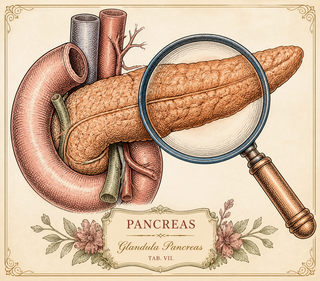
Most pancreatic cancers are exocrine tumors, and the big villain is pancreatic ductal adenocarcinoma, or PDAC. It arises from duct-lining cells, accounts for the vast majority of cases, and has a five-year survival rate around 13%. Pancreatic neuroendocrine tumors are rarer and often behave differently, with better average outcomes.
The old story says PDAC is deadly because doctors find it late and chemotherapy has limited room to maneuver. True. But the more useful story is that PDAC is a master of hostile architecture. Its tumor microenvironment is fibrotic, inflamed, immune-suppressive, and physically dense. If many cancers are burglars, PDAC is a burglar who bought the building, rewrote the lease, and hired the bouncer.
The Market Is Following the Biology, Finally
For years, treatment mostly meant combinations of chemotherapy: FOLFIRINOX, gemcitabine plus nab-paclitaxel, and newer variations like NALIRIFOX. NAPOLI 3 showed that NALIRIFOX improved median overall survival versus nab-paclitaxel plus gemcitabine in previously untreated metastatic PDAC, which is real progress, though not exactly “cancel your existential dread” progress. The survival difference was measured in months, not years. In pancreatic cancer, months still matter. A lot. https://doi.org/10.1016/S0140-6736(23)01366-1
The newer pipeline is more interesting because it stops treating PDAC as one big blob of bad news. It asks: what is driving this tumor, what is protecting it, and which patients might actually benefit?
KRAS is the obvious suspect. More than 90% of PDAC tumors carry activating RAS mutations, and for decades KRAS was treated like the “do not touch” button in the oncology control room. Now the button is being touched. Daraxonrasib, an oral RAS(ON) multiselective inhibitor, produced antitumor activity in previously treated RAS-mutated PDAC in a phase 1-2 study, including objective responses in a subset of second-line patients. Side effects were common, but the signal was meaningful enough to make everyone sit up straighter. https://doi.org/10.1056/NEJMoa2505783
That does not mean KRAS inhibition magically fixes pancreatic cancer. Cancer cells are not known for politely accepting eviction notices. But it does mean one of PDAC’s central engines is no longer just a thing researchers glare at during conferences.
The Neighborhood Problem
The contrarian take is this: the drug market may be underestimating the “neighborhood” as much as it over-celebrates shiny targets.
A 2024 review in Nature Reviews Gastroenterology & Hepatology lays out the modern battlefield: chemotherapy remains the backbone, but progress is emerging through biomarkers, KRAS-targeted therapy, PARP inhibitors for DNA-repair-deficient tumors, immunotherapy for rare subgroups, and smarter trial designs. https://doi.org/10.1038/s41575-023-00840-w
That matters because PDAC is not just a pile of cancer cells. It is cancer cells plus scar-like stroma, exhausted immune cells, metabolic weirdness, and enough cellular freeloaders to fill a bad group project. If a drug only attacks the tumor cell but leaves the neighborhood intact, the tumor may simply regroup behind the drywall.
Elraglusib offers one example of this broader thinking. In a randomized phase 2 trial, adding the GSK-3β inhibitor elraglusib to gemcitabine plus nab-paclitaxel improved median overall survival from 7.2 to 10.1 months and doubled the one-year survival rate from 22.3% to 44.1%. It also appeared to shift immune features inside tumors. Translation: maybe the neighborhood can be made less sketchy. https://doi.org/10.1038/s41591-026-04327-4
What Would Real Impact Look Like?
The dream is not one miracle drug. That is comic-book oncology, and the pancreas is not impressed by capes.
The more realistic future looks layered: genomic testing to find KRAS variants, BRCA/PALB2 alterations, NTRK or NRG1 fusions, and mismatch repair deficiency; better first-line combinations; targeted drugs that hit RAS biology; agents that remodel the tumor microenvironment; and vaccines or immune strategies for patients whose tumors can be taught to wave a brighter “attack me” flag.
Personalized RNA neoantigen vaccines are one early example. In a small phase 1 trial, an individualized mRNA vaccine stimulated T cells in some patients with resected PDAC, hinting that even this immune-cold cancer may not be completely immune to immunotherapy logic. It just requires more persuasion than a normal tumor, like trying to get a cat into a Halloween costume. https://doi.org/10.1038/s41586-023-06063-y
The market story, then, is not simply “more drugs are coming.” It is “the drugs are getting less naive.” They are starting to account for mutation, microenvironment, immune escape, and patient selection. That is where the hope lives, with a raised eyebrow and a spreadsheet.
References
-
Tripathi P, Ramos García L, Webster RM. The pancreatic cancer drug market. Nature Reviews Drug Discovery. 2026;25:416-417. https://doi.org/10.1038/d41573-026-00027-3
-
Hu ZI, O’Reilly EM. Therapeutic developments in pancreatic cancer. Nature Reviews Gastroenterology & Hepatology. 2024;21:7-24. https://doi.org/10.1038/s41575-023-00840-w
-
Wainberg ZA, et al. NALIRIFOX versus nab-paclitaxel and gemcitabine in treatment-naive patients with metastatic pancreatic ductal adenocarcinoma (NAPOLI 3). The Lancet. 2023;402:1272-1281. https://doi.org/10.1016/S0140-6736(23)01366-1
-
Wolpin BM, et al. Daraxonrasib in previously treated advanced RAS-mutated pancreatic cancer. New England Journal of Medicine. 2026;394:1790-1802. https://doi.org/10.1056/NEJMoa2505783
-
Mahalingam D, et al. Elraglusib and chemotherapy in metastatic pancreatic ductal adenocarcinoma: a randomized controlled phase 2 trial. Nature Medicine. 2026;32:1794-1804. https://doi.org/10.1038/s41591-026-04327-4
-
Rojas LA, Sethna Z, Soares KC, et al. Personalized RNA neoantigen vaccines stimulate T cells in pancreatic cancer. Nature. 2023;618:144-150. https://doi.org/10.1038/s41586-023-06063-y
Disclaimer: The image accompanying this article is for illustrative purposes only and does not depict actual experimental results, data, or biological mechanisms.