A decent recipe needs the right ingredients, the timing has to behave, and somebody has to notice when the oven is lying. Glioblastoma treatment works a bit like that - you can bring in an immune checkpoint drug that looks terrific on paper, but if the tumor’s internal pantry is stocked with the wrong cell types and bad molecular habits, the whole dish comes out sad, expensive, and undercooked.
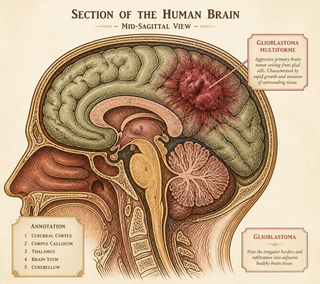
That, in very human terms, is why this new Nature Cancer paper matters. Researchers looked at glioblastoma, the most aggressive common brain cancer in adults, and asked a brutally practical question: can the tumor’s “mesenchymal” features help predict who might respond to immune checkpoint blockade? Their answer points toward yes - and in a disease where treatment decisions can feel like trying to pick a lock in the dark, that is worth paying attention to.
First - what on earth is “mesenchymal”?
Glioblastoma is not one neat, uniform blob. It is more like a rowdy neighborhood where different cells are running different scams. Scientists often describe glioblastoma cells by molecular “states,” and one of those is the mesenchymal state.
In plain English, mesenchymal tumor features usually mean the cancer cells are acting more rugged, invasive, inflamed, and stress-adapted. These tumors often come with a microenvironment full of immune cells - but not always the kind you’d want if you’re hoping for a clean, effective anti-tumor attack. It is less “well-trained security team” and more “crowded emergency room where half the staff got terrible instructions.”
That matters because immune checkpoint blockade - drugs that release the brakes on T cells, such as anti-PD-1 or anti-CTLA-4 therapies - has transformed care in some cancers. In glioblastoma, though, the results have mostly been disappointing. The brain is a difficult place for immune therapy to work, and glioblastoma is particularly good at building a local culture of suppression, confusion, and cellular mischief.
What this study was getting at
This study focused on whether mesenchymal tumor characteristics can predict response to checkpoint blockade in glioblastoma. That is a sharper question than “does immunotherapy work?” because we already know the frustrating answer there: sometimes, but usually not enough.
The more useful bedside question is: who has a tumor biology that gives these drugs a fighting chance?
Based on the paper’s title and framing, the investigators found that glioblastomas with mesenchymal features were more likely to show signs associated with response to checkpoint blockade. That does not mean every mesenchymal glioblastoma will respond, or that checkpoint inhibitors suddenly become a magic key. Cancer biology does not hand out magic keys. It hands out sticky notes written in bad handwriting. But it does suggest that certain tumor states may be more visible - or at least more vulnerable - to immune-based treatment.
Why that’s interesting beyond the jargon
At the bedside, one of the hardest conversations in brain cancer is explaining why a promising drug in one cancer can flop in another. Patients hear “immunotherapy” and understandably think, “Great, let’s call in the cavalry.” Then glioblastoma acts like a fortress with fake doors.
This paper hints that the fortress may not be identical in every patient.
If mesenchymal features really do help identify tumors more likely to benefit from checkpoint blockade, that could move the field toward better patient selection. Instead of offering immunotherapy in a broad, blurry way, clinicians might eventually use tumor profiling to decide when it makes sense, when it probably does not, and when combinations are needed.
That is not just scientifically tidy. It is emotionally important. Every treatment carries time, side effects, hope, logistics, and the kind of calendar rearranging nobody wants to become good at.
The catch - because there is always a catch
Before anyone starts popping champagne in the neuro-oncology workroom, a few reality checks.
First, predicting response is not the same as creating response. A biomarker can help us recognize a more favorable group without fixing the underlying problem that most glioblastomas still resist immune attack.
Second, mesenchymal biology is complicated. In glioblastoma, mesenchymal programs have also been linked to aggressiveness, therapy resistance, and heavy involvement of myeloid cells such as macrophages and microglia, which can either help or hinder anti-tumor immunity depending on their behavior. Tumors, in other words, remain committed to being annoying overachievers.
Third, these findings need validation and expansion. The real test is whether this signal holds up across larger patient groups, different treatment settings, and prospective clinical trials.
Where this could lead
If this line of research holds, it could shape several next steps:
- Biomarker-guided immunotherapy, where mesenchymal signatures help identify patients for checkpoint blockade
- Smarter combination strategies, pairing checkpoint inhibitors with treatments that remodel the tumor microenvironment
- More nuanced trial design, so studies stop lumping biologically different glioblastomas into one giant basket and acting surprised when the answers come back messy
That last point deserves a gold star. Glioblastoma has been teaching us, repeatedly and with some attitude, that biology matters. A lot.
The bigger picture
For families dealing with glioblastoma, progress often arrives in inches, not fireworks. This study does not announce a cure. It does something quieter and, honestly, more useful: it helps explain why some tumors may be more open to immune attack than others.
Sometimes better cancer care starts with a better map.
And if you have ever sat with someone waiting for scan results, you know a better map is not a small thing. It means fewer blind guesses. It means more rational choices. It means the science is finally listening to the tumor’s actual behavior instead of trying to bully every case with the same script.
That is not flashy. But in oncology, flashy is overrated. Give me honest, useful, reproducible any day.
References
-
Mesenchymal tumor features predict response to immune-checkpoint blockade in glioblastoma. Nature Cancer. 2026. doi:10.1038/s43018-026-01178-3
-
Lim M, Xia Y, Bettegowda C, Weller M. Current state of immunotherapy for glioblastoma. Nature Reviews Clinical Oncology. 2018;15(7):422-442. doi:10.1038/s41571-018-0003-5
-
Xu S, Tang L, Li X, Fan F, Liu Z. Immunotherapy for glioma: Current management and future application. Cancer Letters. 2020;476:1-12. doi:10.1016/j.canlet.2020.02.002
-
Wang Q, Hu B, Hu X, et al. Tumor evolution of glioma-intrinsic gene expression subtypes associates with immunological changes in the microenvironment. Cancer Cell. 2017;32(1):42-56.e6. doi:10.1016/j.ccell.2017.06.003
-
Schalper KA, Rodriguez-Ruiz ME, Diez-Valle R, et al. Neoadjuvant nivolumab modifies the tumor immune microenvironment in resectable glioblastoma. Nature Medicine. 2019;25(3):470-476. doi:10.1038/s41591-018-0339-5
Disclaimer: The image accompanying this article is for illustrative purposes only and does not depict actual experimental results, data, or biological mechanisms.