Intrahepatic cholangiocarcinoma is the kind of villain that does not burst through the door - it slips into the liver’s bile ducts, keeps the lights low, and starts rewriting the house band’s set list before anyone notices.
That is part of why this cancer, often shortened to iCCA or ICC, is such a rough customer. It begins in the small bile ducts inside the liver, tends to be found late, and does not always offer doctors an obvious target to hit. Surgery can cure some patients, but many tumors show up after that window has mostly closed. For advanced cholangiocarcinoma, current treatment has improved with chemotherapy, immunotherapy, and molecular testing, but the disease still plays a lot of dissonant chords.
A new study in Gut turns the spotlight on a surprising bandleader: SIRT6. Yes, SIRT6 sounds like a Star Wars droid assigned to hospital billing, but it is actually an enzyme involved in chromatin, DNA repair, inflammation, and metabolism. In many cancers, SIRT6 has been cast as a tumor suppressor. The new paper asks a sharper question: what if, in ICC, SIRT6 changes keys and helps the tumor instead?
The Metabolic Solo Nobody Asked For
Cancer cells need more than energy. They need building materials. A growing tumor is not just “hungry” in the way you are hungry after skipping lunch. It is more like a nightclub trying to build three new dance floors while the show is already happening.
One of its favorite supplies is glutamine, an amino acid that helps cells make nucleotides, other amino acids, and redox-balancing molecules. In normal biology, glutamine is useful, respectable, and not at all suspicious. In cancer biology, useful molecules often get recruited into bad company. The tumor microenvironment is a sketchy neighborhood, and glutamine brought a trumpet.
Zhang and colleagues found that SIRT6 was highly expressed in human and mouse ICC tissues and cell lines. When the researchers reduced SIRT6, ICC cell growth dropped in lab experiments, and tumor development slowed in mouse models. Even louder: forcing SIRT6 expression alongside AKT signaling helped drive ICC formation in mice.
The mechanism centered on GLUL, the gene that encodes glutamine synthetase, the enzyme that makes glutamine from glutamate and ammonia. SIRT6 appeared to boost GLUL from two directions: it increased GLUL transcription and helped stabilize the GLUL protein. That is not one hand on the mixing board. That is both hands, a foot pedal, and somebody yelling “more bass.”
Why This Matters
The big idea is that ICC may use a SIRT6-GLUL axis to keep its glutamine supply humming. When the team silenced SIRT6, glutamine levels fell. Downstream molecules needed for growth, including nucleotides and amino acids, also dropped. In other words, the tumor lost some of its raw material. The solo got wobbly.
This fits a broader theme in oncology: tumors often survive by rewiring metabolism. Recent reviews have emphasized that glutamine metabolism can support cancer growth, stress control, immune evasion, and drug resistance, while cholangiocarcinoma research increasingly points to molecular subtypes, tumor microenvironment differences, and metabolic vulnerabilities as possible therapeutic maps.
The clinically tempting part is combination therapy. In the Gut study, inhibiting SIRT6 or GLUL suppressed ICC progression and increased chemotherapy sensitivity in preclinical models. That does not mean patients should expect a new treatment tomorrow morning with coffee. It means researchers may have found a new chord progression worth testing: chemotherapy plus a metabolic blocker, potentially tuned to tumors with high SIRT6 or GLUL activity.
The Catch, Because Biology Always Sends a Bill
There are caveats. This is mostly mechanistic and preclinical work, using cell systems, human samples, sequencing data, and mouse models. Mouse tumors are helpful, but they do not sit in clinic waiting rooms, have comorbidities, or ask whether parking is validated. Human trials would need to test whether targeting SIRT6 or GLUL is safe, whether the right patients can be identified, and whether tumors route around the blockade through another metabolic back alley.
That last part matters. Cancer metabolism has a reputation for improvisation. Block one pathway and some tumors find another, like a jazz musician modulating out of trouble. That is why combination strategies may matter more than solo acts.
Still, this study gives researchers a sharper riff: in ICC, SIRT6 may not be the responsible adult in the room. It may be helping the tumor feed itself, grow, and resist treatment. If future work confirms the finding, the SIRT6-GLUL pathway could become a new way to classify, monitor, or treat a cancer that badly needs more playable notes.
References
-
Zhang M, Chen C, Zhang H, et al. SIRT6 promotes intrahepatic cholangiocarcinoma development by reprogramming glutamine metabolism via enhanced GLUL. Gut. 2025. DOI: 10.1136/gutjnl-2025-335729
-
Banales JM, Rodrigues PM, Affò S, et al. Cholangiocarcinoma 2026: status quo, unmet needs and priorities. Nature Reviews Gastroenterology & Hepatology. 2026;23:65-96. DOI: 10.1038/s41575-025-01153-w
-
Rodrigues PM, Olaizola P, Paiva NA, et al. Pathogenesis of cholangiocarcinoma. Annual Review of Pathology. 2021;16:433-463. DOI: 10.1146/annurev-pathol-030220-020455
-
Martin-Serrano MA, Kepecs B, Torres-Martin M, et al. Novel microenvironment-based classification of intrahepatic cholangiocarcinoma with therapeutic implications. Gut. 2022;72:736-748. DOI: 10.1136/gutjnl-2021-326514
-
Halama A, Suhre K. Advancing cancer treatment by targeting glutamine metabolism: a roadmap. Cancers. 2022;14:553. DOI: 10.3390/cancers14030553
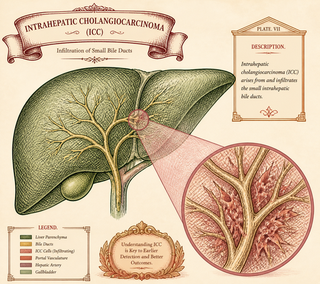
Disclaimer: The image accompanying this article is for illustrative purposes only and does not depict actual experimental results, data, or biological mechanisms.