In the next 60 seconds, your cells will answer thousands of tiny messages: grow, pause, repair, ignore that nonsense, please stop dividing, no seriously stop dividing. Most of this cellular group chat stays boring, which is exactly what you want. Cancer happens when a few cells turn the notifications to maximum, mute the moderators, and start acting like the protocol was merely a suggestion.
A new paper in Nature Biomedical Engineering asks a sharp question: what if we could make a cancer-killing virus that only replicates when it hears the tumor's bad signaling chatter? Not just "this cell looks vaguely cancer-ish," but "this cell has the ErbB/HER growth-signaling system cranked up like a nightclub speaker at 1 a.m." That is the idea behind ErbB-OSV, an engineered oncogene-selective virus designed to kill cells with abnormal ErbB signaling while sparing normal tissue as much as possible Zou et al., 2026.
The ErbB Family: Four Receptors, Too Many Opinions
ErbB receptors are a family of growth-signal antennas on cells. The crew includes EGFR, HER2, HER3, and HER4. In normal life, they help cells interpret growth cues. In cancer, especially tumors with overactive EGFR or HER2 signaling, they can become the cellular equivalent of a project manager who keeps scheduling emergency meetings called "Divide Again."
HER2 is famous in breast cancer, but ErbB signaling also shows up in ovarian and other solid tumors. The problem is that targeting these pathways can be messy. Normal cells also use growth signals, because biology has apparently never heard of clean inclusion criteria. Hit the pathway too broadly and you get off-tumor toxicity. Hit it too weakly and the tumor shrugs, files a resistance amendment, and continues enrollment.
Oncolytic Viruses, But With a Smarter Lock
Oncolytic viruses are viruses engineered or selected to infect and kill cancer cells. They can burst tumor cells directly and sometimes wake up the immune system by spilling tumor antigens into view, like flipping on the lights in a sketchy neighborhood Xiao et al., 2026. The field has real clinical precedent, but also real headaches: delivery, immune clearance, safety, repeat dosing, and the eternal translational question, "Great mouse data, but what happens when humans enter the chat?"
Zou and colleagues tried to tighten the logic gate. They used synthetic signaling proteins to restrict viral replication to cells with hyperactive ErbB signaling. In plain English: the virus can enter the party, but it only starts making copies if the cell is blasting the tumor-specific signal. That is more elegant than simply hoping cancer cells are worse at antiviral defense, though elegance in preclinical oncology still has to survive the Phase I lobby.
The viral backbone matters too. The team built on a vesicular stomatitis virus platform, a fast-replicating RNA virus with known oncolytic potential. VSV has attracted interest because it can kill tumor cells efficiently, but broad tropism and safety concerns have kept people cautious Zhang and Nagalo, 2022. ErbB-OSV is an attempt to keep the useful viral punch while adding better tumor-selective brakes.
What They Found, Minus the Lab-Coat Fog Machine
The researchers tested ErbB-OSV in models of HER2-positive ovarian cancer. In cell experiments, it preferentially killed ErbB-hyperactive cancer cells while leaving non-cancer cells more intact. In mouse xenografts, it showed better safety than a benchmark oncolytic virus from the same family and stronger activity against HER2-positive ovarian tumors.
Then came the part that makes trialists lean forward and squint at the methods. In an immunocompetent, syngeneic model of advanced ovarian cancer, ErbB-OSV plus chemotherapy improved survival more than chemotherapy alone. The authors also used B-cell depletion to allow repeated viral dosing, because the immune system, bless its diligent little clipboard, tends to neutralize viruses after it notices them. In early disease models, single-agent ErbB-OSV cured most cases.
That is exciting, but the usual preclinical caution label applies. These are animal models, not randomized human data. Mouse tumors do not have travel delays, comorbidities, prior PARP inhibitor exposure, or family members asking about supplements in the infusion room. Still, the conceptual advance is strong: instead of targeting where a tumor is, this therapy targets what a tumor is doing.
Why This Could Matter
Metastatic ovarian cancer remains hard because it often spreads through the peritoneal cavity, produces ascites, and builds an immune-suppressive tumor microenvironment that behaves like a locked office where the T cells forgot their badge Mei et al., 2023. Standard chemotherapy can work, but relapse is common. Immunotherapy has helped some cancers dramatically, yet ovarian cancer has often been a tough crowd.
A signal-gated oncolytic virus could, in theory, address several problems at once: better selectivity, local tumor killing, possible immune activation, and compatibility with chemotherapy. Recent reviews have emphasized that engineered viruses may become more useful when designed for tumor specificity and rational combinations, rather than being tossed into trials like confetti and hoping the Kaplan-Meier curves behave Gujar et al., 2024.
The big unanswered questions are the ones you would expect before opening a human protocol: How reproducible is the ErbB signal gate across heterogeneous tumors? Can the virus reach all metastatic deposits? What toxicities appear at clinically meaningful doses? Will B-cell depletion be acceptable, necessary, or replaceable? And what biomarker defines the right patient, so we do not run the classic oncology trial of "everyone with a pulse and a sad CT scan"?
For now, ErbB-OSV is a clever preclinical therapy with a very good elevator pitch: let the tumor's own corrupted growth signal unlock the weapon. If that holds up in larger studies, cancer cells may discover that their favorite pathway has become less of a growth advantage and more of a self-incrimination device.
References
-
Zou X, Palafox E, Zhao C, Beier KT, Kang C-Y, Lin MZ. Rewiring oncogenic signalling to precision ablation of metastatic cancer. Nature Biomedical Engineering. 2026. https://doi.org/10.1038/s41551-026-01704-9
-
Xiao D, Zhang H, Liu Y, Li Y, Li G, Ning Y. Oncolytic viruses: advanced strategies in cancer therapy. Signal Transduction and Targeted Therapy. 2026;11:45. https://doi.org/10.1038/s41392-025-02343-3
-
Gujar S, Pol JG, Kumar V, Lizarralde-Guerrero M, Konda P, Kroemer G, Bell JC. Tutorial: design, production and testing of oncolytic viruses for cancer immunotherapy. Nature Protocols. 2024;19:2540-2570. https://doi.org/10.1038/s41596-024-00985-1
-
Zhang Y, Nagalo BM. Immunovirotherapy based on recombinant vesicular stomatitis virus: where are we? Frontiers in Immunology. 2022;13:898631. https://doi.org/10.3389/fimmu.2022.898631
-
Mei S, Chen X, Wang K, Chen Y. Tumor microenvironment in ovarian cancer peritoneal metastasis. Cancer Cell International. 2023;23:11. https://doi.org/10.1186/s12935-023-02854-5
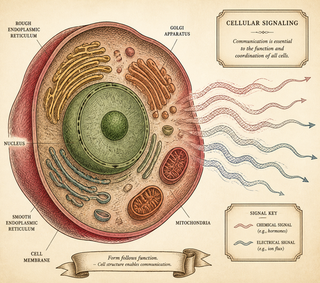
Disclaimer: The image accompanying this article is for illustrative purposes only and does not depict actual experimental results, data, or biological mechanisms.