Most people think GABA is just the brain’s chill-out signal, but in this glioblastoma study it looks less like a calming app and more like a stealth enterprise feature tumors use to keep immune cells off the dashboard.
That is the unsettling little plot twist in a new Nature Cancer paper from Pathak and colleagues: in female mouse models of glioblastoma, GABA signaling appeared to help the tumor grow by upgrading a particular class of immune-suppressing cells into better T-cell bouncers. Not better for you, obviously. Better for the tumor, which is exactly the kind of user experience cancer keeps shipping despite nobody asking for it.
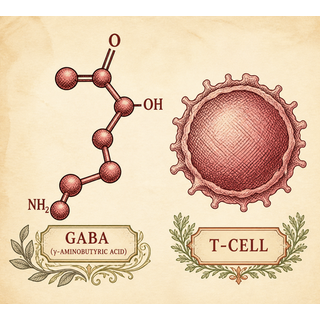
The Tumor Has a Local Security Vendor
Glioblastoma, or GBM, is one of the most aggressive brain cancers. It grows fast, infiltrates brain tissue, and tends to shrug at many therapies like a startup founder ignoring legal advice. Surgery, radiation, and temozolomide can help, but durable control remains hard because GBM is not just a lump of bad cells. It is an ecosystem.
Inside that ecosystem are myeloid-derived suppressor cells, or MDSCs. Think of them as immune system contractors who were supposed to help manage inflammation, then got recruited by the tumor and given a suspiciously generous benefits package. Their specialty is suppressing T cells, the tiny bodyguards that might otherwise attack cancer cells.
The new paper focuses on granulocytic MDSCs, or gMDSCs, in female mice. The researchers found that GABA receptor B signaling made these gMDSCs more suppressive by dialing up a pathway involving cationic amino acid transporter 2, L-arginine, and NOS2. Translation: GABA helped reroute cell metabolism so these suppressor cells could better shut down T-cell activity. Tumor growth, regrettably, loved the feature update Pathak et al., 2026.
Sex Differences Are Not a Footnote
Cancer biology has spent decades treating sex differences like an optional settings menu. Increasingly, that looks like bad software design.
GBM affects men more often and generally more severely, but women still make up a large share of patients. More importantly, male and female immune systems can behave differently inside and around tumors. Prior work showed that MDSC subsets can influence GBM in sex-specific ways, and later studies tied sex-biased T-cell exhaustion to different immune responses in GBM Lee et al., 2023.
Pathak and colleagues push that story forward. When they activated GABA receptor B, GBM grew more in female preclinical models through gMDSCs. When they blocked that receptor, female mice lived longer and had less NOS2 in tumor-infiltrating gMDSCs. Male mice did not show the same benefit.
That matters because “works in mice” is not the same as “works in humans,” but “works only in female mice through a defined immune mechanism” is a giant neon sign saying: please stop averaging biology into mush.
GABA: Calm Brain Signal, Suspicious Side Hustle
GABA’s day job is neurotransmission. It helps tune down neuronal activity, which is generally good because your brain should not run like a group chat during a product launch.
But researchers have been finding that GABA also moonlights outside classic neuron-to-neuron signaling. A 2021 Nature study showed that B-cell-derived GABA could promote IL-10-producing macrophages and limit anti-tumor immunity, suggesting GABA can shape immune behavior in cancer, not just brain circuits Zhang et al., 2021. Separately, brain tumors can interact with neuronal signaling in ways that support growth, including GABAergic neuron-to-glioma synapses in diffuse midline gliomas Barron et al., 2025.
So the GABA story is getting bigger. It is not “the relaxation molecule went rogue,” exactly. It is more that tumors may exploit normal communication systems, then repurpose them like a growth-hacking team with no ethics department.
Why This Could Matter
GBM immunotherapy has struggled. Checkpoint inhibitors transformed treatment for several cancers, but GBM has been a stubborn fortress: limited immune infiltration, a hostile tumor microenvironment, cellular heterogeneity, and the blood-brain barrier all make the job harder Liu et al., 2024.
This study suggests one possible reason some immune strategies underperform: the tumor may be running different immune-suppression software depending on sex. If GABA receptor B signaling helps female gMDSCs suppress T cells, then blocking that pathway could, someday, become part of a more personalized GBM immunotherapy approach.
Big caveat, because biology loves terms and conditions: this is preclinical work, mostly in mice, supported by human GBM immune-cell signatures and GABA measurements. It does not mean people with GBM should change medications, avoid GABA-related drugs, or start freelancing their own neuro-oncology protocol. Please do not let TikTok become your tumor board.
But if these findings reproduce and expand, they could help researchers build sex-aware therapies that target the immune microenvironment more precisely. Not “one weird trick.” More like better system architecture.
The Takeaway
The clever part of this paper is not just that GABA may help GBM. It is that the same signal may matter differently depending on the host biology around the tumor. In female mice, GABA receptor B signaling helped gMDSCs become better suppressors, giving GBM more room to grow. Blocking that signal improved survival in those models.
Cancer, as usual, found a loophole. The useful news is that loopholes can become targets.
References
-
Pathak A, Sravya P, Colon B, et al. GABA signaling activation drives glioblastoma progression in female mice through myeloid-derived suppressor cells. Nature Cancer. 2026. DOI: 10.1038/s43018-026-01192-5
-
Liu Y, Zhou F, Ali H, Lathia JD, Chen P. Immunotherapy for glioblastoma: current state, challenges, and future perspectives. Cellular & Molecular Immunology. 2024;21:1354-1375. DOI: 10.1038/s41423-024-01226-x
-
Lee J, Nicosia M, Hong ES, et al. Sex-biased T-cell exhaustion drives differential immune responses in glioblastoma. Cancer Discovery. 2023;13:2090-2105. DOI: 10.1158/2159-8290.CD-22-0869
-
Zhang B, Vogelzang A, Miyajima M, et al. B cell-derived GABA elicits IL-10+ macrophages to limit anti-tumour immunity. Nature. 2021;599:471-476. DOI: 10.1038/s41586-021-04082-1
-
Barron T, Yalçın B, Su M, et al. GABAergic neuron-to-glioma synapses in diffuse midline gliomas. Nature. 2025;639:1060-1068. DOI: 10.1038/s41586-024-08579-3
Disclaimer: The image accompanying this article is for illustrative purposes only and does not depict actual experimental results, data, or biological mechanisms.