Cancer research occasionally produces a sentence so weird it sounds like it lost a bet. This is one of those times: a new Cell paper suggests that a form of copper-triggered cell death - yes, copper, the metal in pennies and plumbing - may shape whether immunotherapy works or faceplants. And here is where it gets interesting: the study argues that the crosstalk between cuproptosis and CD8+ T cells could help explain why some tumors shrug off immune attack like they are ignoring a strongly worded email from your body.
Wait - what on earth is cuproptosis?
Cuproptosis is a recently described kind of cell death linked to copper and a metabolic program inside cells, especially involving mitochondria - the tiny power plants that biology teachers have been dining out on for decades. It depends on a protein called FDX1, which helps set up a chain of events tied to protein lipoylation. When the system gets pushed the wrong way, cells basically suffer a metabolic meltdown.
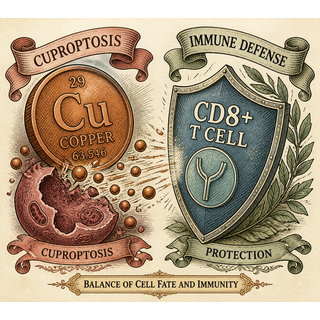
That matters because cancer cells are not just growing fast. They are also metabolic weirdos. They rewire how they use nutrients, oxygen, and metals, then act surprised when scientists start poking around in the wiring closet.
The big idea in this paper is not just that cuproptosis exists. It is that the immune system may interact with it in a way that changes tumor response to immunotherapy. In other words, this is not just a story about copper. It is a story about whether tumors can turn their local environment into a no-go zone for the very T cells meant to kill them.
The punchline: metabolism and immunity are gossiping behind your back
The paper, titled “Cuproptosis-immunity crosstalk informs strategy to overcome immunotherapy resistance,” takes on a nasty clinical problem: immunotherapy resistance. Checkpoint inhibitors can produce dramatic responses in some patients, but many tumors either never respond or find a workaround. Cancer, ever the overachiever, loves an escape route.
This study centers on CD8+ T cells, the immune system’s trained assassins. In a functioning anti-tumor response, these cells recognize cancerous troublemakers and eliminate them. But tumors often build a hostile neighborhood - low nutrients, altered metabolism, suppressive signals, and assorted biochemical booby traps.
The authors propose that cuproptosis sits right in that neighborhood drama. Based on the abstract and framing, the work suggests that tumor-intrinsic metabolic state - especially pathways linked to FDX1 and copper-dependent death - can influence how visible or vulnerable a tumor is to CD8+ T-cell attack. And here is where it gets interesting: if that relationship is real and reproducible, it opens the door to combination strategies that do more than “boost immunity” in the vague, hand-wavy way every biotech deck loves. It means targeting a specific metabolic choke point to make immunotherapy work better.
Why this matters outside the lab mouse cinematic universe
Immunotherapy has changed oncology, but not evenly. In some cancers, it looks like magic. In others, the response rates are low enough that the statistics start to feel personally insulting.
That is why studies like this get attention. They ask a practical question: why do tumors resist immune attack even when the immune system shows up? If cuproptosis-related pathways are part of that answer, then clinicians might eventually sort tumors not just by mutations, but by whether they sit in a metabolic state that helps or hinders immune killing.
That could matter in at least three ways:
- Biomarkers - FDX1 or related signatures might help predict who benefits from checkpoint blockade.
- Drug combinations - therapies that modulate copper handling or cuproptosis pathways might sensitize resistant tumors.
- Mechanistic clarity - and yes, this is catnip for oncology people - because knowing why resistance happens usually beats staring at response curves and hoping for spiritual insight.
A quick reality check before we all start wearing copper bracelets
This is exciting biology, but nobody should confuse a strong mechanistic paper with next Tuesday’s standard of care. A lot has to go right between a compelling Cell paper and a treatment that helps patients in the clinic.
For one thing, tumor metabolism is messy. It changes across cancer types, across patients, and sometimes across different parts of the same tumor, because apparently chaos was available at wholesale prices. Also, immune responses are shaped by far more than one pathway. Even if cuproptosis matters, it is entering a crowded room full of cytokines, stromal cells, antigen presentation issues, and enough signaling loops to make a statistician reach for aspirin.
Still, the appeal here is obvious. This is not random fishing. It is a plausible biological bridge between metabolic vulnerability and immune effectiveness.
What the broader field says
This paper lands in a fast-moving area where metabolism and cancer immunity keep colliding in productive ways. Reviews over the past few years have highlighted how tumor metabolism can suppress T-cell function and blunt checkpoint blockade, while immunogenic cell death pathways can sometimes turn a “cold” tumor “hot” for immune recognition.12 Meanwhile, cuproptosis itself has become a serious topic since its formal characterization, with researchers exploring its links to cancer subtype behavior, prognosis, and therapeutic targeting.3
The obvious next step is clinical translation: can investigators identify the patients whose tumors are most dependent on this biology, then pair immunotherapy with a cuproptosis-relevant intervention? If yes, that would be the fun part of precision oncology - not just collecting molecular trivia cards, but actually changing outcomes.
The bottom line
This study makes a bold argument: copper-linked cell death and anti-tumor immunity are not separate stories. They may be part of the same plot, and that plot could help explain why immunotherapy sometimes stalls.
If the findings hold up, the payoff is not just a new buzzword. It is a new strategy. And in cancer research, a good strategy beats a flashy acronym every time - though ideally you get both.
References
Primary paper: Lei G, Lu Z, Xu Z, et al. Cuproptosis-immunity crosstalk informs strategy to overcome immunotherapy resistance. Cell. 2026. doi:10.1016/j.cell.2026.05.036
Disclaimer: The image accompanying this article is for illustrative purposes only and does not depict actual experimental results, data, or biological mechanisms.
-
Lei G, Zhuang L, Gan B. Targeting ferroptosis as a vulnerability in cancer. Nat Rev Cancer. 2022;22(7):381-396. doi:10.1038/s41568-022-00459-0 ↩
-
Hegde PS, Chen DS. Top 10 challenges in cancer immunotherapy. Immunity. 2020;52(1):17-35. doi:10.1016/j.immuni.2019.12.011 ↩
-
Tsvetkov P, Coy S, Petrova B, et al. Copper induces cell death by targeting lipoylated TCA cycle proteins. Science. 2022;375(6586):1254-1261. doi:10.1126/science.abf0529 ↩