Drug development usually worships tight binding. Stronger affinity, lower off-rate, shinier investor deck. But this new Immunity paper on hFcγRIIB suggests that for one important immune brake, the winning antibody may need to act less like handcuffs and more like a subway turnstile - grab, release, move along, repeat.
And yes, cancer immunology has once again produced a result that sounds backwards until you stare at it long enough and mutter, "well, that is annoying."
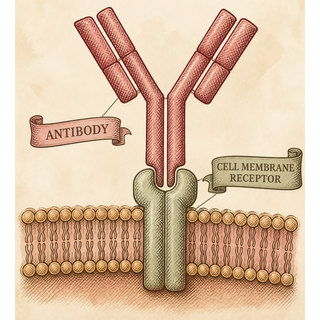
Meet hFcγRIIB, the immune system's compliance department
hFcγRIIB is an inhibitory Fc gamma receptor found on immune cells, especially B cells and myeloid cells. Its job is to dampen activation when antibody responses get too rowdy. That's useful when your immune system risks turning into an overcaffeinated hedge fund. It is less delightful when you want a strong anti-tumor response.
Because this receptor acts like a brake, scientists have been trying to figure out how antibodies can either turn it on - agonism - or block it - antagonism. That matters for cancer, autoimmunity, and antibody drug design more broadly. If you can predict what kind of antibody behavior triggers inhibitory signaling, you can build smarter therapies instead of just spending several hundred million dollars to discover that biology had other plans.
The surprise: weaker stickiness can trigger stronger signaling
Fisher and colleagues studied antibodies that bind hFcγRIIB and found a striking pattern: agonistic antibodies, the ones that activate the inhibitory receptor, had lower affinity and faster off-rates than antagonistic antibodies, which bound more tightly and stayed put longer.1
At first glance, that sounds economically irresponsible. Why pay for a less committed antibody?
Because signaling here seems to depend on receptor clustering. The agonist antibodies reduced receptor mobility in the cell membrane, pushed receptors into lipid rafts - little membrane neighborhoods where signaling molecules like to mingle - and promoted cluster formation. The antagonists, despite their stronger grip, did not do that effectively.1
So the model is not "best binder wins." It's more like "best choreographer wins." An agonist catches a receptor, helps it bump into friends, lets go, and repeats. The authors describe this as a catch-and-release mechanism. It's basically speed dating for membrane receptors, except the outcome is inhibitory signaling.
Geometry, not just chemistry, runs the show
This paper did not stop at binding measurements. The team used crystal structures, alanine scanning, small-angle X-ray scattering, and molecular dynamics simulations to ask why these antibodies behave differently.1
The answer seems to be binding geometry. Agonists and antagonists target overlapping but distinct epitopes on hFcγRIIB. The agonists create more compact receptor complexes, which appear better suited for clustering and activation. Antagonists bind in a way that seems to interfere with productive receptor gathering.
That is a useful reminder that antibodies are not just Velcro. They are more like oddly shaped keys that also influence how doors line up in the hallway. Two antibodies can bind roughly the same region and still produce opposite outcomes because the angle, orientation, and dwell time change what the receptor can physically do next.
For immunotherapy, this is a big deal. We often talk about affinity as if it were a stock price - up is good, down is bad. But for signaling receptors, topology and kinetics may carry just as much value as raw binding strength. Biology, as ever, refuses to simplify the spreadsheet.
Why cancer people should care
Fc receptors shape how therapeutic antibodies work, including antibody-dependent cell killing, antigen presentation, and immune regulation.23 hFcγRIIB in particular has become important in designing next-generation antibodies, especially when trying to tune activation thresholds on B cells and other immune cells.4
If these findings hold up and generalize, they could influence how researchers design immunomodulatory antibodies across oncology and beyond. Instead of simply maximizing affinity, developers may need to optimize for:
- epitope location
- binding geometry
- on/off kinetics
- ability to drive or prevent receptor clustering
That could lead to better agonists when you want to suppress harmful immune activation, and better antagonists when you want to remove inhibitory brakes in cancer. In plain English: smarter drugs, fewer expensive guessing games, and maybe a lower chance of discovering in phase 2 that your antibody is beautifully engineered for the wrong job.
Will this instantly cut drug prices or fix access? Of course not. Oncology still treats pricing restraint like a vampire treats sunlight. But a design rule that improves the odds of making the right antibody the first time would be real progress.
The catch-and-release economy of immune signaling
What makes this paper fun - if "fun" is your idea of a receptor doing membrane square dance - is that it explains why agonism and antagonism diverge. Not just that they do.
And the principle may travel. Other immune receptors also depend on clustering, membrane organization, and multivalent interactions.56 That means this study is not only about one receptor. It's a broader warning against oversimplified antibody design logic.
Sometimes a molecule that hangs on like a needy ex is less useful than one that knows when to leave the party.
References
Disclaimer: The image accompanying this article is for illustrative purposes only and does not depict actual experimental results, data, or biological mechanisms.
-
Fisher H, Sutton EJ, Oldham RJ, et al. Antibody binding geometry and affinity control inhibitory hFcγRIIB receptor signaling. Immunity. 2026;S1074-7613(26):00241-0. doi:10.1016/j.immuni.2026.05.019 ↩↩↩
-
Nimmerjahn F, Ravetch JV. Fcgamma receptors as regulators of immune responses. Nat Rev Immunol. 2008;8(1):34-47. doi:10.1038/nri2206 ↩
-
Lu LL, Suscovich TJ, Fortune SM, Alter G. Beyond binding - antibody effector functions in infectious diseases. Nat Rev Immunol. 2018;18(1):46-61. doi:10.1038/nri.2017.106 ↩
-
Van der Poel CE, Spaapen RM, van de Winkel JGJ, Leusen JHW. Functional characteristics of the high affinity IgG receptor, FcγRI. J Immunol. 2011;186(5):2699-2704. doi:10.4049/jimmunol.1003526 ↩
-
Tay C, Stewart AG, Neri D, Williams NK. Fc gamma receptor biology and the design of next-generation therapeutic antibodies. Nat Rev Drug Discov. 2023;22(12):1004-1026. doi:10.1038/s41573-023-00711-z ↩
-
Bruhns P, Jönsson F. Mouse and human FcR effector functions. Immunol Rev. 2015;268(1):25-51. doi:10.1111/imr.12350 ↩