That, in essence, is the HPV vaccine. And according to a Nature Medicine news feature tied to new population-level data, this molecular bouncer is not just reducing cervical cancer cases - it is now being linked to a dramatic drop in deaths from cervical cancer. Which is the kind of plot twist public health people dream about and then try very hard not to jinx.
The virus with a terrible résumé
Human papillomavirus, or HPV, is an absurdly common virus. Most HPV infections clear on their own, which is nice. But some high-risk strains - especially HPV-16 and HPV-18 - can stick around, mess with the machinery that keeps cells well-behaved, and over years push cervical cells toward cancer. It is less a smash-and-grab robbery and more a long, creepy con.
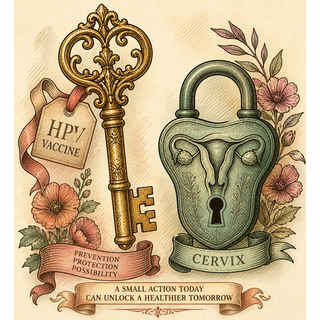
This basic story has been known for a while. We have had strong evidence that HPV vaccination cuts HPV infections, precancerous cervical lesions, and cervical cancer incidence. What makes this moment hit harder is the mortality signal. Preventing abnormal cells is great. Preventing funerals is better.
The article by O'Leary highlights that vaccinated populations are now showing substantial reductions in cervical cancer deaths - the metric nobody gets casual about. That is public health leaving the group chat and showing up in person.
Why this matters beyond one organ
Cervical cancer often gets talked about as though it lives in its own neat little box. Biology, naturally, refuses neat boxes. HPV also drives other cancers, including anal, vulvar, vaginal, penile, and many oropharyngeal cancers. So when a vaccine proves it can stop a virus from setting up a cancer pipeline in one tissue, researchers immediately start thinking across organs like overly caffeinated chess players.
We have seen this kind of cross-system pattern before. Hepatitis B vaccination reduced liver cancer risk. Smoking cessation lowers lung cancer and then keeps paying dividends elsewhere. In cancer biology, the same villains love a franchise.
And from a comparative biology angle, the whole thing is deliciously weird: one tiny virus can exploit epithelial tissues in multiple body sites, yet one vaccine can block the opening move. Nature is full of overcomplicated nonsense, but every now and then we get a wonderfully simple intervention.
The sneaky timeline problem
One reason this news took time is that cervical cancer does not appear the week after HPV infection. Cancer development can take many years, often decades. So proving that vaccination saves lives required patience, huge cohorts, and the kind of record-linkage epidemiology that sounds boring until you realize it answers the very non-boring question of who lived.
That lag has always been one of the hardest things about prevention science. If a treatment shrinks a tumor on a scan, everybody claps immediately. If a vaccine prevents a cancer death fifteen years later, the applause arrives on geological time. Prevention has terrible PR. It is the stagehand of medicine - essential, invisible, and underappreciated until the set collapses.
What problem this research actually solves
There has never been much serious biological doubt that HPV vaccination should reduce cervical cancer mortality. The challenge was showing it clearly in real populations, outside tidy trial logic and inside the messy universe where people miss appointments, move cities, get screened unevenly, and governments make baffling policy choices.
That is why this report matters. It helps close the loop from infection prevention to cancer prevention to death prevention. For clinicians, policymakers, and parents, that is a much sharper message than a stack of surrogate endpoints.
It also arrives at a useful moment. Vaccine hesitancy has become the world’s most exhausting hobby. Data showing fewer deaths gives public health campaigns something sturdier than vibes.
The catch - because biology and society both love complications
Before we declare victory and ride into the sunset on a giant syringe, a few things still need work.
First, vaccine uptake remains uneven. Countries with strong school-based vaccination programs have done well. Others have patchy access, weaker health infrastructure, or political resistance. Cervical cancer is especially deadly where screening and treatment are limited, which means the places that would benefit most from vaccination often face the steepest barriers. Classic global health injustice - terrible and repetitive, like a movie sequel nobody asked for.
Second, screening still matters. Vaccination dramatically lowers risk, but it does not erase it overnight, especially in older unvaccinated groups or where vaccine coverage is incomplete. Pap tests and HPV testing remain part of the safety net.
Third, the benefits likely extend beyond cervical cancer, but the timelines for some other HPV-related cancers - especially oropharyngeal cancer - are longer and more complicated. Science is annoyingly committed to waiting for evidence.
The big picture
If these mortality reductions continue and expand across more populations, this is one of the clearest examples of a vaccine preventing cancer death at national scale. Not in mice. Not in a dish. In actual humans with jobs, families, and grocery lists.
And that is the thrilling part. Cancer research often feels like trench warfare inside a biochemical swamp. Necessary, heroic, exhausting. But every so often we get to stop the enemy at the border instead. The HPV vaccine is shaping up as exactly that kind of intervention - less dramatic than a miracle drug, perhaps, but far more elegant. Like fixing the roof before the storm instead of live-blogging the flood.
References
-
O'Leary K. HPV vaccination linked to dramatic reduction in cervical cancer deaths. Nat Med. 2026. doi:10.1038/d41591-026-00033-3
-
Falcaro M, Castañon A, Ndlela B, et al. The effects of the national HPV vaccination programme in England, UK, on cervical cancer and grade 3 cervical intraepithelial neoplasia incidence: a register-based observational study. Lancet. 2021;398(10316):2084-2092. doi:10.1016/S0140-6736(21)02178-4
-
Lei J, Ploner A, Elfström KM, et al. HPV vaccination and the risk of invasive cervical cancer. N Engl J Med. 2020;383(14):1340-1348. doi:10.1056/NEJMoa1917338
-
Drolet M, Bénard É, Pérez N, et al. Population-level impact and herd effects following the introduction of human papillomavirus vaccination programmes: updated systematic review and meta-analysis. Lancet. 2019;394(10197):497-509. doi:10.1016/S0140-6736(19)30298-3
-
Brisson M, Kim JJ, Canfell K, et al. Impact of HPV vaccination and cervical screening on cervical cancer elimination: a comparative modelling analysis in 78 low-income and lower-middle-income countries. Lancet. 2020;395(10224):575-590. doi:10.1016/S0140-6736(20)30068-4
Disclaimer: The image accompanying this article is for illustrative purposes only and does not depict actual experimental results, data, or biological mechanisms.