The problem with metastatic kidney cancer is that even when you bring in immunotherapy - your body's elite security team - the tumor still sometimes shrugs and keeps the party going. And now researchers are circling a very weird accomplice: the bacteria in your gut. Yes, the microbes minding their own business in your intestines may have opinions about whether cancer drugs work. Biology really refuses to stay in its lane.
A recent letter in European Urology comments on the Phase 1 PERFORM trial, which explored fecal microbiota transplantation, or FMT, plus immunotherapy in metastatic renal cell carcinoma - the most common kind of kidney cancer when it spreads. FMT is exactly what it sounds like, and yes, medicine occasionally has the branding instincts of a dare gone wrong. The basic idea is simple: transfer gut microbes from a healthy donor into a patient, with the hope that the new microbial community helps the immune system do its job better.
Why would poop have anything to do with cancer?
Fair question. Slightly rude wording, but fair.
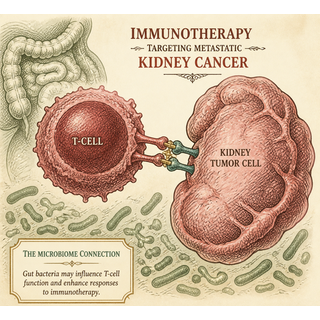
Your gut microbiome is not just a passive tube-zoo. It helps shape inflammation, trains parts of the immune system, and may influence how well certain cancer therapies work - especially immune checkpoint inhibitors, drugs that take the brakes off T cells so they can attack tumors. In metastatic renal cell carcinoma, checkpoint inhibitors have changed treatment in a big way, but they do not work for everyone, and some tumors remain maddeningly good at dodging immune attack.
That has pushed researchers to ask: what if part of the difference between responders and non-responders lives in the gut? A growing pile of evidence says the microbiome can affect cancer immunotherapy outcomes across several tumor types, including melanoma and kidney cancer. Reviews in top journals have been making this case for a few years now, and the field has moved from "huh, that's odd" to "okay, we should probably take this seriously" [1-4].
The PERFORM idea: renovate the neighborhood
Think of the tumor microenvironment as a sketchy neighborhood where immune cells keep getting lost, exhausted, or politely escorted away. Immunotherapy tries to send in better bodyguards. FMT may help by changing the larger immune mood of the body - less confusion, better signaling, more effective T-cell behavior. At least, that's the hope.
The paper here is not the original trial report itself, but a response discussing FMT plus immunotherapy in metastatic renal cell carcinoma. Even without a detailed abstract attached here, the topic matters because it sits at the intersection of two genuinely hot areas: microbiome-based therapy and immuno-oncology. If this approach proves reproducible, it would mean cancer treatment is not just about the tumor or even the immune cells around it. It is also about the ecosystem living a few feet south of the drama.
Which is a sentence no oncologist from 1997 would have enjoyed hearing.
Why this is intriguing beyond the gross-out factor
Kidney cancer can be tough to treat once it spreads. Immunotherapy has improved outcomes, but resistance remains common. Some patients respond beautifully. Others get side effects without much benefit. That mismatch is one of the central headaches in oncology.
A microbiome-based strategy is appealing because, in theory, it could be modifiable. You cannot easily rewrite a tumor's entire genome on command. But microbes? Those are at least somewhat adjustable - through FMT, diet, antibiotics, probiotics, and other still-experimental approaches. The gut microbiome is not a magic wand, but it may be one of the few cancer-related systems that doctors can actually nudge without sci-fi technology.
There is already clinical evidence from melanoma that FMT can help overcome resistance to checkpoint blockade in some patients [5,6]. That does not guarantee the same thing in renal cell carcinoma - cancers are annoyingly individualistic - but it makes the PERFORM concept more than just a wild swing.
The giant caveats, because science hates a victory lap
Before anyone declares stool the next blockbuster cancer drug, several problems remain.
First, early-phase trials are small. Phase 1 studies mainly ask whether something is feasible and reasonably safe, not whether it definitely improves survival.
Second, FMT is messy science. Not philosophically - literally and biologically. Donor selection matters. Delivery method matters. The specific microbes that help may differ between patients. Standardizing a living ecosystem is harder than standardizing a pill. A lot harder.
Third, there are safety concerns. FMT can transmit infectious organisms if screening fails, and immunotherapy already comes with immune-related risks. Combining the two means researchers need to be careful, systematic, and not remotely vibes-based.
And finally, correlation is not causation. If certain gut bacteria show up more often in responders, that does not automatically mean they caused the response. Cancer biology loves confounding variables the way raccoons love unsecured trash.
What could this mean in real life?
If future studies confirm the benefit, oncologists might one day use microbiome profiling to help guide kidney cancer treatment. Patients could get immunotherapy plus a microbiome-targeted intervention designed to improve the odds of response. That might mean FMT in some settings, or more refined versions later - defined bacterial consortia, capsules, or precision microbial therapies that sound less like a frat-house prank and more like modern medicine.
That would be a big deal. Not because it is weird - though, credit where due, it is very weird - but because it expands the cancer playbook. Instead of only targeting tumor cells or immune checkpoints, researchers would be treating the broader biological network that helps determine whether therapy lands or fizzles.
And honestly, that may be the main lesson here. Cancer is not just a lump of bad cells. It is a whole ecosystem problem. Sometimes the plot twist lives in the gut.
References
-
Dizman N, Meza L, Pal SK. Genitourinary microbiome and cancer immunotherapy. Cancer Treat Rev. 2022;107:102391. doi:10.1016/j.ctrv.2022.102391
-
McCulloch JA, Davar D, Rodrigues RR, et al. Intestinal microbiota signatures of clinical response and immune-related adverse events in melanoma patients treated with anti-PD-1. Nat Med. 2022;28(3):545-556. doi:10.1038/s41591-022-01698-2
-
Elkrief A, Derosa L, Zitvogel L, Kroemer G, Routy B. The intimate relationship between gut microbiota and cancer immunotherapy. Gut. 2024;73(2):351-363. doi:10.1136/gutjnl-2023-329388
-
Matson V, Fessler J, Bao R, et al. The commensal microbiome is associated with anti-PD-1 efficacy in metastatic melanoma patients. Science. 2018;359(6371):104-108. doi:10.1126/science.aao3290
-
Baruch EN, Youngster I, Ben-Betzalel G, et al. Fecal microbiota transplant promotes response in immunotherapy-refractory melanoma patients. Science. 2021;371(6529):602-609. doi:10.1126/science.abb5920
-
Davar D, Dzutsev AK, McCulloch JA, et al. Fecal microbiota transplant overcomes resistance to anti-PD-1 therapy in melanoma patients. Science. 2021;371(6529):595-602. doi:10.1126/science.abf3363
Disclaimer: The image accompanying this article is for illustrative purposes only and does not depict actual experimental results, data, or biological mechanisms.