Immune cells train like underpaid boxers - roadwork at dawn, drills all day, always one punch away from disaster. Pancreatic cancer, meanwhile, has been fighting like a champion with brass knuckles. A new drug called daraxonrasib suggests we may have found a way to hit back at one of cancer's favorite enablers: RAS.1
Why RAS has been such a pain
RAS proteins are like molecular light switches. They tell cells when to grow, divide, and generally mind their own business. In many cancers, especially pancreatic cancer, that switch gets jammed in the "go" position. Great for tumors. Less great for the person carrying them around.
Pancreatic ductal adenocarcinoma is notorious for this. More than 90 percent of cases carry a KRAS mutation, which helps explain why this disease behaves like it has somewhere else to be.2 It grows fast, spreads early, and often shrugs at treatment.
For years, drugging RAS looked borderline cursed. The protein's surface is smooth, compact, and not especially welcoming to medicines. Medicinal chemists kept trying anyway, which is either inspiring or a sign they don't sleep enough.
What daraxonrasib is trying to do
Daraxonrasib is a pan-RAS inhibitor. Translation: instead of targeting one specific mutant version of RAS, it aims to block a broader range of RAS-driven signaling. That matters because pancreatic tumors are messy. Even when one RAS-targeted drug works at first, cancer cells often find a detour.
A pan-RAS approach is appealing for the same reason you'd rather shut the main valve than chase individual leaks around the house. Fewer escape routes. Fewer opportunities for the tumor to act clever, which it absolutely will if you give it the chance.
The paper in Nature Reviews Clinical Oncology is a news-style research highlight rather than a full trial report, but the message is straightforward: daraxonrasib has shown encouraging activity in pancreatic cancer and adds momentum to a field that finally looks less impossible than it did five minutes ago.1
Why this is a big deal in pancreatic cancer
Pancreatic cancer has needed a plot twist for a while. Standard treatment still leans heavily on chemotherapy, which can help but often not enough. Surgery offers the best chance when the disease is caught early, but many patients are diagnosed after the cancer has already spread or wrapped itself around vital structures like it pays rent there.3
That is why RAS-targeted therapy matters. It goes after a core engine of the disease, not just the fallout. If broader RAS inhibition proves durable, safe enough, and useful in larger studies, it could become part of a more rational treatment strategy - alone, in combinations, or earlier in the disease course.
And combinations are likely the real game here. Pancreatic tumors live in a dense, hostile microenvironment that blocks drugs, suppresses immune cells, and generally behaves like a nightclub with an aggressive door policy.4 A RAS inhibitor may weaken the tumor, but pairing it with chemotherapy, immune approaches, or other targeted drugs may be what turns a good idea into actual patient benefit.
The catch - because there is always a catch
One promising drug does not mean pancreatic cancer is suddenly solved. That would be nice. Also extremely not how oncology works.
The questions now are the usual brutal ones. How many patients respond? How long do those responses last? Which KRAS or RAS contexts benefit most? What toxicities show up when treatment continues long enough for reality to enter the chat?
Resistance also looms over everything in RAS biology. Tumors can reactivate the same pathway through other mechanisms or switch to backup routes entirely.5 Cancer is less a single villain than a committee with poor ethics.
What to watch next
The next chapter is bigger trials and better biomarker work. Researchers need to figure out who benefits, who does not, and what to combine with daraxonrasib before tumors start improvising.
That may sound incremental. It is. But in pancreatic cancer, incremental progress is not boring - it is oxygen.
For years, RAS was treated like a locked door with no key. Now there are several keys in development, and daraxonrasib looks like one worth watching. Not a miracle. Not a movie montage. Just a serious new swing at a target that has mocked the field for decades.
That alone gets attention.
References
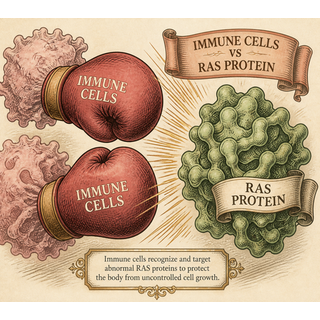
Disclaimer: The image accompanying this article is for illustrative purposes only and does not depict actual experimental results, data, or biological mechanisms.
-
Killock D. Pan-RAS inhibitor daraxonrasib shows promise in pancreatic cancer. Nat Rev Clin Oncol. 2026. doi:10.1038/s41571-026-01162-x ↩↩
-
Moore AR, Rosenberg SC, McCormick F, Malek S. RAS-targeted therapies: is the undruggable drugged? Nat Rev Drug Discov. 2020;19(8):533-552. doi:10.1038/s41573-020-0068-6 ↩
-
Neoptolemos JP, Kleeff J, Michl P, Costello E, Greenhalf W, Palmer DH. Therapeutic developments in pancreatic cancer: current and future perspectives. Nat Rev Gastroenterol Hepatol. 2024;21(1):35-56. doi:10.1038/s41575-023-00861-0 ↩
-
Houg DS, Bijlsma MF. The pancreatic cancer microenvironment as a clinical target. Nat Rev Gastroenterol Hepatol. 2024;21(2):103-119. doi:10.1038/s41575-023-00875-8 ↩
-
Waters AM, Der CJ. KRAS: the critical driver and therapeutic target for pancreatic cancer. Cold Spring Harb Perspect Med. 2021;11(1):a031435. PMCID:PMC7781041 doi:10.1101/cshperspect.a031435 ↩