Cancer has always been a bit of a metabolic weirdo. It chews through glucose like a teenager after soccer practice, then spits out lactate - the same molecule your muscles make when they start filing complaints during a hill sprint. For years, lactate got cast as acidic background mess, the biochemical equivalent of empty pizza boxes at a crime scene. But this new Immunity paper says lactate is not just clutter. It may be part of the getaway plan.
The headline: lactate can directly bind and inhibit STING, one of the immune system's key alarm systems, helping tumors stay sneaky and poorly infiltrated by immune cells. And in glioblastoma, one of the nastiest brain cancers around, that trick seems tied to worse outcomes. Grim, yes. But also biologically juicy.
STING: the cellular burglar alarm
STING - short for stimulator of interferon genes - is part of your innate immune system, which is basically the body's "something weird is happening and I would like to speak to a manager" network. When STING senses danger signals, it helps trigger interferon responses and other inflammatory signals that can recruit immune cells to the tumor site.
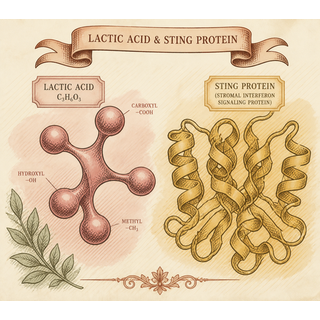
In many cancers, researchers want STING awake, loud, and deeply annoying to the tumor.
That matters because tumors often live in what can only be described as a sketchy neighborhood - low oxygen, weird metabolites, stressed cells, mixed signals everywhere. Immune cells entering that environment are already dealing with bad lighting and terrible management. If the tumor can also muffle STING, it gets even easier to avoid detection.
This paper argues that lactate is one of the mufflers.
Not just waste - a molecular hand over the mouth
The authors found that lactate directly binds the cGAMP-binding domain of STING. That's a pretty big deal. cGAMP is the molecule that normally activates STING. If lactate gets there first, STING basically misses the memo.
The result: less STING activation, less IRF3 signaling, and lower expression of cytokines that would otherwise help rally immune defenses.
That's a clever move by the tumor, in a deeply rude sort of way. It's like the fire alarm works fine, but someone keeps stuffing gum into the sensor.
What makes this especially interesting is that it links tumor metabolism - how cancer cells process fuel - to innate immune escape in a very direct way. We've known for a while that lactate-rich tumors tend to be immunosuppressive. But "lactate makes the neighborhood gross" is different from "lactate physically grabs the alarm box and stops it from going off." This study pushes the second idea.
How the tumor turns up the lactate hose
The paper also maps the upstream machinery. In glioblastoma cells, EGFR signaling promoted phosphorylation of LDHA by PKM2 at serine 161. That boosted LDHA activity and ramped up lactate production.
If that sentence sounds like three acronyms in a trench coat, fair. In plain English: a common cancer growth pathway seems to reroute sugar metabolism so the tumor makes even more lactate, which then helps shut down immune alarm signaling.
This is a familiar cancer theme across organs. Breast tumors, pancreatic tumors, melanomas, and brain tumors all exploit metabolism to shape their surroundings. Evolution keeps reinventing the same scam with different branding. Squid use ink, skunks use spray, and tumors apparently use lactate.
In human glioblastoma samples, the authors found that higher LDHA S161 phosphorylation correlated with lower STING activation, fewer cytotoxic immune cells, and poorer survival. That's not proof of every causal detail in patients, but it fits the lab story uncomfortably well.
Why this matters beyond one brain tumor paper
Glioblastoma is notoriously hard to treat, and immunotherapy has not exactly had a victory parade there. One big reason is the tumor microenvironment - it's hostile, suppressive, and very good at keeping effective immune cells out. This paper suggests that one part of that problem may be metabolic sabotage aimed straight at innate immunity.
And the implications probably stretch beyond glioblastoma. Lactate is abundant in many tumors. STING signaling matters across cancer types. So this may represent a more general immune-evasion trick, not just a one-off brain-tumor oddity.
That fits with a broader trend in oncology: metabolism and immunity are not separate stories. They are roommates sharing a fridge and passive-aggressively labeling the leftovers.
The therapeutic angle - and the fine print
The encouraging part is that the researchers didn't stop at "wow, that's weird." They showed that pharmacologic PKM2 inhibition reduced lactate-mediated STING suppression, limited immune evasion, and synergized with anti-PD-1 therapy in experimental models.
That raises an appealing possibility: maybe some tumors could become more visible to the immune system if you block the metabolic pathway feeding this lactate-STING shutdown.
Still, let's keep one foot on the ground. This is exciting mechanistic work, but not a finished clinical strategy. We need replication, broader validation in other tumor types, better understanding of off-target effects, and eventually human trials that show real benefit. Cancer biology loves making us think we've found the master key, then reveals twelve more locks behind the first door.
Even so, this study gives us a sharper picture of how tumors hide. Not by building an invisibility cloak, but by flooding the room with a metabolite that jams the alarm.
And honestly, that's classic cancer - less Darth Vader, more corrupt facilities manager.
References
-
Guo D, Meng Y, Yang Q, et al. Lactate binds and inhibits the innate immune sensor STING to promote tumor immune evasion. Immunity. 2026;S1074-7613(26):00004-0. doi:10.1016/j.immuni.2026.06.004
-
Sanmamed MF, Ocaña MC, Alfaro C, et al. Tumor metabolic reprogramming and immune cell dysfunction in the tumor microenvironment. Nat Rev Clin Oncol. 2023;20(9):565-586. doi:10.1038/s41571-023-00764-0
-
Bader JE, Voss K, Rathmell JC. Targeting metabolism to improve the tumor microenvironment for cancer immunotherapy. Mol Cell. 2020;78(6):1019-1033. doi:10.1016/j.molcel.2020.05.034 PMCID:PMC7781361
-
Li X, Wenes M, Romero P, Huang SC-C, Fendt S-M, Ho P-C. Navigating metabolic pathways to enhance antitumour immunity and immunotherapy. Nat Rev Clin Oncol. 2019;16(7):425-441. doi:10.1038/s41571-019-0203-7
-
Corrales L, McWhirter SM, Dubensky TW Jr, Gajewski TF. The host STING pathway at the interface of cancer and immunity. J Clin Invest. 2016;126(7):2404-2411. doi:10.1172/JCI86892 PMCID:PMC4922690
Disclaimer: The image accompanying this article is for illustrative purposes only and does not depict actual experimental results, data, or biological mechanisms.